


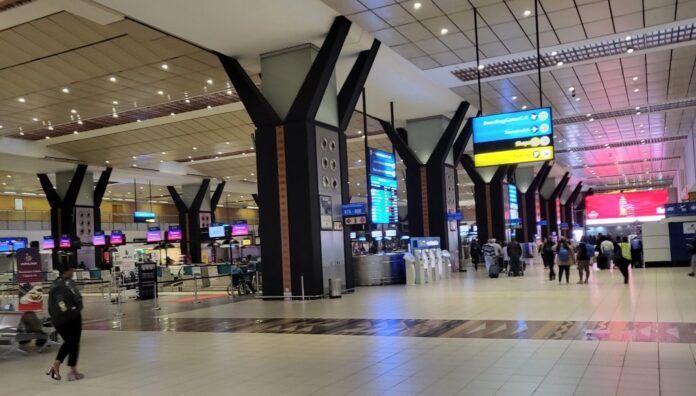
South Africa has launched its Electronic Travel Authorisation (eTA) system at O.R. Tambo International Airport as part of efforts to modernise immigration and border management.
President Cyril Ramaphosa delivered the keynote address at the launch, describing digital technology as an important part of improving border security while making legitimate travel into the country more efficient.
The eTA allows eligible travellers to obtain travel authorisation electronically before arriving in South Africa. Authorities say the system will improve the screening of visitors and help identify potential immigration risks before travellers reach the border.
Its introduction forms part of a wider shift towards a more digitally managed immigration system.
South Africa is a major destination for tourists, business travellers, investors, students and people seeking employment. Managing those movements has placed increasing pressure on immigration authorities to balance easier legitimate travel with stronger border controls.
Government expects the eTA to help streamline entry procedures while strengthening efforts to address irregular migration and document fraud.
Digital processing could also reduce reliance on paper-based immigration procedures. Electronic verification allows authorities to process and share information more efficiently, potentially reducing administrative delays at ports of entry.
Launching the system at O.R. Tambo International Airport is significant because the Johannesburg airport is one of South Africa’s main international gateways. Its implementation there will provide an important test of how the system performs as passenger volumes increase.
Government also sees more efficient immigration processing as important to South Africa’s tourism and investment ambitions. Easier entry for legitimate travellers could improve the country’s accessibility to international visitors while maintaining security checks.
Ramaphosa positioned the eTA within his administration’s broader drive to modernise government services and use technology to improve state efficiency.
However, the system’s longer-term impact will depend on how effectively it is implemented. Coordination between government agencies, protection of travellers’ data, system reliability and accessibility will all be important as its use expands.
The launch marks another step in South Africa’s move towards a more digitally managed immigration system, with authorities seeking to balance border security with faster and more efficient international travel.