


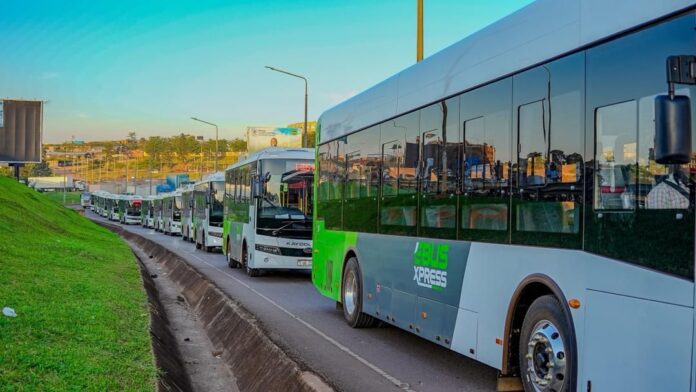
KAMPALA, UGANDA — Uganda is expanding its locally developed electric bus network around Kampala as the government pushes cleaner public transport and greater investment in domestic automotive manufacturing.
The latest rollout centres on Kira Municipality, where Kayoola electric buses developed by Kiira Motors Corporation will operate across three routes. Science, Technology and Innovation Minister Eng Asiimwe Jonard said 21 buses form part of the deployment, describing the initiative as an important step towards cleaner and technology-driven urban transport.
The buses will introduce scheduled services alongside features including air conditioning, onboard Wi-Fi and cashless payments. Adult fares start at UGX800, while students will pay from UGX400 depending on the distance travelled.
Beyond improving public transport, Uganda wants the Kayoola programme to strengthen its automotive industry and demonstrate the commercial potential of technology developed by Ugandan engineers.
“Having personally test-driven the Kayoola Electric Bus, I did so not only as Minister, but as a representative of Government and the people we serve,” Asiimwe said.
“If we have the confidence to drive what our own engineers have built, then we must equally have the confidence to put it on our roads and allow it to serve our people.”
The programme forms part of Uganda’s wider Science, Technology and Innovation strategy, which seeks to turn locally developed technology into practical products that can create jobs and support economic growth.
Uganda plans to expand electric public transport significantly, with the government targeting 300 electric buses in Kampala by 2027. Greater production could create opportunities for engineers, technicians, component suppliers and charging infrastructure providers.
Kiira Motors is also working to increase the proportion of components sourced locally. Government figures released earlier this year put local content at about 21%, highlighting both the progress made and the opportunity to build a deeper domestic automotive supply chain.
Kampala provides an important test for that ambition. Rapid urban growth has increased pressure on the city’s transport network, while congestion and ageing public transport vehicles remain persistent challenges.
Electric buses alone will not solve those problems. Their success will depend on reliable schedules, affordable fares, effective routes and sufficient charging infrastructure. If the Kira model works, however, it could provide a foundation for expansion across Greater Kampala and other Ugandan cities.
Asiimwe said the initiative represents more than putting new buses on the road. It also reflects Uganda’s ambition to build confidence in its own engineering and manufacturing capabilities.
“This is more than the deployment of buses,” he said. “It is about addressing everyday mobility challenges, strengthening Uganda’s automotive industry, creating opportunities and demonstrating confidence in our own engineering, science, technology and manufacturing capabilities.”
The Kira rollout therefore gives Uganda an opportunity to test whether home-grown technology can deliver reliable public transport while supporting a larger industrial ambition. If the model succeeds, Kayoola could become more than a Ugandan electric bus; it could demonstrate how African-developed technology can move from innovation to commercial application.