


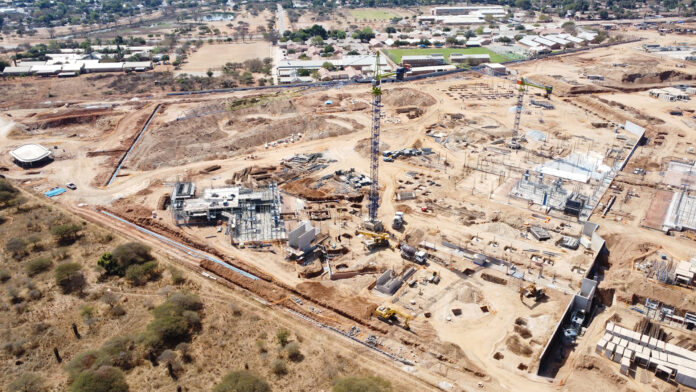
PRETORIA, SOUTH AFRICA – South Africa has secured $405 million in financing from the New Development Bank to build a major hospital in Limpopo and expand bulk water infrastructure across communities struggling with supply shortages.
The government signed two loan agreements with the BRICS-backed development bank as it increases investment in public infrastructure. The funding will support the Limpopo Central Hospital in Polokwane and the Magalies Bulk Water Supply Scheme serving parts of Limpopo and North West.
A $200 million loan will finance the new Limpopo Central Hospital, a 488-bed tertiary facility designed to strengthen specialised healthcare in the province. Limpopo faces growing demand for tertiary services alongside ageing infrastructure and shortages of specialised medical facilities.
The hospital will become the province’s principal referral facility and provide advanced diagnostic and treatment services. Plans also include medical training and clinical research facilities, strengthening its role beyond conventional hospital care.
The project could also address a longstanding geographical imbalance in access to specialised healthcare. Patients requiring advanced treatment often depend on limited provincial capacity or referrals elsewhere, increasing pressure on families and the wider public health system.
South Africa will direct the remaining $205 million towards the Magalies Bulk Water Supply Scheme. The project aims to increase access to reliable drinking water across six municipalities where demand already exceeds available supply.
Bela-Bela, Modimolle-Mookgophong, Mogalakwena, Moretele, Moses Kotane and Rustenburg will benefit from the investment. These areas span parts of Limpopo and North West, where population growth and economic activity have increased pressure on water infrastructure.
Water security has become an increasingly important economic issue across South Africa. Ageing infrastructure, maintenance backlogs, population growth and weaknesses in municipal management have placed pressure on supply systems in several parts of the country.
Reliable bulk water infrastructure also carries consequences beyond households. Mining, agriculture, manufacturing, tourism and property development depend on secure water supplies, making investment in water systems an important part of regional economic growth.
Both New Development Bank loans have a 10-year maturity period, including a four-year grace period. National Treasury said the agreements form part of government’s broader programme to strengthen health and water infrastructure while securing long-term development financing.
The $405 million package also forms part of South Africa’s wider international borrowing strategy. Financing from the New Development Bank and other multilateral partners has helped the government meet its $3.2 billion foreign currency borrowing requirement for the 2026/27 financial year.
South Africa has increasingly turned to multilateral development institutions to help finance infrastructure while public finances remain under pressure. The New Development Bank, established by the BRICS countries, has become one of the institutions supporting transport, water, energy and other development projects in the country.
The latest agreements come as infrastructure investment takes on greater importance in South Africa’s economic strategy. Weak municipal services, deteriorating infrastructure and insufficient investment have constrained businesses and affected living conditions in communities across the country.
Building new infrastructure alone will not resolve those challenges. Effective procurement, construction management, maintenance and accountable spending will determine whether the financing delivers lasting improvements.
The Limpopo Central Hospital illustrates the scale of that opportunity. Beyond its 488 beds, the project includes 17 operating theatres and specialised facilities for areas including cardiac, trauma, burns and obstetric care. It will also support the University of Limpopo’s medical training programmes.
The Magalies project carries a different but equally important development objective. Increasing bulk water availability could give municipalities greater capacity to serve households while supporting businesses and future investment in areas where limited supply has constrained growth.
South Africa’s $405 million financing agreement therefore represents more than another addition to government borrowing. It directs international development capital towards two infrastructure gaps that directly affect communities and economic activity.
Success will ultimately depend on delivery. Completing the hospital and water scheme efficiently, controlling costs and maintaining the infrastructure after construction will determine whether the investment translates into better healthcare, stronger water security and sustainable economic benefits.