


CAPE TOWN, South Africa – South Africa’s R1 trillion infrastructure programme is entering a crucial phase as government seeks to turn ambitious spending plans into bankable projects capable of attracting private capital.
Public-sector infrastructure spending is expected to reach about R1.07 trillion over the next three years. Investment will span transport, energy, water and other essential services as Pretoria seeks to remove bottlenecks that have constrained economic growth.
Yet the scale of South Africa’s infrastructure needs extends far beyond available public resources. Estimates put the funding required to modernise transport and logistics infrastructure at about R13 trillion, strengthening the case for greater private-sector participation.
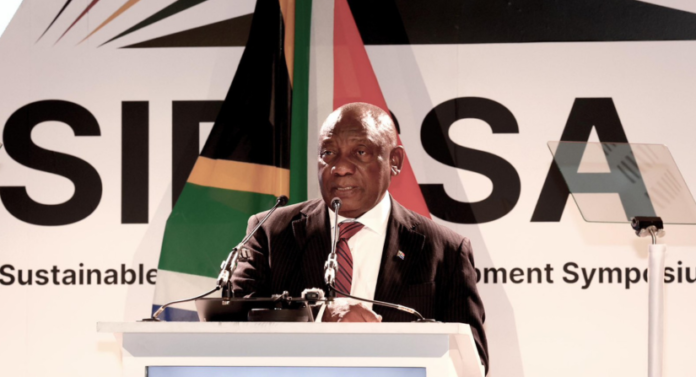
Attention is now turning to the Sustainable Infrastructure Development Symposium South Africa, known as SIDSSA 2026. The gathering takes place in Cape Town from 23 to 25 August and will bring together government, investors and infrastructure leaders.
South Africa has made infrastructure central to its economic reform programme. Electricity, freight rail, ports and water systems have all faced years of operational pressure, maintenance challenges and insufficient investment.
However, access to capital is not the only obstacle. Investors need projects with credible financial models, clear procurement structures and manageable risks before committing long-term funding.
Standard Bank Corporate and Investment Banking has highlighted project bankability as one of the central challenges facing South Africa’s infrastructure ambitions. Steve Barnes, Head of Corporate and Investment Banking South Africa, argues that stronger preparation and credible delivery will help unlock private capital.
That distinction is increasingly important. South Africa has significant pools of institutional capital through banks, pension funds, insurers and development finance institutions. Turning infrastructure needs into projects that those institutions can finance remains the bigger challenge.
Energy reforms have already demonstrated how private investment can expand infrastructure capacity. Regulatory changes opened greater space for companies to develop electricity generation projects, helping increase private participation in the sector.
Pretoria is pursuing a similar transition in freight logistics. Greater private access to the state-owned rail network forms part of efforts to improve freight volumes and strengthen connections between mines, factories and ports.
Reliable logistics remains essential to South Africa’s competitiveness. Mining companies and exporters have lost revenue when rail constraints prevented commodities from reaching ports efficiently. Manufacturers also depend on predictable transport networks to reach domestic and international markets.
Water infrastructure presents another urgent challenge. Ageing municipal systems, leaks and weak maintenance have contributed to supply disruptions in several areas. Water security is increasingly becoming an investment consideration alongside electricity and transport.
International financing is also supporting South Africa’s reform agenda. The World Bank approved a $1.5 billion Infrastructure Modernization Development Policy Loan on 16 July 2026. The financing provides budget support linked to reforms rather than directly funding individual infrastructure projects.
Those reforms target electricity, freight transport, water and sanitation, with a strong emphasis on improving efficiency and attracting private investment. The World Bank expects changes in electricity and transport alone to support hundreds of thousands of jobs over the coming years.
Private capital will remain critical because government cannot finance South Africa’s infrastructure requirements alone. However, investors will need confidence that projects can move efficiently from planning through procurement, financing and construction.
SIDSSA 2026 will provide an important test of that ambition. Government faces pressure to demonstrate not only the scale of its project pipeline but also which developments are ready to attract financing and move towards implementation.
South Africa has the economic scale, financial institutions and private capital needed to support a significant infrastructure market. Improving project preparation and execution could unlock investment while rebuilding confidence in the country’s ability to deliver major developments.
The R1.07 trillion public infrastructure programme therefore represents only part of the challenge. South Africa must use that investment to attract additional capital and build infrastructure that improves productivity, supports businesses and strengthens economic growth.
Whether Pretoria can make that transition will help determine if its infrastructure programme becomes a catalyst for investment and jobs or remains an ambitious pipeline waiting for delivery.