


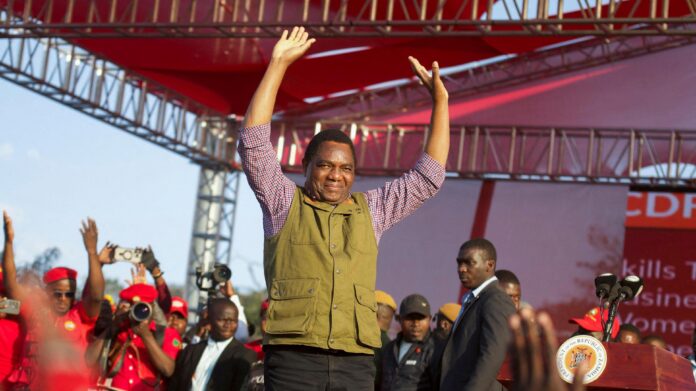
LUSAKA, Zambia — Zambia’s debt markets are attracting renewed investor interest after President Hakainde Hichilema secured a second term, with Citi upgrading the country’s international bonds as attention shifts towards copper expansion and economic growth.
Citi upgraded Zambia’s international bonds to overweight following the election and signalled interest in local government debt. The move reflects expectations that Hichilema will maintain the economic policies that shaped Zambia’s recovery from its 2020 sovereign default.
Hichilema secured about 60% of valid votes, compared with 38% for his main challenger, Brian Mundubile. His victory provides greater policy continuity after a first term dominated by debt restructuring and reforms backed by the International Monetary Fund.
Investors are now looking beyond Zambia’s recovery from default. A new IMF programme, rising copper production and continued fiscal discipline are emerging as early tests of Hichilema’s second term.
Zambia aims to secure a new IMF programme by the end of 2026 after its previous $1.7 billion arrangement expired in January. Finance Minister Situmbeko Musokotwane has said fresh investment will be essential to drive growth and create jobs.
An immediate return to international bond markets remains unlikely. Musokotwane has said Zambia needs more time before issuing new international debt as the government seeks to strengthen its relationship with the IMF.
Markets will closely watch that approach. Zambia’s debt restructuring helped restore access to international investors after years of uncertainty, but maintaining fiscal discipline will remain important as government increases spending on infrastructure and development.
Copper will sit at the centre of Zambia’s next growth phase. Government has set a target of producing 3 million metric tonnes annually by 2031, almost three times current production levels.
Reaching that target could significantly strengthen export earnings and Zambia’s position in global mineral supply chains. Copper demand is rising as countries invest in electricity grids, renewable energy, construction and other infrastructure.
Mining investment has already accelerated since Hichilema took office in 2021. International companies have expanded or revived projects as Zambia has sought to create a more predictable investment environment across the sector.
Competition around Zambia’s mineral resources also extends beyond commercial mining. China maintains a significant presence in the country, while the United States and other Western partners are seeking greater involvement in African critical-mineral supply chains.
Regional infrastructure could strengthen Zambia’s position further. The Lobito Corridor aims to improve transport connections between mineral-producing regions in Zambia and the Democratic Republic of Congo and Angola’s Atlantic coast.
Better logistics could give mining companies additional export routes while lowering transport constraints. That becomes increasingly important if Zambia succeeds in sharply increasing copper production over the coming years.
Electricity remains one of the biggest risks to those ambitions. Zambia relies heavily on hydropower, making electricity generation vulnerable to drought and changing rainfall patterns.
Recent power shortages have demonstrated the economic consequences of that dependence. Mining operations require large and reliable electricity supplies, meaning copper expansion will need to progress alongside investment in new generation capacity.
The risk remains particularly relevant as another El Niño weather pattern develops. Investors are watching whether weaker rainfall could again place pressure on hydropower and disrupt mining production.
Hichilema’s re-election has removed one source of uncertainty, but markets will now expect economic reforms to produce stronger growth. His first term focused heavily on stabilising public finances and rebuilding Zambia’s relationship with international lenders.
His second term faces a different challenge: converting that stability into investment, employment and higher household incomes.
Cost-of-living pressures remained a significant issue during the election campaign despite Zambia’s improving economic position. Mundubile drew support from voters who argued that stronger national indicators had not translated into enough improvement in everyday living conditions.
That gap between financial recovery and household experience will remain politically important. Zambia needs investment to generate jobs and government revenue while avoiding the borrowing pressures that contributed to its earlier debt crisis.
Citi’s more positive stance on Zambian debt provides an early indication that international investors see opportunities after the election. Yet confidence will depend on what happens next.
A new IMF agreement could reinforce Zambia’s fiscal credibility, while higher copper production could strengthen exports and attract further investment. Reliable electricity and disciplined borrowing will be equally important to sustaining that momentum.
Hichilema begins his second term with Zambia in a stronger financial position than when he first entered office in 2021. The next test is whether the country can use that stability to build a larger and more competitive economy.
With global demand strengthening the strategic importance of copper, Zambia has a significant opportunity. Turning renewed investor interest into broader economic gains will depend on how effectively government manages mining expansion, energy investment and public finances.