


BENGUELA, Angola – Angola has launched a €114.6 million university campus project in Benguela Province to expand public higher education and strengthen professional training. The new development will accommodate approximately 8,500 students per shift, creating opportunities for young people pursuing careers in medicine, law, economics and education. The investment comes as the Southern African country seeks to develop its workforce and reduce its long-standing dependence on oil revenues.
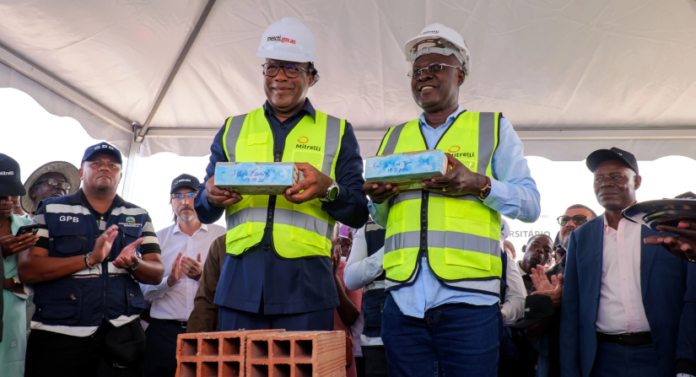
The government laid the foundation stone for the Baía Farta University Campus on 19 October, marking the official start of the project. Construction is expected to take four years. Once completed, the campus will bring together three faculties of Katyavala Bwila University and the Higher Institute of Educational Sciences of Benguela (ISCED-Benguela).
The university will accommodate the faculties of Medicine, Law and Economics, alongside ISCED-Benguela, which specialises in teacher training and educational sciences. The Angolan government is developing the project through a consortium comprising Mitrelli Group Netherlands B.V. and K.A. KORA Angola. The investment forms part of wider efforts to improve access to university education and develop skills needed across the economy.
Benguela is one of Angola’s important economic centres, yet access to public higher education remains limited. According to the Ministry of Higher Education, Science, Technology and Innovation, the province has nine higher education institutions. Only two are public, and they currently accommodate fewer than 20% of Benguela’s 26,514 university students.
As a result, many students depend on private institutions or seek alternative opportunities to continue their education. The new campus is expected to increase public higher education capacity in the province by approximately 116%. This expansion could improve access for students who face financial or geographical barriers to university education.
Speaking at the foundation stone ceremony, Minister of Higher Education Albano Vicente Lopes Ferreira described the project as part of Angola’s commitment to strengthening its education system.
“Today, we reaffirm the Government’s commitment to opening a new chapter for higher education in the province, building on the achievements we have celebrated in recent years,” Ferreira said, according to a statement issued by Mitrelli.
The campus will cover approximately 29,977 square metres of gross construction area. Plans include lecture halls, laboratories, libraries, auditoriums, administrative offices and facilities for student activities. The government has allocated approximately €77.3 million to Katyavala Bwila University and €37.3 million to the ISCED-Benguela development.
Beyond increasing student numbers, the project aims to improve practical professional training. Mitrelli says the Faculty of Medicine will include a clinical simulation centre where students can practise medical procedures before working with patients. Meanwhile, the Faculty of Law will feature a moot court, allowing students to gain practical experience of legal proceedings.
These facilities could help bridge the gap between academic learning and professional practice. Angola needs qualified healthcare workers, teachers, legal professionals and economists to support its public institutions and growing industries. However, modern buildings alone will not guarantee better educational outcomes. Universities will also need qualified lecturers, teaching resources and sustainable funding.
Rodrigo Manso, Chief Executive Officer of Mitrelli, said higher education plays an important role in economic competitiveness.
“Higher education is a strategic investment in a country’s economic development and competitiveness,” Manso said. “The Baía Farta University Campus will help develop Angola’s next generation of doctors, legal professionals, economists and educators.”
Angola’s investment comes as the country works to diversify an economy that remains heavily dependent on petroleum exports. Oil continues to generate substantial government revenue and foreign exchange. However, changes in international energy prices can place pressure on public finances and economic stability.
Successive governments have identified agriculture, manufacturing, tourism, transport and logistics as sectors capable of creating employment and broadening the economy. Developing these industries requires skilled workers, effective institutions and stronger connections between education and employment.
Angola’s National Development Plan for 2023–2027 identifies human capital development as a national priority. The strategy recognises that education and professional training can improve productivity and support long-term economic growth. Expanding university access therefore forms part of the country’s wider development ambitions.
Benguela’s location also gives the investment regional significance. The province connects to the Lobito Corridor, a major transport route linking Angola’s Atlantic coast with Zambia and the Democratic Republic of Congo. Governments and investors are developing the corridor to improve regional trade, transport infrastructure and access to international markets.
The corridor is expected to support economic activity across several industries, including logistics, agriculture, mining and manufacturing. These sectors require professionals with expertise in finance, management, law and public administration. Although the Baía Farta campus will not specialise in transport engineering, its academic programmes could contribute to the region’s wider skills needs.
The development also reflects challenges facing countries across the Southern African Development Community (SADC). Governments throughout the region are working to expand access to higher education while improving the quality of qualifications. Youth unemployment, shortages of specialised professionals and unequal educational opportunities remain major obstacles to economic development.
Across many African economies, the challenge extends beyond enrolling more students. Universities must prepare graduates for employment, research and entrepreneurship while responding to changing labour markets. Stronger cooperation between educational institutions, businesses and governments could help close existing skills gaps.
However, expanding university infrastructure requires sustained investment beyond the construction phase. Institutions need qualified academic staff, research equipment, reliable services and effective management. Affordable tuition and student support are equally important if the facilities are to serve communities that currently struggle to access higher education.
The Baía Farta project will take approximately 48 months to complete. During that period, the government must oversee construction, manage costs and prepare the institutions for academic operations. Recruiting lecturers and equipping laboratories will be essential to ensuring that students can begin their studies once the buildings are ready.
Ferreira has called for close supervision of construction and responsible management of public funds. The ministry has also indicated that preparations for academic staffing and equipment will form part of the development process.
The investment comes at a time when Angola faces competing demands on public resources. Healthcare, housing, employment and infrastructure remain important national priorities. Consequently, the scale of the university project makes transparent procurement, effective supervision and long-term financial planning essential.
Students in Benguela could benefit from more opportunities to study closer to home. The new campus may also reduce dependence on private institutions and improve access to professional qualifications. However, these benefits will depend on affordability, academic standards and the availability of courses that respond to employment needs.
The project also presents an opportunity to strengthen the relationship between education and economic development in Angola. A larger pool of qualified professionals could improve public services, attract investment and increase productivity across several industries. Its long-term success will depend on how effectively the new institutions prepare graduates for the country’s changing economic needs.
The foundation stone ceremony marks the beginning of that undertaking rather than its completion. The government’s challenge is to deliver a functioning campus that meets academic standards and expands educational opportunities.
Across Africa, countries are investing in infrastructure to support industrialisation and regional trade. Yet physical development must be matched by investment in people. Angola’s €114.6 million university project reflects that wider ambition, with its lasting value likely to depend on the opportunities it creates for students and the contribution graduates make to the economy.