
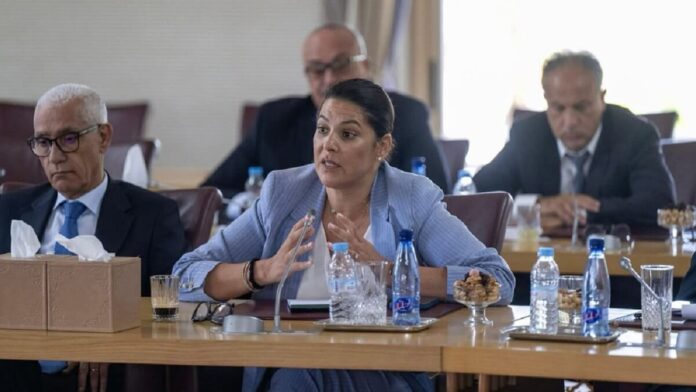
RABAT, Morocco – Morocco’s first female head of government, Fatima Ezzahra El Mansouri, has secured a four-party coalition with a parliamentary majority, clearing a major hurdle towards forming a new administration. The agreement comes as the North African country faces mounting pressure to address youth unemployment, living costs and demands for better public services.
El Mansouri’s Authenticity and Modernity Party (PAM) reached the agreement on 12 October following two rounds of negotiations with other political parties. The coalition controls 207 seats in Morocco’s 395-member House of Representatives, nine more than the 198 required for an absolute majority.
King Mohammed VI appointed El Mansouri head of government on 29 September after PAM emerged as the largest party in parliamentary elections held six days earlier. Her appointment marked the first time a woman had reached the highest government office in Morocco, although the king retains extensive constitutional powers.
The coalition brings together PAM, the nationalist Istiqlal Party, the Socialist Union of Popular Forces (USFP) and the Party of Progress and Socialism (PPS). Their agreement gives El Mansouri the parliamentary backing needed to advance negotiations over ministerial appointments and the government’s policy programme.
PAM holds 97 seats, while Istiqlal has 65. The USFP and PPS contribute 26 and 19 seats respectively. Together, the parties control just over 52% of the lower house, leaving the incoming government with a relatively narrow majority.
The National Rally of Independents (RNI), which led the outgoing government, will not join the coalition despite finishing second in September’s election. Its exclusion marks a change in the political alliances that governed Morocco under former Prime Minister Aziz Akhannouch.
The four parties say they intend to establish a government built around shared reform priorities, including social justice, economic development and stronger public institutions. They must now agree on ministerial appointments and prepare a programme capable of securing parliamentary confidence.
El Mansouri’s appointment represents a significant milestone for women’s political representation in Morocco. A lawyer and former mayor of Marrakesh, she previously served as minister responsible for housing and urban development before taking on the country’s highest government role.
However, her leadership comes at a difficult moment for the Moroccan economy. Unemployment remains a major concern, particularly among young people seeking opportunities after completing their education.
Official figures have placed youth unemployment above 20%, while wider economic pressures continue to affect household incomes. Rising living costs, access to affordable housing and uneven development between urban and rural communities have also shaped public debate.
The incoming administration faces expectations that it will turn economic growth into more employment and improve access to essential services. Education and healthcare have become particularly sensitive issues following protests led by young Moroccans demanding greater public investment and government accountability.
These concerns extend beyond employment statistics. Many young people question whether education provides a realistic path to economic security, while families continue to face pressure from housing costs and limited opportunities in some regions.
El Mansouri’s government will also oversee preparations for the 2030 FIFA World Cup, which Morocco will co-host with Spain and Portugal. The country has committed substantial investment to transport, stadiums and other infrastructure ahead of the tournament.
The preparations offer opportunities for construction, tourism and related industries. However, they have also raised questions about spending priorities at a time when citizens are demanding improvements in schools, hospitals and employment prospects.
Morocco’s authorities have outlined infrastructure investment plans worth approximately US$20 billion in connection with preparations for the tournament. The incoming government will face scrutiny over how it manages these projects and whether their economic benefits reach communities beyond major cities.
The political transition also comes amid continuing debate over the balance of power within Morocco’s constitutional monarchy. Although the head of government oversees domestic policy and coordinates ministers, King Mohammed VI retains substantial authority over defence, foreign affairs and other strategic matters.
This arrangement means a change in government does not necessarily signal a major shift in Morocco’s broader political direction. El Mansouri will need to navigate both the expectations of her coalition partners and the institutional framework within which the government operates.
Her appointment has nevertheless renewed attention on women’s participation in Moroccan politics. Women hold roughly 27% of seats in the House of Representatives, but their representation in directly contested constituencies remains considerably lower.
Women’s rights organisations have also called for further reforms to family law and stronger protections against discrimination. These issues could test the coalition’s ability to reach agreement across parties with different political traditions.
The government’s immediate task is to finalise its cabinet and present a policy programme to parliament. Its parliamentary majority provides a route to taking office, but it does not guarantee agreement on every major reform.
With only nine seats above the majority threshold, the coalition will need to maintain cooperation among its four partners while responding to public expectations for economic and social change.
El Mansouri’s appointment has already made political history in Morocco. Her greater challenge will be to demonstrate whether that milestone can translate into improvements in employment, public services and economic opportunity for the people her government will serve.