
HARARE, Zimbabwe – Zimbabwe aims to clear nearly US$3 billion in international debt arrears by March 2027. The government is advancing economic reforms, improving governance and compensating former farmers to rebuild investor confidence and restore access to international financing.
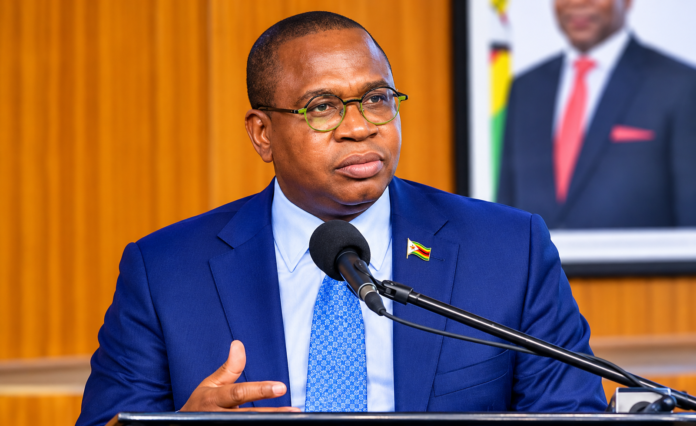
Finance Minister Professor Mthuli Ncube said the country remains committed to resolving debts that have restricted development financing for over two decades. The government hopes to strengthen international financial relations and attract investment to support economic growth.
Zimbabwe reaffirmed its commitment at the 2026 IMF and World Bank Annual Meetings in Bangkok, Thailand. The country owes US$1.7 billion to the World Bank Group, US$835 million to the African Development Bank Group and US$433 million to the European Investment Bank.
Ncube said achieving the March 2027 target requires funding, institutional approvals and continued economic reforms. He also called on development partners to support a sustainable financing solution.
The government established the Structured Dialogue Platform in December 2022 to engage creditors and development partners. The initiative focuses on economic governance, land tenure reforms and resolving Zimbabwe’s long-standing debt obligations.
Ncube said clearing arrears would help restore confidence, unlock affordable financing and create new economic opportunities.
Zimbabwe’s economy grew by 8.3% in 2025, according to government figures. Authorities project growth of 5% in 2026 and 3.5% in 2027. Ncube attributed the expected slowdown to the anticipated effects of El Niño-related weather conditions.
Annual inflation in the Zimbabwe Gold (ZiG) currency fell from 32.7% in October 2025 to 4.3% in October 2026. The minister credited fiscal discipline, tight monetary policy and foreign exchange stability.
The government plans to maintain strict spending controls and avoid central bank financing of budget deficits. It also aims to strengthen public financial management and improve social services.
Zimbabwe has reported progress under its 10-month IMF Staff-Monitored Programme, which ran until September 2026. According to Ncube, the country met all five quantitative targets and relevant structural benchmarks for the March and June reviews.
However, the government missed its social spending target because of audits and delays in disbursements. Authorities have responded with programme-based financing, closer expenditure monitoring and a new Social Registry manual.
An IMF mission is expected to conduct the third and final review from 2 to 11 December 2026. The assessment will help determine Zimbabwe’s progress in maintaining credible economic policies.
Zimbabwe is also pursuing governance reforms to strengthen transparency, public accountability and justice delivery.
The country’s World Justice Project Rule of Law Index score increased from 0.39 to 0.40 in 2026. Its Open Government indicator improved by 5.6% between 2021 and 2026.
Zimbabwe also ranked third in sub-Saharan Africa in the 2025 Open Budget Index, according to figures cited by Ncube. The Mo Ibrahim Governance Index recorded a marginal increase from 48.1 to 48.4.
Meanwhile, the country’s Corruption Perceptions Index score rose from 21 to 22 out of 100 in 2025. Despite these improvements, the figures highlight the need for further institutional reforms.
Cabinet has approved the second National Anti-Corruption Strategy, covering 2026 to 2030. The government expects the strategy to improve transparency, strengthen accountability and support economic governance.
Land tenure reforms and farmer compensation remain central to Zimbabwe’s efforts to rebuild international trust.
Under the Global Compensation Deed, the government says it has provided a compensation package worth US$820 million to at least 800 former farm owners. The package includes cash, US dollar-denominated Treasury bonds carrying a 2% coupon and a 12.5% shareholding in Kuvimba Mining House.
Authorities have introduced an online portal to simplify compensation claims and document submissions. The government has also started issuing title deeds to strengthen land ownership security and encourage agricultural investment.
Zimbabwe has separately paid US$60 million towards its US$130.5 million compensation obligation under Bilateral Investment Protection and Promotion Agreements (BIPPAs).
The government has made annual payments of US$20 million since 2024. It plans to settle the remaining US$70.5 million through equal payments in 2027 and 2028.
Eligible claimants include investors from Denmark, Germany, the Netherlands, Switzerland and the former Yugoslavia.
Ncube said honouring these agreements would help restore confidence among foreign investors and international development partners.
Despite progress in economic reforms, Zimbabwe continues to face significant financing challenges. The government has requested financial support from the World Bank, African Development Bank and European Investment Bank to help clear outstanding arrears.
Ncube said grants and long-term concessional loans offer the most sustainable solution. He stressed that Zimbabwe must maintain sound economic policies, improve transparency and manage borrowing responsibly.
Resolving the debt crisis could restore access to international financing and strengthen investor confidence. It could also support infrastructure development, improve public services and create employment opportunities.
The March 2027 deadline now presents a major test of Zimbabwe’s reform programme. Success will depend on sustained economic stability, creditor cooperation and access to affordable financing.
Ncube reaffirmed the government’s commitment to economic stability and institutional reforms. He urged international partners to support Zimbabwe’s efforts to resolve its debt obligations and improve the lives of its citizens.
Source: Statement by Professor Mthuli Ncube, Zimbabwe’s Minister of Finance, published 19 November 2026.