


LUSAKA – Zambia is targeting average economic growth of about 7% over the next three years as the copper-producing nation attempts to turn years of debt restructuring and economic stabilisation into stronger investment, exports and job creation.
The government’s latest medium-term economic framework projects growth of 6% in 2027, rising to 7.5% in 2028 before easing slightly to 7.1% in 2029. Zambia’s 2026 budget had projected growth of 6.4% this year, although the International Monetary Fund has since lowered its forecast to 4.3%.
That difference illustrates the scale of Zambia’s ambition as it enters a new phase of its economic recovery. The government is betting that stronger mining investment, improved energy supply, agriculture and private-sector expansion can accelerate growth after several years dominated by debt negotiations and fiscal consolidation.
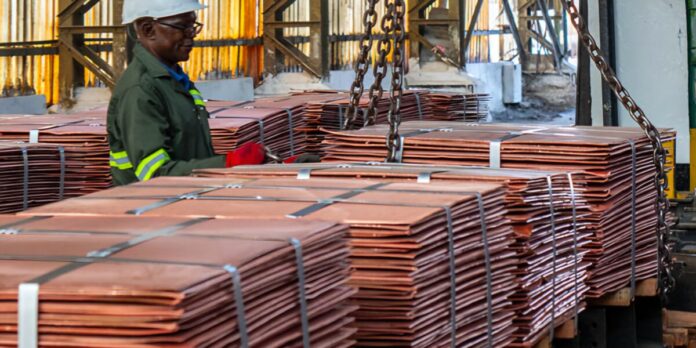
Copper will remain central to that strategy. Zambia is Africa’s second-largest copper producer and has set a target of increasing annual production to three million tonnes by 2031. Achieving that goal would require major investment in existing mines, new projects, electricity generation and the infrastructure needed to move minerals to international markets.
Global demand gives Zambia a potentially favourable environment in which to pursue that expansion. Copper is increasingly important to electric vehicles, renewable energy systems, electricity grids and data infrastructure. The energy transition has intensified international competition for reliable supplies of the metal, placing major producers such as Zambia at the centre of global investment strategies.
Higher copper prices have already supported Zambia’s currency and broader economic outlook. The kwacha strengthened against the US dollar during September, with market analysts pointing to strong copper prices, an improved harvest and progress on debt restructuring as important sources of support.
Zambia’s challenge is to translate favourable commodity conditions into economic activity beyond mineral exports. Greater copper production can generate foreign exchange and government revenue, but the wider development gains depend on how much processing, procurement, manufacturing and employment Zambia can build around its mining industry.
The IMF has encouraged greater copper value addition alongside diversification into agriculture, tourism, textiles and other productive sectors. Its assessment reflects a broader economic challenge facing Zambia: mining can provide the capital and foreign exchange needed for growth, but dependence on a single commodity leaves the economy vulnerable to changes in international prices and demand.
Energy supply will also determine how quickly the country can expand production. Zambia relies heavily on hydropower and has experienced severe electricity shortages during periods of drought. Those shortages have affected households, businesses and mining operations, demonstrating how climate vulnerability can become an industrial constraint.
Investment in electricity generation and transmission is therefore closely connected to Zambia’s copper ambitions. Mining companies require dependable power to increase production, while new processing and manufacturing industries will need additional electricity if Zambia wants to retain more value from its mineral resources.
The country’s improved economic position follows a difficult period that began when Zambia became Africa’s first sovereign default during the COVID-19 era in 2020. It subsequently entered the G20 Common Framework and began lengthy negotiations with official and commercial creditors.
Those negotiations have made substantial progress. The IMF said earlier this year that restructuring agreements covered about 94% of the external debt included in the restructuring perimeter. Zambia also completed the final review of its Extended Credit Facility programme in January after several years of fiscal and economic reforms.
Debt restructuring has given Lusaka greater room to focus on growth, but it has not removed the country’s debt risks. The IMF continues to assess Zambia’s public debt as sustainable while classifying the country as being at high risk of overall and external debt distress. Maintaining fiscal discipline therefore remains important as the government increases investment and pursues faster economic expansion.
Inflation provides another indication of the progress Zambia has made. The IMF reported that inflation had fallen to 6.8% in April, bringing it back within the Bank of Zambia’s 6% to 8% target range. International reserves had also increased to $6.4 billion, equivalent to about 4.4 months of prospective imports.
Those improvements strengthened the country’s macroeconomic position, but new pressures have emerged during 2026. Higher fuel costs, government spending and weaker-than-expected mining output contributed to the IMF lowering its growth outlook. The Fund expects inflation to rise again towards the end of the year as higher fuel prices offset some of the benefits from a stronger kwacha.
Agriculture has played an important role in Zambia’s recent recovery after an exceptional harvest in 2025 helped improve food supply and ease inflationary pressure. Maintaining that contribution will depend partly on weather conditions, particularly because drought can affect both agricultural output and hydropower generation at the same time.
That vulnerability means Zambia’s 7% growth target will depend on several parts of the economy performing together. Mining expansion needs reliable electricity, agriculture needs greater climate resilience and businesses need affordable financing and predictable economic policy. Government finances must also remain stable as Zambia resumes debt-service obligations under its restructuring agreements.
Private investment will be critical to meeting those demands. Zambia needs capital for mines, power generation, transport infrastructure, agriculture and manufacturing, while the government has limited fiscal room to finance every major project itself.
The country has attracted renewed international interest in its mineral sector as governments and companies seek greater access to African copper and other critical minerals. Zambia’s position along the US-backed Lobito Corridor could strengthen that opportunity by improving transport connections between the Copperbelt and Angola’s Atlantic coast.
Improved logistics could reduce the cost and time required to move copper and other goods to international markets. The wider economic opportunity will depend on whether transport investment also supports Zambian businesses, agriculture and manufacturing rather than functioning primarily as an export route for raw minerals.
That distinction is increasingly important as African mineral-producing countries push for a larger share of the economic value generated by their natural resources. Zambia has an opportunity to use growing copper demand to attract investment into processing, engineering, services and other industries connected to mining.
The government’s growth targets therefore represent more than an attempt to produce stronger GDP figures. They test whether Zambia can convert macroeconomic stability into productive investment and whether its copper wealth can support a more diversified economy.
The foundations have improved considerably since the 2020 default. Debt restructuring has advanced, inflation has fallen sharply from previous highs and international reserves have strengthened. Copper prices and international interest in critical minerals provide additional support.
The next stage will be more difficult because economic stabilisation and economic transformation require different forms of success. Zambia has made progress repairing its financial position, but reaching average growth of about 7% will require sustained investment, dependable energy, higher productivity and stronger businesses across sectors beyond mining.
If those pieces come together, Zambia could move from being primarily a story of debt recovery to one of Africa’s more closely watched economic expansion stories. The government’s targets now set the benchmark against which that transition will be measured.