


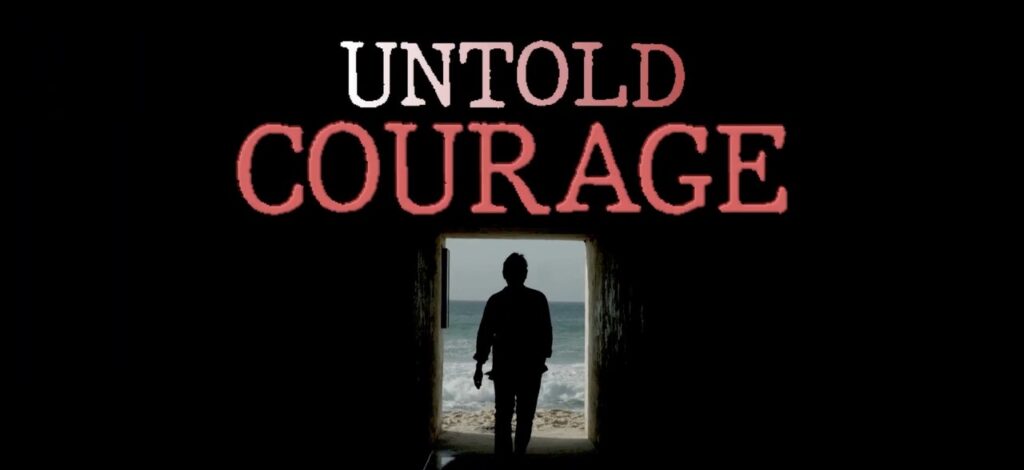
There is a poignant moment in Untold Courage, Mark Kaplan’s four-part documentary. Here, Steve Biko asserts the delicate balance of the liberation struggle. Black Consciousness, he insists, demands that freedom from apartheid be led and defined by Black people. They must psychologically own it. White allies must resist the instinct to direct and instead learn the discipline of supporting without controlling.
As he sketches this separation of roles, he envisages a unified horizon. This is “a non-racial, just and egalitarian society in which colour, creed and race shall form no point of reference.” But his vision is already shadowed by doubt. He questions whether such a future can truly be realised at all.
It is within this moral and strategic tension that Kaplan frames Untold Courage. The film explores the work of the Christian Institute of Southern Africa, a network that sought not to lead the struggle but to sustain it. Under Beyers Naudé, the Institute became a skilled, stealthy, and subversive conduit. It bridged internal resistance and global solidarity, challenged apartheid theology, channelled resources, and linked South African activists to African resistance nodes, international churches, and movements.
Alongside figures such as Horst Kleinschmidt, Cedric Mayson, Janet Love, and Frank Chikane, the Institute helped transform resistance. It became a globally sustained moral force. This ensured apartheid was not only a South African crisis, but a system demanding international confrontation, condemnation and eventual conquest.
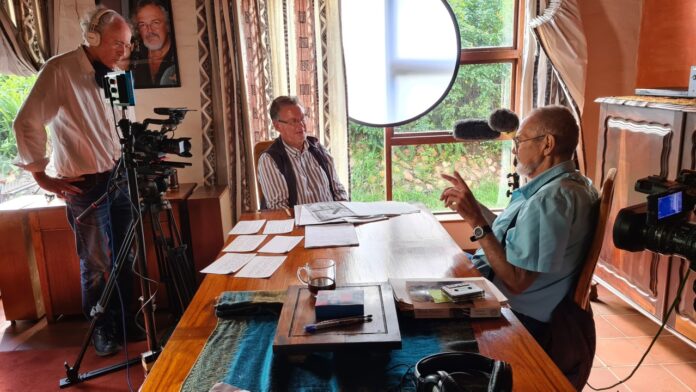
Untold Courage was conceived in 2019. The idea grew from the flowering of a friendship between Kaplan and Kleinschmidt. The four episodes unfold as a harrowing, at times heart-wrenching, yet hope-laced epic of endurance. The documentary is enriched by a haunting score, gritty verité camerawork and editing, and previously unseen documents. It also features extraordinary archival material drawn from public records, Kaplan’s past films, and Kleinschmidt’s personal archive.
Each episode traces a different layer of the struggle: repression at home, political, personal and moral awakening, exile, and the fraught connections that bound them. Through Kleinschmidt’s measured narration, the series moves between idealism, sacrifice, subterfuge, rupture, and survival. Personal odysseys collide and sometimes conflict with an unshakable utopian conviction. Alongside Naudé, Mayson, Chikane, and Love, Kleinschmidt emerges as a central architect. He links European solidarity networks to internal resistance and coordinates funding and information flows. This all happens under constant surveillance, infiltration, and sabotage.
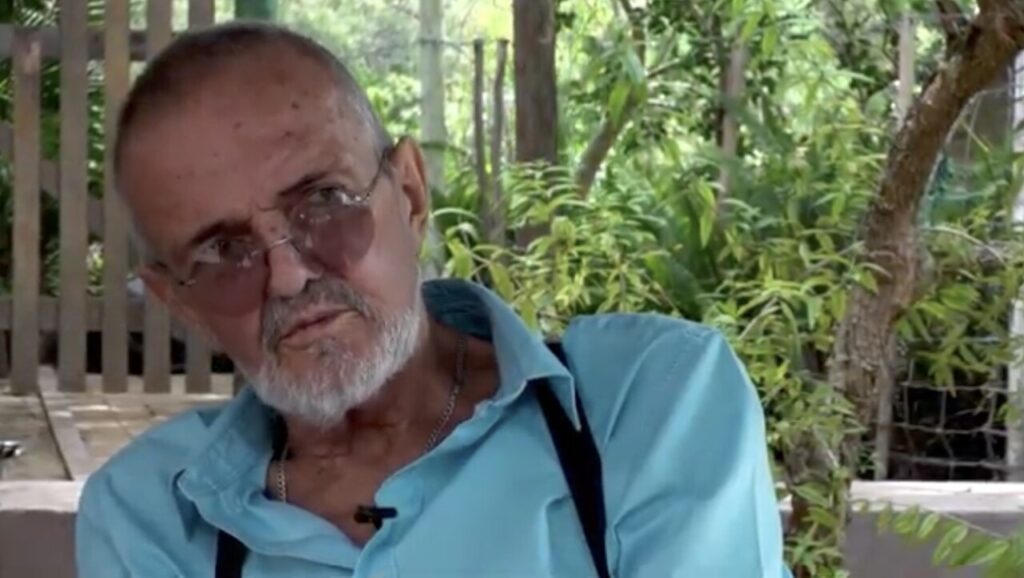
At the heart of this machinery lies the discreet ingenuity of organisations such as the Defence and Aid Fund for Southern Africa. Created to provide legal defence, bail, and welfare support for political prisoners and their families, it became one of the most vital international lifelines for the anti-apartheid movement. Impenetrable codes were constructed to help elude detection.
Funds moved through layered church channels and trusted intermediaries, sometimes physically carried across borders in cash, hidden in envelopes, folders, or paper bags by clergy, academics, businessmen and visiting delegates. Once inside South Africa, money was distributed through church networks to families of detainees, legal teams, and banned activists. Its brilliance lay not only in scale, but in trust: a parallel financial world operating beneath the surveillance of the apartheid state.
BY POPULAR DEMAND – BUY TICKETS FOR THE HIGHLY ANTICIPATED DOCUMENTARY, ‘UNTOLD COURAGE‘
Yet Untold Courage is also a study of betrayal, moral fracture and unexpected grace. In one striking exchange, Kleinschmidt converses with former apartheid security operative Paul Erasmus. Erasmus admits to surveillance, disinformation, and attempts to destabilise resistance networks. The confession is disarmingly frank, yet incomplete. Even here, the simplest word, sorry, remains unspoken.
The camera lingers on Kleinschmidt’s composed visage. His veneer of gentility barely camouflages a grimace of disgust. Behind him lies the accumulated weight of lives disrupted and destroyed, activists assassinated, detained, tortured, broken, poisoned, bombed. These acts were committed by shadowy networks of the apartheid security state, who still elude accountability. Like Erasmus and Craig Williamson, these individuals justified their crimes in the name of ‘war.’ Their actions were designed to abort democracy before it could even be born.
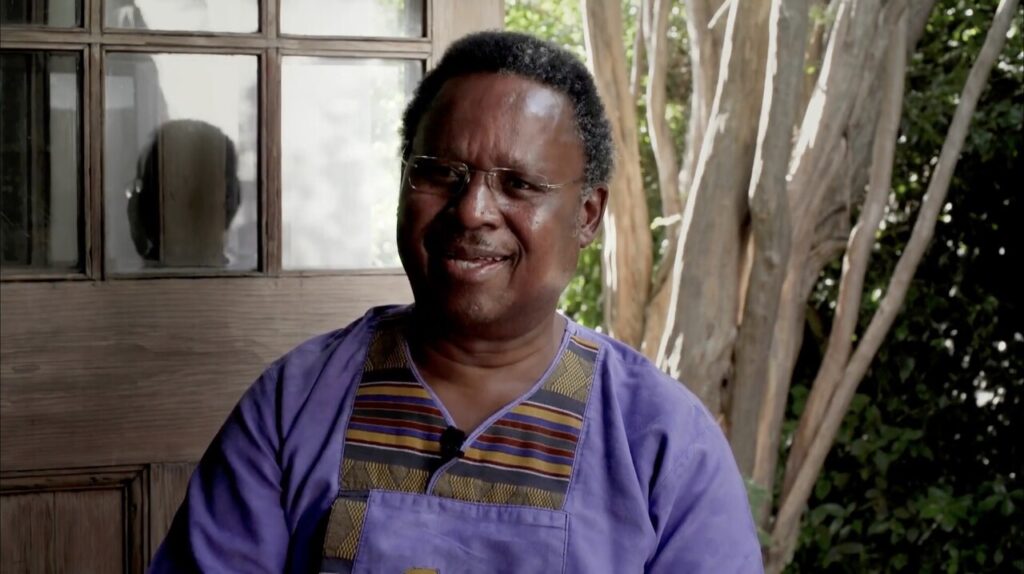
The series also turns inward. It examines fissures within the liberation movement itself. There was a widening gap between the ANC hierarchy in exile and the internal foot soldiers of the UDF. Returnees like Kleinschmidt and Kaplan himself faced a devastating realisation. What was good for the movement was not always good for the country. The dream of the promised land – an egalitarian, equitable, non-racial, free South Africa – had become the land of broken promises.
This betrayal, most sharply felt in the fourth episode, lands heavily on veteran activists in the audience. It sparks uneasy debate. No one wants the story to end badly, but the title Untold Courage suggests that courage alone cannot guarantee justice. South Africa’s younger generations have yet to be told this history and its immeasurable contribution to political freedom. But they have inherited an incomplete reckoning with a past that still haemorrhages into the present.
The film extends beyond history into the unsettled present and a precarious future. What of South Africa’s “born frees,” and a wider generation across the continent? They inherit liberation without certainty or context. Kaplan’s documentary becomes as much a warning as a record. It explores the seductions of power, the slide into patronage and kleptocracy, and the corrosive force of disinformation. The film also shows the ease with which revolutionary legitimacy can curdle into new hierarchies of inequality and duplicity.
Yet the film resists collapse into despair. For all its fractures, Untold Courage holds determinedly to a hopeful proposition. History is not about dreams destroyed, but rather deferred. The vision Biko articulated is neither secured nor lost; it remains contested. This vision is shaped by the tension between memory, unjust realities, and accountability, between what was endured, the uneven legacies thereof, and what is still being, and must be, built. Kaplan’s documentary doesn’t provide an ending, but an argument still in motion: that courage, however untold, is not the conclusion of liberation, but its continuum.
Untold Courage was first screened on 22nd March, but due to public demand, it will be re-screened on Sunday, 19th April, at the UCT School of Education, Neville Alexander Building. BUY TICKETS HERE