
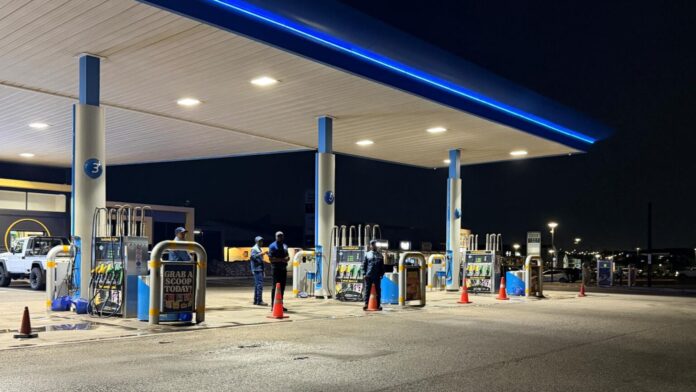
Johannesburg, South Africa – South Africans’ reliance on minibus taxis, buses and private cars to travel to school and work leaves millions vulnerable to fuel price shocks. Vehicle emissions also pose serious health risks to commuters, pedestrians and communities living near busy roads.
Petrol and diesel prices rose sharply in October, following months of severe fuel price volatility. The increases have placed further pressure on households and transport operators. Meanwhile, vehicle emissions contribute to air pollution associated with premature deaths and respiratory illnesses.
“South Africans pay for their commute twice: once at the pump and again with their health. Our national vehicle emission standards are 20 years old, but in 2027 lower-sulphur fuels will arrive, which is a positive step for cleaner air,” says Prian Reddy, Senior Researcher, Africa at the International Council on Clean Transportation (ICCT).
“With this cleaner fuel, we can now consider stricter vehicle emission standards to improve air quality and public health, and vehicle efficiency regulations, which can lead to the reduction of household spending on transport.”
The Department of Mineral and Petroleum Resources’ Clean Fuels Two (CF2) regulations are expected to take effect in July 2027. The regulations will introduce stricter national fuel quality specifications, including lower sulphur levels in petrol and diesel.
Cleaner fuels could significantly reduce harmful vehicle emissions. They would also support the introduction of stricter vehicle emission and fuel efficiency standards, bringing South Africa closer to its national Green Transport Strategy goals.
Introducing vehicle efficiency regulations would encourage the adoption of modern, fuel-efficient technologies across the country’s vehicle fleet. Improved fuel efficiency could reduce spending at the pump and limit the exposure of households and businesses to fuel price shocks.
“Clean Fuels Two opens the door in July 2027, but South Africa needs matching vehicle emission standards to walk through it. And for buses and trucks, going straight to zero emissions is the fastest route to cleaner air,” says Oscar Delgado, ICCT Heavy-Duty Vehicles Programme Director.
South Africa is already receiving support to advance cleaner public transport. The Zero-Emission Bus Rapid Deployment Accelerator (ZEBRA) partnership, led by the ICCT and C40 Cities, is supporting efforts to accelerate the transition.
C40 Cities is a global network of nearly 100 mayors working to address climate change through city-level action. In South Africa, the partnership supports initiatives involving electric bus trials, minibus taxi electrification and industrial policy.
In Latin America, ZEBRA has helped cities accelerate the transition to electric public transport. The region has reached 10,000 electric buses in operation, supported by government policies, city procurement commitments, financing and manufacturing initiatives.
Africa’s electric bus fleet remains considerably smaller, according to ZEBRA’s E-Bus Radar tracker. However, South African manufacturers have demonstrated the potential to produce electric bus bodies with up to 90% local content.
This manufacturing capacity is particularly important for South Africa’s public procurement requirements and its Just Energy Transition (JET) goals. The JET seeks to move the economy away from fossil fuels towards net-zero carbon emissions by 2050, while protecting vulnerable workers and communities.
Some South Africans are already turning to electric vehicles as rising fuel costs make alternative technologies more attractive.
According to the National Association of Automobile Manufacturers of South Africa (naamsa), growing consumer interest in new-energy vehicles reflects changing market preferences. Improvements in technology, affordability, efficiency and driving range are also influencing adoption.
“South Africans aren’t waiting for policy to catch up. Sales of electric vehicles this year have almost matched last year’s sales, with a full quarter still to go. People can see that electric vehicles protect them from oil price spikes. But we’re still taxing electric vehicles as luxury goods, which prices out many South Africans from purchasing them.
“Fixing vehicle emission standards, boosting the switch to electric vehicles and using electric vehicles for public transport would cut fuel bills for households and transport operators, and make the switch affordable for more than just early adopters,” says Reddy.