


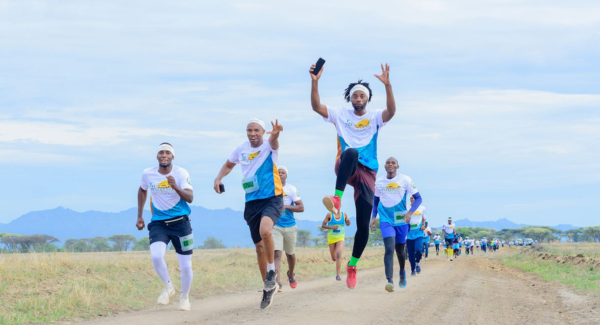
Tanzania is widening its tourism appeal beyond traditional wildlife safaris as the Serengeti Safari Marathon brings together sport, conservation and travel in one of Africa’s most celebrated natural landscapes.
The event, held close to the Serengeti ecosystem, forms part of a growing effort to attract travellers seeking experiences that go beyond conventional game drives. It combines distance running with the landscapes, wildlife and communities that have made northern Tanzania one of Africa’s leading tourism destinations.
The approach reflects a wider shift in the global travel industry. Visitors increasingly want to participate in experiences connected to nature, culture, sport and local communities rather than simply travel between established attractions.
Tanzania is well placed to benefit from that trend. The country already has some of Africa’s most recognisable tourism assets, including Serengeti National Park, Mount Kilimanjaro, the Ngorongoro Conservation Area and the beaches of Zanzibar.
Wildlife remains central to the country’s tourism industry, particularly the annual Great Migration across the Serengeti-Mara ecosystem. Millions of wildebeest, zebra and other animals move through the landscape in one of the world’s most recognised wildlife spectacles.
Events such as the Serengeti Safari Marathon add another dimension to that established tourism offering. They give travellers a reason to combine sporting participation with longer visits to national parks, conservation areas and nearby communities.
The economic potential extends beyond the race itself. Participants and accompanying visitors require accommodation, transport, food and other services, creating opportunities for hotels, tour operators, restaurants, guides and local businesses.
International sporting events can also reach audiences that traditional destination advertising may struggle to attract. Runners often travel with family members or supporters and may extend their stay to explore the destination after competing.
That makes sports tourism particularly attractive to destinations seeking to increase how long visitors remain and how much they spend.
Tanzania has been pursuing a broader strategy to grow visitor numbers and tourism revenue while increasing the industry’s contribution to employment and local economic development.
Improved aviation connectivity has supported that ambition. International travellers can reach Tanzania through gateways including Kilimanjaro International Airport, Julius Nyerere International Airport in Dar es Salaam and Abeid Amani Karume International Airport in Zanzibar.
Regional connections also make it possible to combine Tanzania with neighbouring destinations, particularly Kenya, Rwanda and Uganda. This gives East Africa an opportunity to market itself as a connected tourism region rather than a collection of competing destinations.
The Serengeti occupies a particularly important position within that regional tourism economy. Its ecosystem extends towards Kenya’s Maasai Mara, creating one of the world’s most important cross-border wildlife landscapes.
Protecting that environment remains essential as tourism expands.
Large sporting events in environmentally sensitive areas require careful management to prevent increased visitor activity from damaging the ecosystems that attract travellers in the first place. Waste management, transport, water use and interactions with wildlife all require planning.
Sustainable tourism therefore becomes central to the success of experiences built around protected landscapes.
The challenge extends beyond environmental protection. Tourism growth also needs to create visible benefits for communities living around national parks and conservation areas.
Residents often bear some of the costs associated with conservation, including restrictions on land use and encounters with wildlife. Ensuring that tourism creates jobs, business opportunities and community investment can strengthen local support for conservation.
Sports tourism offers opportunities to deepen those connections when organisers work with local accommodation providers, suppliers, transport operators and community businesses.
It can also introduce visitors to parts of a destination they might otherwise overlook.
Tanzania’s tourism identity has traditionally centred on safari experiences and Zanzibar’s beaches. Adventure and sports tourism could help broaden that image, particularly among younger travellers and visitors seeking active holidays.
Mount Kilimanjaro already demonstrates the potential of adventure tourism. Thousands of international visitors travel to Tanzania each year specifically to climb Africa’s highest mountain, supporting guides, porters, accommodation providers and businesses around the Kilimanjaro region.
Running events can complement that market while requiring less specialist preparation than high-altitude climbing.
Other African destinations have also recognised the value of sports tourism. Marathons, cycling races, surfing competitions and endurance events increasingly form part of destination marketing strategies across the continent.
The combination can be particularly powerful when sporting events take place against landscapes that already have strong international recognition.
Tanzania’s advantage lies in the global profile of the Serengeti.
Few sporting events can offer participants an environment associated so closely with African wildlife and conservation. That distinction gives organisers a tourism product that is difficult to reproduce elsewhere.
The country also benefits from the wider momentum behind African tourism.
International travel to the continent has recovered strongly in recent years, with destinations including Morocco, Egypt, South Africa, Tanzania and Kenya competing more aggressively for global visitors.
African destinations are also seeking to attract travellers from a wider range of markets rather than depending heavily on traditional European and North American visitors.
Regional African tourism presents another important opportunity. Growing middle-class travel across the continent could provide a more resilient visitor base while reducing dependence on long-haul markets.
Events can help stimulate that movement by giving travellers a specific reason to visit a neighbouring country.
Tanzania’s challenge will be converting increased attention into sustainable tourism revenue.
Higher visitor numbers alone do not guarantee stronger local economies. Tourism generates greater value when travellers stay longer, spend across a wider range of businesses and visit destinations beyond the most established attractions.
Experiential tourism can support that objective because visitors often combine several activities during one trip.
A traveller arriving to run near the Serengeti might also take a safari, visit Ngorongoro, climb in the Kilimanjaro region or travel onwards to Zanzibar. Each additional experience spreads spending across different parts of the tourism economy.
That makes the Serengeti Safari Marathon more than a sporting event from a tourism perspective.
It represents a model in which Africa’s natural assets provide the setting for experiences capable of attracting new categories of travellers while supporting established tourism industries.
The long-term opportunity is not to replace the traditional safari. Tanzania’s wildlife remains one of its greatest competitive advantages and a major reason international visitors travel to the country.
The opportunity lies in giving those visitors more reasons to come, stay longer and experience more of the country.
As competition between global destinations intensifies, memorable experiences will increasingly shape where travellers choose to spend their time and money.
Tanzania already has the landscapes and wildlife. By combining them with sport, culture and adventure, the country is building a broader tourism proposition around one of Africa’s most powerful destination brands.