
The African Development Bank Group has approved a €100 million loan to Gotion Power Morocco the develop a major lithium iron phosphate (LFP) battery gigafactory, strengthening Morocco’s ambitions to become a leading African hub for electric vehicle manufacturing and clean technology.
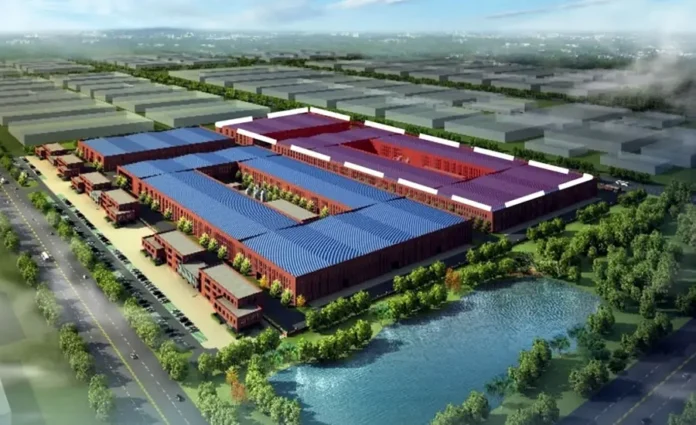
The project will develop an integrated battery manufacturing facility in the Rabat-Salé-Kénitra region. The African Development Bank also plans to mobilise up to €141 million from financial partners to support the investment. It will act as Mandated Lead Arranger under the New African Financial Architecture for Development.
Gotion Power Morocco is backed by Gotion High-Tech, a Chinese battery manufacturer headquartered in Hefei and listed on the Shenzhen Stock Exchange. The investment represents a significant step in Morocco’s efforts to move further into the global electric vehicle supply chain by developing domestic battery manufacturing alongside its established automotive industry.
According to the African Development Bank, the first phase will have capacity to produce 10 gigawatt-hours of battery cells and packs for electric vehicles. Longer-term plans envisage expanding production capacity to as much as 100 GWh.
The Bank describes the project as the first integrated battery manufacturing plant of its kind in Africa and the Middle East and North Africa region. The development is designed to bring different stages of battery production together, including cathode materials, battery cells and finished battery packs.
This integration could give Morocco a stronger position within the electric vehicle supply chain. Rather than concentrating only on vehicle assembly, the country would participate in the production of one of the most valuable components in an electric vehicle.
Morocco has spent years developing a sizeable automotive manufacturing industry, supported by international investment, export infrastructure and access to European markets. The Gotion project adds battery manufacturing to that expanding industrial ecosystem at a time when global carmakers are accelerating their transition towards electric vehicles.
Battery production is particularly significant because batteries represent a major part of the value of an electric vehicle. Building that capacity locally could help Morocco deepen its automotive supply chain while creating opportunities for companies involved in materials, components, engineering and logistics.
Achraf Tarsim, the African Development Bank Group’s Country Manager for Morocco, said the gigafactory would strengthen Morocco’s industrial competitiveness and support its emergence as an African manufacturing hub for sustainable mobility. He said the investment could also help develop a broader African industrial ecosystem for batteries and electric vehicles while encouraging local processing of critical minerals needed for the energy transition.
The first phase of the project is expected to create more than 600 direct jobs, while the African Development Bank expects it to achieve a local industrial integration rate of about 70%. That target could create opportunities for Moroccan suppliers, service providers and skilled workers as production expands.
The wider economic impact could extend beyond jobs inside the factory. A large battery manufacturing operation requires engineering services, logistics, materials processing, maintenance and other specialised support, potentially creating additional opportunities within Morocco’s industrial sector.
Skills development will also be important. Advanced battery manufacturing requires technical expertise, and developing those capabilities locally could help Morocco strengthen its workforce in an industry expected to play an increasingly important role in global transport and energy systems.
The African Development Bank says the facility will operate primarily using renewable energy, linking Morocco’s industrial ambitions with its substantial investments in solar and wind power. The country has increasingly sought to use its renewable energy resources not only to generate electricity but also to attract industries looking to reduce the carbon footprint of their manufacturing operations.
Kevin Kariuki, the Bank Group’s Vice President for Power, Energy, Climate and Green Growth, said battery storage represented an important part of Africa’s clean energy transition. He argued that large-scale battery manufacturing could help support the integration of solar and wind power while creating green industrial employment and stronger African value chains.
Battery technology has applications beyond electric vehicles. Large-scale energy storage can help electricity systems manage fluctuations in renewable generation by storing electricity when production is high and releasing it when demand increases. Developing battery manufacturing capacity could therefore support both electric mobility and the wider transition towards renewable energy.
The investment also comes amid a broader push for African economies to capture more value from the global transition towards clean energy. The continent holds significant reserves of minerals needed for batteries and other low-carbon technologies, but much of the processing and manufacturing associated with those resources has traditionally taken place elsewhere.
African governments and development institutions have increasingly called for a shift away from simply exporting raw materials. They want more processing, manufacturing and value addition to take place on the continent, allowing African economies to retain a larger share of the jobs, technology and revenues generated by the clean energy transition.
The Gotion project could provide an important test of that strategy. If Morocco can combine renewable energy, advanced manufacturing, local suppliers and access to international markets, the project could demonstrate how African countries can participate more deeply in global battery and electric vehicle supply chains.
Earlier African Development Bank environmental documentation described a broader first-phase development with capacity for up to 20 GWh of lithium iron phosphate batteries and annual production of 100,000 tonnes of cathode materials. Those documents also indicate that construction began in 2025 at the Atlantic Free Zone in Kénitra.
The Bank’s latest financing announcement, however, refers to an initial capacity of 10 GWh of battery cells and packs, followed by plans to expand capacity to 100 GWh. The difference may reflect the phased development of the wider project or changes to the production schedule.
Using the latest financing announcement as the current benchmark, the initial 10 GWh operation represents the first stage of what could eventually become a considerably larger battery manufacturing complex.
For Morocco, the €100 million financing strengthens an industrial strategy already centred on automotive manufacturing, renewable energy and export-oriented production. Adding large-scale battery manufacturing could help the country capture a greater share of the rapidly expanding electric vehicle market.
The project also aligns with the African Development Bank’s wider focus on industrialisation, infrastructure, regional integration and greater value addition to Africa’s natural resources. Its longer-term impact will depend on whether the investment develops strong links with local suppliers and encourages further battery and electric vehicle investment across the continent.
If those connections develop, the Gotion gigafactory could become more than a major Moroccan industrial project. It could help establish an African foothold in a global industry that will play a central role in the future of transport and energy.
The €100 million loan, alongside the additional financing the Bank plans to mobilise, therefore represents a broader investment in Africa’s ability to participate in the global clean technology economy rather than remaining primarily a supplier of raw materials.