


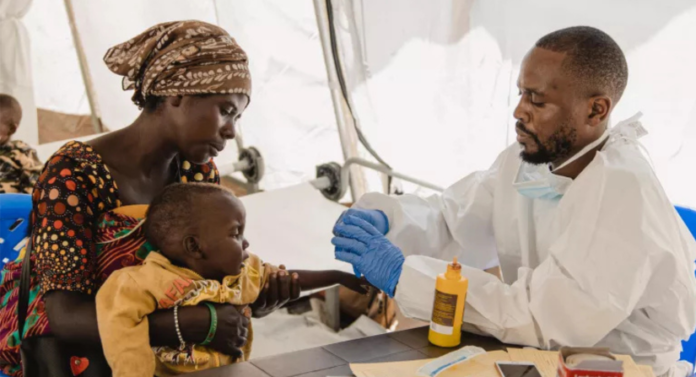
BUNIA, DR CONGO – More than 3,000 people have died in the Democratic Republic of Congo’s worsening Ebola outbreak, as health authorities confront rapid transmission across communities already struggling with conflict and displacement.
Health authorities had recorded 6,342 laboratory-confirmed cases and 3,072 deaths by September 2. The outbreak has reached six provinces, making it one of the most serious public health emergencies facing Africa.
The crisis began in May and spread rapidly through eastern DRC. Ituri has carried a particularly heavy burden, while health authorities have also recorded infections in North Kivu and other provinces.
The Bundibugyo virus is driving the outbreak. Unlike the Zaire Ebola virus behind several previous epidemics, the Bundibugyo strain has no approved vaccine or specific treatment.
That difference has complicated efforts to bring transmission under control. Health teams must rely heavily on rapid diagnosis, patient isolation, contact tracing and community cooperation.
The scale of the emergency has forced authorities to expand their response. DR Congo and its partners have launched an updated 180-day plan as they seek more resources to contain the epidemic and protect vulnerable communities.
Conflict makes that task considerably harder. Armed groups remain active across parts of eastern Congo, while years of violence have displaced millions of people and weakened health infrastructure.
Population movement also creates opportunities for the virus to reach new communities. People regularly move between towns, mining areas and territories controlled by different authorities.
Health officials have started using anonymised mobile-phone data to understand those movements. The technology allows response teams to identify travel patterns and anticipate areas where infections could emerge.
The approach marks an important development in Ebola surveillance. It could help health teams position resources before confirmed cases appear, although mobile data cannot capture every movement or community.
Medical workers face severe pressure as the outbreak expands. Some facilities lack sufficient protective equipment, while insecurity has disrupted healthcare delivery in several affected areas.
Misinformation and mistrust have created additional challenges. Previous Ebola outbreaks in Congo have shown that containment becomes far more difficult when communities distrust health authorities or resist contact tracing and safe burial practices.
Every unidentified transmission chain gives the virus another opportunity to spread. That makes community engagement as important as medical intervention.
The outbreak also carries regional consequences. Uganda has recorded Bundibugyo Ebola cases, while neighbouring countries continue to strengthen surveillance and preparedness.
International health authorities are monitoring the risk of further cross-border transmission as movement continues through one of Africa’s most interconnected regions.
Researchers are working on vaccines and treatments that could provide better protection against the Bundibugyo strain. Until scientists establish an effective medical countermeasure, traditional outbreak control remains the strongest defence.
The human cost is already severe. More than 3,000 confirmed deaths in less than four months have pushed DR Congo into another devastating health emergency while communities in the east continue to face violence and displacement.
Containing the outbreak will require more than treating people who reach Ebola centres. Authorities must find transmission chains faster, protect health workers and rebuild trust in communities where insecurity has weakened confidence in public institutions.
DR Congo has defeated Ebola outbreaks before. The speed and scale of the current epidemic, however, show why this response may prove far more difficult.