


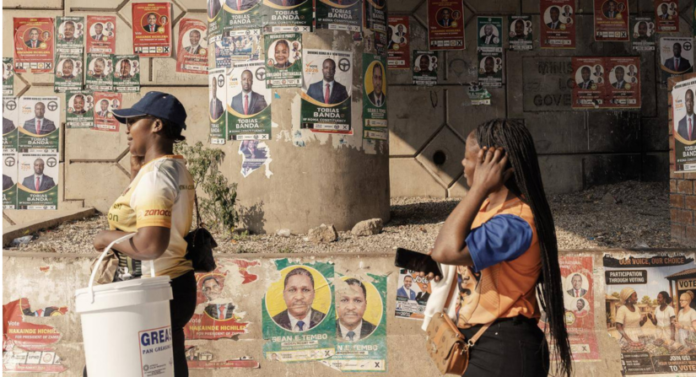
Zambians head to the polls on Thursday in a closely watched election that will test whether President Hakainde Hichilema’s economic reforms have delivered enough change to secure him a second term.
More than eight million registered voters are expected to take part in the 13 August election, choosing a president alongside members of parliament and local government representatives.
Hichilema enters the contest after five years dominated by Zambia’s recovery from a sovereign debt crisis. His government has restructured more than $12 billion in debt while working with international lenders to restore stability to one of Africa’s major copper-producing economies.
Economic indicators have improved, but many Zambians continue to face high food and energy costs. That gap between national recovery and household finances has become one of the defining issues of the campaign.
Hichilema, who leads the United Party for National Development, has presented debt restructuring and renewed economic growth as evidence that his administration has stabilised the country after taking office in 2021.
His opponents argue that improvements in headline economic figures have yet to translate into better living conditions for enough households.
Brian Mundubile, leader of the Tonse Alliance, has emerged as Hichilema’s main challenger. Opposition parties have focused much of their campaign on living costs, employment and concerns over the political environment.
Voters will therefore be weighing two different measures of economic progress. Zambia has improved its position with creditors and investors, but households are more likely to judge the government through prices, jobs and their own disposable income.
Copper adds another dimension to the election. Zambia is Africa’s second-largest copper producer and holds significant reserves of minerals needed for electric vehicles, renewable energy and global electrification. Hichilema’s government wants to increase annual copper production to three million tonnes by 2031.
Rising global demand has increased international interest in Zambia’s mining industry, particularly from China and the United States. Both countries view access to critical minerals as strategically important as competition intensifies around clean-energy supply chains.
Mining investment could support economic growth, but voters will also expect mineral wealth to create jobs and improve public services.
That challenge reaches beyond Zambia. Several resource-rich African countries are under growing pressure to demonstrate that foreign investment and higher commodity demand can produce tangible benefits for local communities.
Political freedoms have also featured in the campaign. Opposition groups have accused Hichilema’s administration of using state institutions against political rivals, allegations the government disputes.
Concerns over Zambia’s democratic direction have drawn attention because the country has built a reputation for peaceful transfers of power. Hichilema himself defeated incumbent president Edgar Lungu in 2021 after previously losing several presidential contests.
Thursday’s election will test that democratic reputation alongside his economic record. A presidential candidate needs more than 50% of valid votes to win outright. Failure to reach that threshold would trigger a runoff.
Hichilema enters the vote as the frontrunner, but the final decision rests with an electorate judging whether economic recovery has reached everyday life.
For Zambia, the election is about more than choosing its next president. Voters are being asked to decide whether five years of debt restructuring, reform and renewed investor confidence have created enough progress to justify another term.
The answer will begin to emerge after polls close on Thursday.