


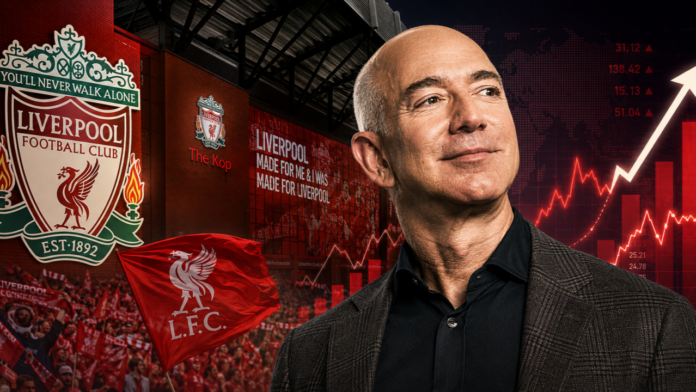
Liverpool Football Club is bringing some of the world’s most influential technology and investment figures into its ownership structure after Fenway Sports Group agreed to sell a 30% stake to a consortium led by British-Indian businessman Amit Bhatia.
The £1.65 billion transaction values Liverpool at about £5.5 billion and brings Amazon founder Jeff Bezos and Facebook co-founder Eduardo Saverin into the investment group. Fenway Sports Group (FSG) will remain the majority shareholder and retain operational control of the Premier League club.
Bhatia will take the most prominent role among the incoming investors after leading negotiations through 1892 Holdings, a consortium named after the year Liverpool was founded. Subject to regulatory approval, he will become vice-chair of an expanded Liverpool board.
His arrival brings considerable experience in English football. Bhatia spent almost 19 years involved with Queens Park Rangers, where he held several senior positions, including chairman, before transferring his shareholding in July.
The consortium draws its financial backing from some of the wealthiest families and investors in global business. The Mittal Family Trust is involved alongside K5 Sports and EE Capital, linking the deal to interests associated with Bezos, Saverin and Indian steel magnate Lakshmi Mittal.
Bezos is expected to remain a passive investor and will not take a seat on Liverpool’s board. Elaine Saverin, wife of Eduardo Saverin, and Bryan Baum, co-founder and managing partner of K5 Global, are expected to join the board alongside Bhatia.
Despite the financial weight behind the consortium, control of Liverpool is not changing hands. FSG has owned the club since 2010 and will continue to oversee its operations after the transaction is completed.
The American group bought Liverpool for about £300 million following a turbulent period under former owners Tom Hicks and George Gillett. Sixteen years later, the £5.5 billion valuation attached to the latest deal illustrates the extraordinary rise in the commercial value of elite English football.
Liverpool has grown substantially during FSG’s ownership, both on the pitch and as an international business. Annual revenue reached a record £703 million in the year ending May 2025, supported by broadcasting, commercial partnerships and matchday income.
The Premier League’s international reach has also transformed its leading clubs into global entertainment businesses. Liverpool’s following stretches far beyond Britain, making commercial growth in markets such as Asia increasingly important to its long-term strategy.
That global reach appears to be one of the attractions behind the new partnership. FSG believes Bhatia and the wider consortium can bring expertise and connections across finance, technology and international investment while helping Liverpool explore new commercial opportunities.
India could become an important part of that expansion. The country has a large and growing Premier League audience, while Bhatia’s business background and family connections provide Liverpool with additional links to one of the world’s largest consumer markets.
The presence of Bezos and Saverin adds a powerful technology dimension to the consortium. Their involvement connects Liverpool with business networks built around some of the companies that have shaped the global digital economy, although neither investor will take control of the club’s day-to-day operations.
Supporters should not expect the £1.65 billion investment to translate directly into a larger transfer budget. Premier League and UEFA financial regulations increasingly tie spending to the revenues clubs generate, limiting the extent to which shareholder wealth alone can transform recruitment.
Commercial expansion could have a greater impact over time. Higher sponsorship, merchandising and other revenues can strengthen Liverpool’s financial position and create more room for investment while keeping the club within football’s spending rules.
That makes the expertise behind 1892 Holdings potentially as important as the capital itself. Access to technology, investment and international business networks could help Liverpool find new ways to generate revenue from its global following.
FSG has also made clear that the transaction does not represent the start of a planned withdrawal from Liverpool. The agreement does not require the group to sell further shares, nor does it oblige 1892 Holdings to increase its stake.
Bhatia’s consortium could have opportunities to acquire additional shares if FSG decides to sell more of the club in future, leaving open the possibility of further changes to the ownership structure over the longer term.
Regulatory approval remains necessary before the transaction can be completed, a process that could take up to 90 days. Liverpool’s leadership and day-to-day operations are expected to remain unchanged during that period.
The deal arrives as international investors continue to compete for positions in elite football. Premier League clubs offer access to enormous global audiences, valuable broadcasting rights and commercial opportunities that extend well beyond matchday revenues.
Liverpool represents one of the strongest examples of that transformation. A club acquired for around £300 million in 2010 is now valued at approximately £5.5 billion, reflecting both its sporting stature and the financial growth of the Premier League.
Bringing Bhatia, Bezos and Saverin into the ownership structure adds another dimension to that story. Their investment places global technology and finance alongside one of football’s most recognisable brands, while leaving FSG firmly in control at Anfield.
The immediate impact may be limited, particularly on Liverpool’s football operations, but the longer-term opportunity lies in expanding the club’s commercial reach. If the partnership delivers the international growth FSG expects, the significance of the £1.65 billion deal may ultimately extend well beyond the 30% stake changing hands.