


Zambia’s copper industry is attracting renewed investment as global demand for the metal rises. Jubilee Metals is responding by becoming more selective about where it puts its capital.
The company is considering the sale of its Large Waste Project after receiving two binding offers for the Zambian asset. Both bids value the project above its acquisition cost, although Jubilee has not disclosed the amounts.
A sale would not signal a retreat from Zambia. Instead, Jubilee wants to direct more capital towards copper operations that can increase production faster.
The strategy comes as mining companies reassess how they invest in Africa’s critical minerals sector. Large undeveloped resources remain attractive, but building new projects requires significant capital and time. Expanding existing mines and processing plants can provide a quicker route to production. Jubilee has chosen to focus on that route.
Its Zambian business combines mining, concentration and refining. The company has built its strategy around the Roan concentrator, Sable refinery and a growing portfolio of nearby copper resources.
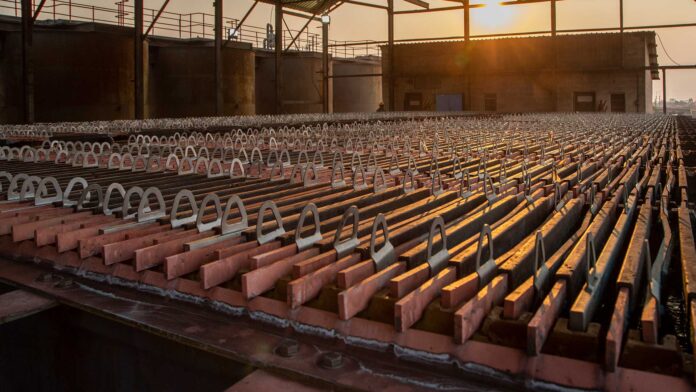
Roan processes ore and previously mined material, while Sable converts copper concentrates into refined copper. Jubilee is also expanding Sable to handle more production from its mining operations.
Molefe Mine forms another important part of the strategy. Jubilee has increased its position around the mine through additional exploration permits. It is also working to develop more nearby copper resources that could supply its processing network.
The Large Waste Project offers a different opportunity. It contains about 240 million tonnes of copper-bearing material, according to Jubilee. Developing a resource of that scale would require further investment and infrastructure.
Selling the asset would allow Jubilee to realise some of its value while concentrating spending elsewhere in Zambia. That decision comes at an important time for the country.
President Hakainde Hichilema’s government wants Zambia to produce three million tonnes of copper a year by 2031. Achieving that target would require major investment across the mining industry.
Global demand is strengthening the case for expansion. Copper plays a central role in electricity grids, renewable energy, electric vehicles and data centres. Rapid investment in artificial intelligence is also increasing demand for electricity infrastructure.
Zambia holds some of Africa’s most important copper resources, giving the country a strategic position in this transition. However, extracting more copper represents only part of the opportunity.
Mining companies also need reliable electricity and sufficient processing capacity. Transport networks must then move copper efficiently from the landlocked country to international markets. Those requirements make infrastructure central to Zambia’s mining ambitions.
Power shortages have already affected mining operations. Zambia relies heavily on hydroelectric generation, which leaves the country vulnerable when drought reduces water levels.
Transport presents another challenge. Zambia needs efficient links between the Copperbelt and ports on Africa’s eastern, western and southern coasts.
Regional projects could improve those connections. The Lobito Corridor promises better access to Angola’s Atlantic coast, while Tanzania provides another important route towards the Indian Ocean.
Better infrastructure could lower export costs and make new mining investments more competitive.
Jubilee faces the same challenge on a smaller scale. Its growth depends on connecting mines with processing plants and ensuring enough material moves through those facilities.
The company has already invested heavily in its Zambian copper operations. Its strategy now centres on building an integrated business that can extract, process and refine more copper within the country.
This approach also follows Jubilee’s decision to focus its business on Zambia after moving away from its former South African chrome and platinum operations. Its 2025 integrated report described copper production in Zambia as the company’s central focus.
Greater concentration brings risks, particularly when a company depends heavily on one commodity and market. Rising copper demand, however, gives Jubilee a strong reason to prioritise Zambia.
The proposed Large Waste Project sale remains incomplete. Jubilee still needs to conclude the transaction before it can redirect the proceeds into other operations. Its strategy nevertheless reflects a broader shift across African mining.
Companies increasingly need more than large mineral resources to compete. They need processing capacity, reliable energy, efficient logistics and disciplined investment.
Zambia has the copper. Its next challenge is building the infrastructure and production capacity needed to capture more value from growing global demand.