


In my previous articles, I explored the terms used to describe African people, specifically the term “Black”, which in Western culture carries heavy and inescapable negative connotations.
The truth is, I have never actually seen a “black” person. The closest we come to that description is in our equatorial regions, where the skin of men and women is a magnificent, deep ebony, rather than black. Does this terminology really matter? What is in a word?
Let us break it down.
Consider the intrinsic negativity attached to the word “black” in the English language: the black sheep of the family, a black day, the blacklist, being blackballed, extortion through blackmail, trading on the black market, and practising black magic.
This terminology is so saturated with deficit and darkness that, no matter how proudly we attempt to reclaim it, it leaves an unconscious, heavy mark on our collective psyche.
This psychological distortion is what the revolutionary psychiatrist Frantz Fanon called an “aberration of affect” — a systemic organising process that induces self-pathology and fractures a young boy’s mind before he even develops his masculine identity.
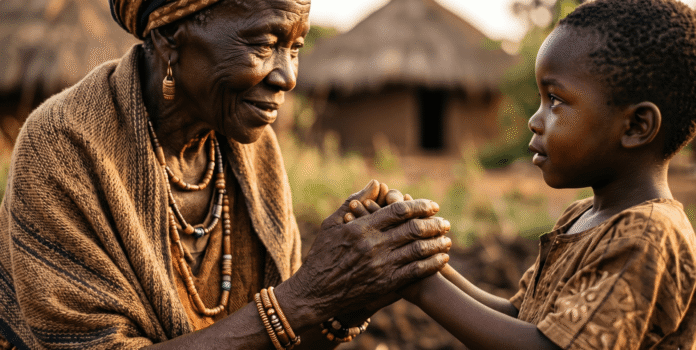
The reality is that we are not technically black. Rather, we are the beautiful, rich colours of the African soil: ebony, coffee, bronze and chocolate.
The structural blueprint of language
The weaponisation of language has been proven over centuries. With words alone, regimes have cast doubt on the very right of nations and individuals to exist.
In psychology and sociolinguistics, this is known as linguistic dehumanisation. History shows us this exact machinery repeating itself across global atrocities, systematically stripping targeted groups of their narrative safety. During the Transatlantic Slave Trade, human beings were legally reclassified as “chattel” and “cargo”.
During the colonisation of Africa, advanced and sovereign kingdoms were dismissed as “primitive heathens” to justify land theft. African men fighting for land and freedom were systematically branded by the British press as mentally diseased savages during the Mau Mau Uprising.
During the Rwandan Genocide, human neighbours were reframed as “cockroaches” over the airwaves to bypass natural human empathy. We perpetuate this cycle when we try to shape the oppressor’s narrative instead of changing it entirely.
The formation of “Black Pride” does not always foster true liberation. Instead, it can serve as a constant, subconscious reminder that our very existence is a “problem” to be managed.
If we genuinely want to foster pride, we must aggressively pivot our focus away from the labels handed to us by occupiers. Moving away from “black” towards the colours of the soil gives us the unilateral power to rewrite our own narrative.
Grounding the narrative in African psychologies
To repair this fractured pride, we cannot rely on theories developed in the Global North. These theories often take white Euro-American experiences as the standard while viewing African masculinity as simultaneously incomplete and hypermasculine.
As prominent scholars such as Kopano Ratele assert, we must practise a situated African psychology. This places Africa and Africans at the absolute centre of our field of vision.
Furthermore, sociologists such as Sakhumzi Mfecane encourage us to decolonise our understanding of manhood by unearthing indigenous masculinities and focusing on positive deviance. This means finding the strengths, solutions and positive behaviours that already exist within our heritage.
We begin by conducting a deep study of our ancestors. What were they well known for doing? Look for the strengths in your family history. There is so much more to the humans we have been conditioned to see as lesser.
A personal reflection on inherent assets
I was raised by an African woman. She was not my birth mother, but she was so much more. She was the woman who nursed me when I was ill, who taught me to see everyone as human, and who loved me fiercely as her own son.
She was not simply a maid or a servant. She was a wise, powerful woman who turned a potential enemy into an ally. No one is powerless in their circumstance.
To shift the economic and psychological status of the continent, we must disrupt the “checklist” mindset of simply working to survive.
We must cultivate unconventional energy and cognitive diversity within our daily labour.
If you work as a gardener, do not just cut the grass. Become a master of your craft. Learn botany, study soil health, master landscaping, and make your expertise indispensable.
If you are a domestic worker, elevate the role. Become an expert in childhood development, nutrition or efficient estate management.
When seeking opportunities, the narrative must shift from a deficit mindset “I just want a job to earn money”, to an asset framework: “I am here because I possess unique, non-linear problem-solving skills that will add immense value to your establishment.”
Modern technology is our premier tool for accelerating this shift. With access to the internet and AI, you have an expert mentor, trade school and global distribution network right in your pocket.
We are no longer restricted by immediate physical or structural fences. The knowledge of the world is accessible on a mobile phone. It can help us upskill, build direct-to-consumer value and re-author our futures.
The destiny of contribution
Nothing worth doing should be done solely for oneself. The spirit of Ubuntu, the realisation that “I am because we are”, remains our greatest competitive advantage. When an African man shifts his focus from isolated survival to communal contribution, he transforms his daily labour into a destiny.
We have fantastic, powerful African stories that we need to expose our people to. When we do, we shift the collective mindset from “We are not good enough” to an unyielding declaration: “We possess immeasurable ability.”
I am tired of seeing the defeated looks on the faces of men standing at our traffic lights. It is the hollow gaze that whispers: “I have given up; there is no hope.”
If we band together as an empowered, self-aware collective, we can right the systemic wrongs perpetrated on Africa. If we can reframe the story for just one African boy or girl, our work here is done.