


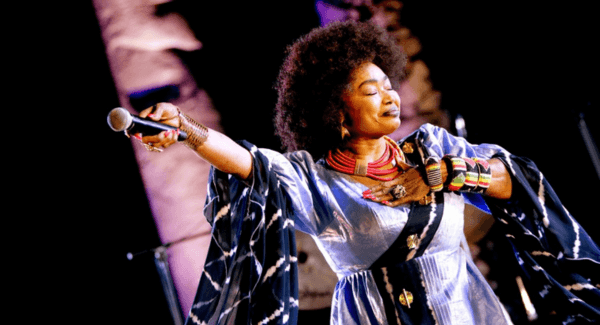
Malian music icon Oumou Sangaré is returning to one of the world’s most prominent global music stages this week, carrying with her a career that has spent decades challenging attitudes towards women while taking the sound of Mali’s Wassoulou region around the world.
Sangaré is among the headline artists at the 2026 WOMAD Festival in England, which runs from 23 to 26 July at its new home at Neston Park in Wiltshire.
At 58, the singer remains one of Africa’s most distinctive musical voices. But her influence has never been limited to music. From songs confronting forced marriage and gender inequality to business ventures designed to create economic opportunities, Sangaré has built a career around a belief that women should have greater control over their own lives.
From the Streets of Bamako to International Stages
Sangaré’s journey began far from the international festivals she now headlines. Growing up in Mali, she experienced financial hardship after her father left the family. As a child, she sang to help her mother support the household.
Music eventually became both her livelihood and her platform. Her breakthrough came with her debut album, Moussoulou, meaning “Women”, which established her as a major voice in Malian music while addressing subjects that were rarely discussed so openly.
The record challenged practices affecting women and questioned expectations around marriage and gender. Its success transformed Sangaré from a young singer into one of Mali’s best-known artists.
Sangaré’s music is rooted in Wassoulou, a cultural region spanning parts of southern Mali and neighbouring West African countries.
The tradition combines distinctive vocals with instruments and rhythms associated with the region’s musical heritage. Sangaré helped introduce that sound to audiences far beyond Mali. Her international career gained momentum after she connected with legendary Malian musician Ali Farka Touré and later worked with the World Circuit record label.
Over the decades, she has performed on major stages around the world while maintaining the musical identity that first made her famous.
Her appearance at WOMAD continues that journey. The festival brings together musicians, dancers and artists from different cultures and has long provided a major international platform for African music.
Sangaré’s songs have often confronted subjects that many artists might avoid. Women’s independence, marriage, social expectations and economic freedom appear repeatedly in her work.
For Sangaré, these are not abstract political themes. They reflect experiences she witnessed growing up and the lives of women around her.
She has spoken throughout her career about the importance of women having the ability to earn their own income and make decisions about their futures.
That message has helped make her music particularly significant for generations of women across Mali and beyond. Yet Sangaré does not describe herself simply as an activist.
Music remains at the centre of what she does. Her approach has been to use songs to tell stories, question accepted practices and encourage conversations that might otherwise remain unspoken.
Sangaré has also taken her ideas about women’s independence into business. Over the years, she has invested in ventures in Mali, including hospitality and automotive businesses. Her approach reflects a broader argument she has made throughout her career: empowerment also requires economic opportunity.
For women in particular, financial independence can change the choices available to them. Her career therefore sits at an unusual intersection of music, entrepreneurship and social advocacy. That combination has helped make Sangaré more than an internationally recognised performer.
In Mali, she has become an example of how artistic success can be turned into businesses and employment beyond the entertainment industry. Sangaré’s WOMAD appearance also comes at a difficult time for her home country. Mali has endured years of political instability and armed conflict, particularly across its northern and central regions.
The country’s security challenges have affected communities, businesses and cultural life. Yet Malian music continues to command international respect. Artists from the country have played an important role in introducing global audiences to West African musical traditions, from Ali Farka Touré and Salif Keita to Tinariwen and Sangaré herself.
Their success has helped establish Mali as one of Africa’s most influential musical nations. For Sangaré, continuing to perform internationally also keeps another image of Mali visible, one shaped by music, culture and creativity rather than conflict alone.
Sangaré’s WOMAD appearance comes as African artists are enjoying unprecedented international visibility. Afrobeats and amapiano have transformed global pop culture, while African musicians increasingly headline festivals, collaborate with international stars and reach audiences through streaming platforms. But Africa’s global musical influence extends well beyond those genres. Sangaré represents an older tradition of African artists who built international careers while remaining deeply connected to local languages, instruments and storytelling.
Her continued presence on major festival stages demonstrates that global audiences are not only interested in contemporary African pop. There is also space for music rooted deeply in the continent’s cultural traditions.
After decades of recording and touring, Sangaré has shown little interest in treating her career as complete. She continues to experiment musically and has indicated that new work is on the way.
Her WOMAD performance therefore represents more than a celebration of what she has already achieved. It is another chapter in a career that began with a young girl singing to help her family and grew into one of African music’s most recognisable international voices.
For generations of listeners, Oumou Sangaré’s music has carried a simple but persistent message: tradition can be celebrated while still being questioned. And as she takes Mali’s Wassoulou sound back onto the WOMAD stage, that message continues to travel.