


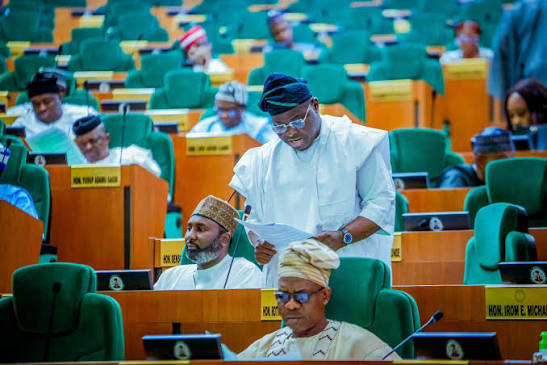
ABUJA, NIGERIA – Nigeria’s National Assembly has indefinitely suspended official legislative engagements with South Africa as anger grows over attacks on Nigerians and other African migrants, pushing a long-running xenophobia crisis into a deeper diplomatic confrontation between two of the continent’s most influential countries.
The parliamentary leadership has ordered lawmakers and officials to halt official visits to South Africa and boycott legislative activities hosted in the country. The directive does not apply to Nigerian government officials, but it represents one of Abuja’s strongest political responses to the deteriorating situation.
Nigeria says at least 98 of its citizens have died in South Africa since 2022 through mob attacks, hate-related incidents and alleged extrajudicial killings. The violence has also contributed to displacement and voluntary departures as some Nigerians reassess their safety in the country.
The latest diplomatic escalation comes as Abuja investigates two further Nigerian deaths in South Africa earlier this month.
Taiwo Michael Fakunle was killed at his residence in Kensington, Johannesburg, on September 4. Nigerian authorities say James Uchechukwu Nwankwo died the following day after what the Foreign Ministry described as abusive interrogation by South African police in the Cape Town area.
The circumstances surrounding both deaths remain under investigation. Nigeria has demanded thorough and transparent inquiries and wants those responsible held accountable.
The allegations involving police have added another layer of concern. Nigeria’s Foreign Ministry has questioned whether South African authorities are doing enough to protect foreigners and prevent abuses at a time when anti-migrant tensions remain high.
South Africa has struggled with recurring xenophobic and anti-migrant violence for years. Migrants from Nigeria, Zimbabwe, Mozambique, Malawi, Somalia and other African countries have faced intimidation, attacks and pressure to leave communities where unemployment and economic hardship remain severe.
Foreign nationals are frequently blamed for unemployment, crime and pressure on public services. Yet South Africa’s economic problems run much deeper than migration. Official unemployment remains above 30%, while inequality, weak economic growth and shortages of opportunity have created conditions in which migrants can become convenient targets for wider frustrations.
The political consequences are becoming harder to contain. Nigeria and South Africa are not marginal players in African affairs. They are two of the continent’s largest economies and wield significant influence within the African Union, international institutions and regional diplomacy.
Their commercial relationship is equally important. South African businesses have built major operations in Nigeria across telecommunications, finance, retail and entertainment, while Nigerian entrepreneurs and professionals have established businesses and communities in South Africa.
That makes the parliamentary boycott more than a symbolic dispute between governments. Continued deterioration could damage a bilateral relationship that carries considerable economic and political weight across the continent. The crisis also exposes an uncomfortable contradiction in Africa’s integration ambitions.
African governments have spent years promoting the African Continental Free Trade Area, freer movement of people and goods, stronger regional integration and a more unified continental voice. Those ambitions become harder to defend when Africans face hostility because of their nationality in another African country.
The contradiction reaches beyond Nigeria and South Africa. Africa cannot build an integrated market of more than 1.4 billion people while allowing nationality to become a fault line that divides workers, entrepreneurs and communities.
South Africa has repeatedly condemned xenophobic violence. Foreign Minister Ronald Lamola travelled to Abuja in July and reiterated his government’s opposition to attacks against foreigners as both countries sought to ease growing tensions.
Nigeria, however, says previous diplomatic efforts have not produced sufficient change. Its Foreign Ministry has also raised concern over the failure to finalise an early-warning mechanism discussed between the two governments. Such a system could help authorities identify rising tensions before they escalate into violence.
Abuja is now considering further measures. These include raising attacks against Nigerians and other African nationals before ECOWAS leaders and the African Union Assembly.
Such a move would significantly broaden the dispute. What began as a bilateral concern over the treatment of Nigerians could become a continental debate about the obligations African governments have towards citizens of other African countries.
The issue requires careful distinction between legitimate immigration enforcement and collective hostility towards foreigners. Every country has the right to enforce its immigration laws and prosecute criminal activity, regardless of nationality.
That principle cannot justify violence against people because they are Nigerian, Zimbabwean, Malawian or from elsewhere on the continent. Nor can criminality involving individuals justify treating entire national communities as responsible.
South Africa itself has repeatedly acknowledged that xenophobic violence damages the country’s reputation and contradicts the values of a nation whose liberation struggle received extensive support from across Africa.
Nigeria’s parliamentary action now shows that the cost may extend beyond reputation. Africa’s integration project ultimately depends on governments convincing citizens that continental cooperation creates shared opportunities rather than competition between nationalities. Political leaders also carry responsibility for ensuring legitimate concerns about jobs, crime and public services do not become justification for hostility towards other Africans.
The suspension of legislative engagements sends a warning that patience in Abuja is wearing thin. Nigeria and South Africa have enough economic and diplomatic influence to shape Africa’s future when they cooperate. A prolonged dispute driven by attacks on African migrants would demonstrate the opposite: how quickly domestic tensions can undermine the continental unity both countries regularly champion.
The immediate responsibility lies in protecting lives and establishing the facts surrounding recent deaths. The bigger test is whether two of Africa’s most powerful countries can confront xenophobia before it damages not only their bilateral relationship, but the wider idea of an Africa becoming more integrated rather than more divided.