


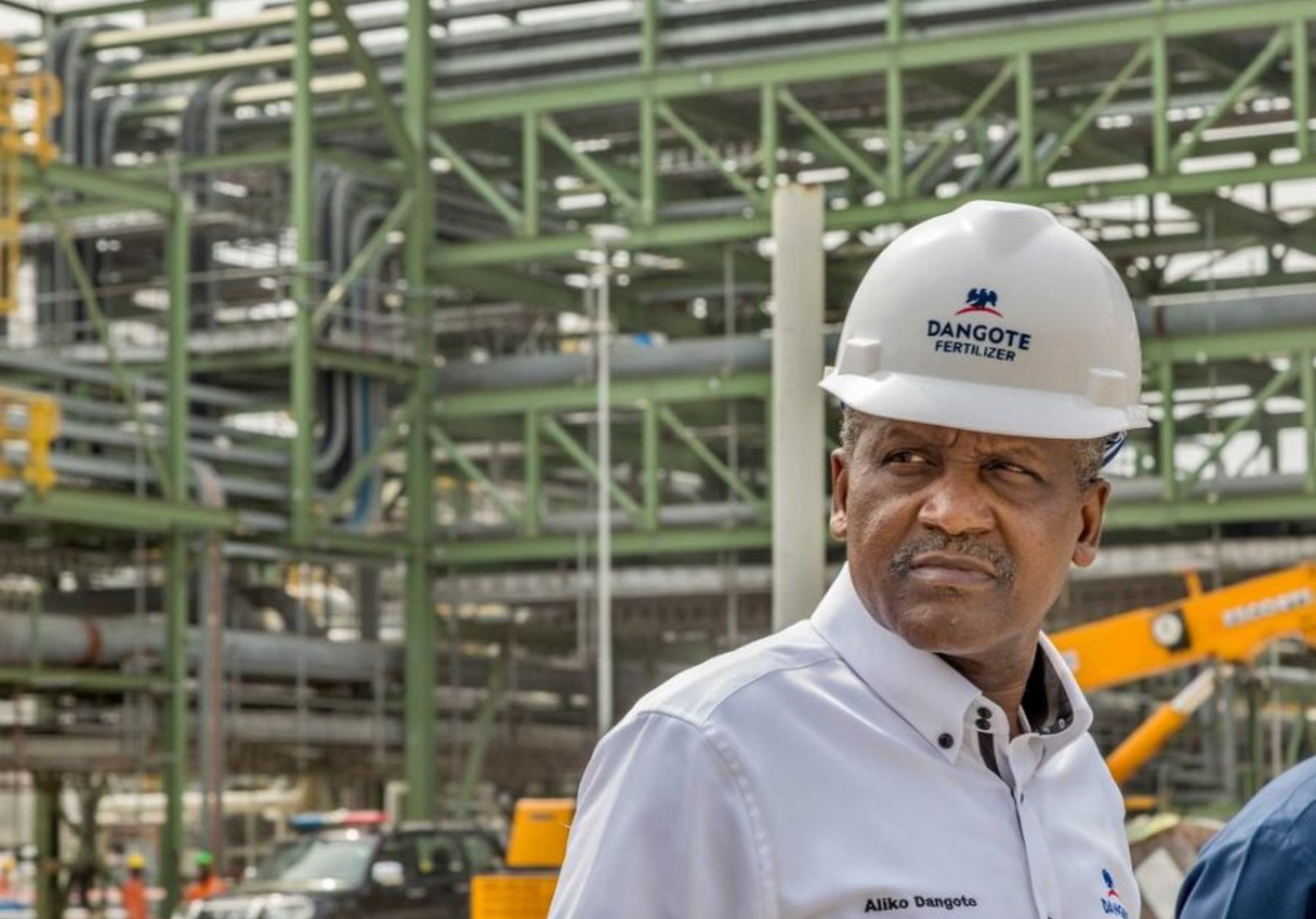
Africa’s economic renaissance is increasingly being written in concrete, steel, and industrial ambition. At the centre of this transformation stands Nigerian industrialist Aliko Dangote, whose latest milestone, the full-scale operation of Dangote Fertiliser, signals a decisive shift in Africa’s journey towards industrial self-reliance.
Located within the Lekki Free Trade Zone in Lagos, the $2.5 billion Dangote Fertiliser complex is one of the largest fertiliser plants in the world. Spanning 500 hectares, the facility has the capacity to produce up to three million metric tonnes of urea fertiliser annually. For Nigeria, and the African continent more broadly, this marks a turning point in agricultural productivity, food security, and industrial confidence.
Dangote Fertiliser and Africa’s Agricultural Transformation
For decades, Africa has relied heavily on imported fertiliser, exposing farmers to volatile global prices and chronic supply shortages. With Dangote Fertiliser now operational, Nigeria is positioned to close its domestic fertiliser gap while supplying regional markets across West, Central, and Southern Africa. The impact is expected to be transformative, particularly for smallholder farmers who form the backbone of African agriculture.
Speaking at the commissioning of the plant, Dangote emphasised that Dangote Fertiliser is not merely a manufacturing project, but a strategic intervention. “We are dismantling dependency,” he said. “When Africa can feed itself and export surplus, we fundamentally change our economic position in the world.” This vision aligns with broader continental goals under the African Continental Free Trade Area (AfCFTA), which seeks to boost intra-African trade and industrial value chains.
DON’T MISS THIS: Dangote Oil Refinery Now Supplying Petroleum Products to Local Market
Economists note that Africa consumes close to 30 million tonnes of fertiliser each year but produces less than a quarter of that amount locally. According to agricultural analysts, the output from Dangote Fertiliser alone could significantly improve fertiliser access, leading to yield increases of between 50 and 60 per cent for key staple crops such as maize, rice, and wheat. These gains have far-reaching implications for food affordability, rural incomes, and national food reserves.
The timing of the plant’s launch is particularly significant. Global supply chain disruptions, geopolitical tensions, and rising energy costs have pushed fertiliser prices to historic highs in recent years. By producing fertiliser domestically at scale, Dangote Fertiliser helps insulate African economies from international shocks while stabilising input costs for farmers.
Beyond agriculture, the project’s wider economic footprint is substantial. Thousands of direct and indirect jobs have been created, alongside opportunities for skills transfer, local procurement, and downstream industries such as logistics, packaging, and agro-processing. Engineers, technicians, and young professionals are gaining exposure to world-class industrial systems, strengthening Africa’s long-term manufacturing capacity.
Importantly, Dangote Fertiliser forms part of Dangote Group’s broader integrated industrial strategy, which has already reshaped Nigeria’s cement and sugar sectors and is set to redefine energy markets through the Dangote Refinery. This vertically integrated approach, from raw materials to finished products, offers a scalable blueprint for African industrialisation driven by African capital.
As the lights glow across the Lekki skyline, the Dangote Fertiliser plant stands as more than an industrial facility. It is a symbol of Africa’s growing determination to control its productive assets, feed its population, and compete confidently in global markets. The message is clear: Africa is no longer content to import its future; it is building it.