


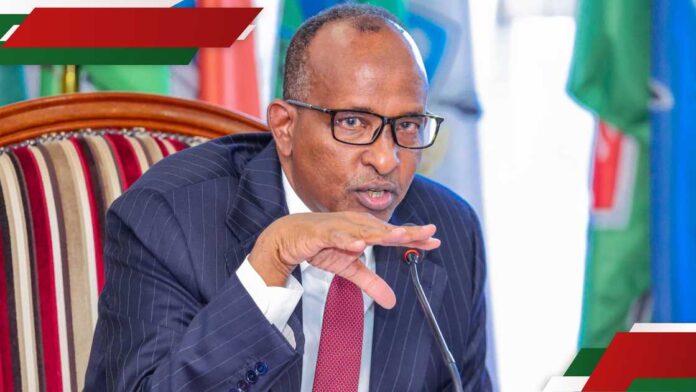
Nairobi, 12 November 2026. Kenya has discharged its last Ebola patient, starting a 42-day countdown to being declared Ebola-free. Health Minister Aden Duale says the period ends on 23 December if no new infections appear. The milestone is welcome news for a region watching a serious outbreak.
Kenya recorded nine cases in October. The first patient travelled from the Democratic Republic of Congo through Uganda. He infected four family members and four health workers. The first patient and his mother died, while the other seven recovered.
The case count is small compared with the situation in neighbouring countries. Nevertheless, health workers were among those infected, which shows how quickly the virus can spread inside care settings.
Officials identified 135 contacts of the first patient. Every confirmed case was linked to that list. As a result, there is no sign of spread in the community. This is the strongest evidence that contact tracing worked.
The 42-day period is twice the longest Ebola incubation period. The country can only be declared Ebola-free if it records no new infections across that whole window. The countdown began on 11 November, so the earliest end date is 23 December.
Kenya has changed how it handles arrivals. It now directs passengers from 10 countries with Ebola cases, or with neighbouring active outbreaks, through a single airport gate. Passengers face thermal screening and must complete health declaration forms.
The outbreak has had other effects. Saudi Arabia suspended visas for Kenyans indefinitely on 30 October, which affects workers headed to the Gulf. Kenya’s foreign ministry has urged Riyadh to reconsider. Therefore, the end of the countdown matters for jobs and travel, as well as for public health.
The outbreak remains severe elsewhere. In DR Congo, the epicentre, the government says 11,042 people have been infected and 5,387 have died. The strain is Bundibugyo, which OkayAfrica’s summary of the AP report describes as one of the worst on record. The outbreak has also spread to Uganda and Nigeria.
Against that background, Kenya’s result stands out. Quick isolation, careful contact tracing and screening at the border all played a part, according to the figures reported.
The next six weeks are decisive. Any new case would reset the clock. Travellers should also watch for changes to airport rules and for Saudi Arabia’s decision on visas.
When could Kenya be declared Ebola-free? On 23 December, if no new infection appears during the 42-day period that began on 11 November.
How many people were infected in Kenya? Nine, all in October. Two people died and seven recovered.
How did the outbreak reach Kenya? The first patient travelled from DR Congo through Uganda, according to the AP report.
Which strain is involved? The Bundibugyo strain, which the report calls one of the worst on record.
Is there community spread in Kenya? Officials say no. Every confirmed case traced back to the 135 contacts of the first patient.
An Ebola-free declaration would support Kenya’s case with Saudi Arabia on visas. It would also ease pressure on airlines, workers and exporters who face extra checks. Moreover, it would show neighbours that early detection works when contacts are traced quickly.
Kenya’s response gives the region a practical model for containing Ebola. The final test is whether the next 42 days pass without a new case. Fence Africa 24 will report on 23 December.