
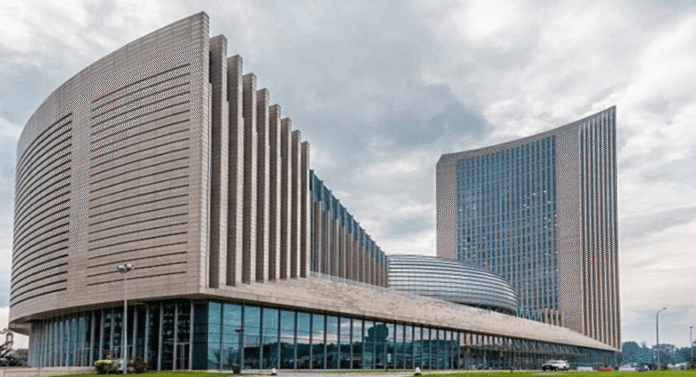
In a quiet conference room at the African Union (AU) headquarters in Addis Ababa last month, South Africa made a promise.
The AU Gender Directorate had just finished a report presented by Prudence Ngwenya, Director of the AU Women, Gender and Youth Directorate (WGYD), after her team had visited 11 countries urging governments to sign a new binding treaty: the AU Convention on Ending Violence Against Women and Girls (CEVAWG).
It is Africa’s first treaty that makes ending violence against women a legal obligation, not a political favour. It requires funded shelters, criminal law reform and a national budget line.
No country was asked to speak. Then South Africa asked for the floor.
According to participants in the room, South Africa’s Chief Director for Women’s Rights from the Department of Women, Youth and Persons with Disabilities (DWYPD) told the committee that South Africa was “almost there.” Only minor issues remained before signature.
In diplomatic language, that is not small talk. It means the lawyers have cleared it, Cabinet has approved it and the President has signed the authorisation.
It sounded like progress. In Addis, it was recorded as progress. In Pretoria, however, the file was empty.
No file. No memo. No Minute.
In South Africa, you cannot sign an international treaty because an official says so at a meeting. You sign it because the Constitution says you can.
Section 231 of the Constitution is clear, and it was written for exactly this reason to stop officials making international promises without domestic authority.
It requires three things, in order:
First, the treaty must be scrutinised by the Chief State Law Adviser (CSLA) in the Department of Justice and Constitutional Development (DOJ&CD) and by the Department of International Relations and Cooperation’s (DIRCO) International Law Division. They must certify that it does not conflict with the Bill of Rights.
Second, Cabinet must approve a memorandum. Then the President must sign a formal Minute authorising someone to sign for the country. That Minute is countersigned by the Minister. Without it, no official has the power to commit South Africa.
Third, the CSLA issues Full Powers, a legal passport, and DIRCO deposits the signed instrument with the AU.
Civil society has spent weeks trying to trace this file. There is no public record of a State Law Adviser opinion on CEVAWG. There is no Cabinet memo with a decision number. There is no President’s Minute. There is no Full Powers certificate. The AU Treaty Office in Addis Ababa still lists South Africa as a non-signatory. DIRCO’s treaty database shows no deposit.
If the legal process has been completed, it has been completed in secret, which itself violates constitutional requirements for openness and public participation.
The meeting that DWYPD missed
If South Africa were almost there, you would expect the department leading the process to be at every consultation. It was not.
In February this year, the Department of Justice, not the Department of Women called an interdepartmental consultation to start legal scrutiny of CEVAWG. It invited all relevant departments, including DWYPD, as well as the Commission for Gender Equality (CGE) and the South African Human Rights Commission (SAHRC).
According to attendees, DWYPD did not attend. It did not submit written comments, despite being invited and despite being the line department for women’s rights.
It is the only department that could have said “we are almost there,” and the only department that chose not to show up when the actual legal work began.
Eight months, blue ticks and silence
Since August 2024, a coalition of women’s rights organisations has written repeatedly to the Department – letters addressed to the Director-General, copying the Chief Director, asking for a simple thing: what is the roadmap for ratification?
The letters were acknowledged. Then nothing. Follow-ups were, in the words of one activist, “blue-ticked.”
The irony is sharp. When the AU adopted CEVAWG in February 2024, DWYPD issued a celebratory media statement. It welcomed the treaty and said South Africa would work towards ratification.
Since then, silence. Until Addis.
A verbal promise matters. It is easy to dismiss it as diplomatic boasting. It is not.
When South Africa tells the AU it is almost there, three things happen.
One, the AU marks South Africa as “in progress.” Its advocacy team – which visited 11 countries with limited funding – moves on. Resources go elsewhere. A country that needs pressure gets a pass.
Two, Parliament goes to sleep. The Portfolio Committee on Women, Youth and Persons with Disabilities does not call the Minister to account if it believes the treaty is being handled.
Three, South African women lose. CEVAWG is not symbolic. If ratified, it would force the state to do things it currently does optionally: fund a shelter in every district, standardise police risk assessments for domestic violence, and publish how much it actually spends on gender-based violence (GBV).
Every month without a roadmap is a month those obligations remain optional.
This is a pattern, not an incident. Veteran governance watchers call it “international performativity.”
South Africa is eloquent in Geneva, in New York, in Addis Ababa. In 2025, it presided over the G20 with a strong women’s empowerment agenda. At home, the department responsible for that agenda has no published implementation plan for the AU’s flagship women’s treaty and no dedicated budget line for it.
Non-response has become a governance strategy. You do not refuse a Promotion of Access to Information Act (PAIA) request – you simply never answer the email.
What civil society asked
Civil society has been proactive. The organisations sent detailed questions to the Director-General of DWYPD asking for the Section 231 compliance matrix, an explanation for non-attendance at the February DOJ&CD consultation, who authorised the Addis Ababa statement, what the “minor things” are, whether any documents have been submitted to the AU, why letters since August 2024 have gone unanswered, and what the funded implementation plan is.
This investigation is not calling for a resignation. It is calling for a file.
If South Africa is almost there, proving it takes ten minutes. Publish the President’s Minute. Publish the State Law Adviser opinion. Publish the Cabinet decision number.
If those documents do not exist, then the honourable thing is to correct the record at the AU.
DWYPD responds
Fence Africa 24 engaged DWYPD on the legal standing of CEVAWG and the Addis Ababa statement.
In its response, DWYPD confirmed that the Convention has undergone legal scrutiny by the State Law Advisers in both DOJ&CD and DIRCO. Regarding the signing process, the Department stated that the Chief State Law Adviser has agreed that South Africa sign the Convention but not ratify it at this stage.
DWYPD clarified that the Cabinet memo is for the ratification process. As South Africa’s custodian for AU-CEVAWG, the Department said it initiated the process after receiving the certified copy from the AU Commission (AUC) in May 2025.
According to DWYPD, the Convention was taken for certification through DIRCO’s Office of the Chief State Law Adviser (OCSLA), certified copies were submitted to the Presidency on 1 April 2026, and a Presidential Minute was obtained on 18 May 2026.
On next steps, DWYPD said South Africa is ready to sign, with consultations underway with DIRCO and the Presidency regarding a possible signing date during the AU Heads of State and Government Summit scheduled for January/February 2027.
The Department emphasised that, according to the legal opinion received, the ratification process will only commence once signing is concluded. This will include both domestic and international legal scrutiny, public participation through consultations, Cabinet approval and parliamentary processes.
What the response does not say
However, the response does not disclose the substance of the legal opinions, particularly on consistency with international law.
The advice to “sign but not ratify at this stage” indicates a conditional clearance, which in South African treaty practice means reservations were noted. Those reservations have not been made public.
This is critical because independent legal analysis raises three categories of risk that directly speak to DIRCO and DOJ&CD’s mandate:
First, normative risks: analysts found the Convention regresses from the Maputo Protocol and African Commission standards on equality and non-discrimination, reads more like a national policy than a treaty with enforceable duties, uses soft programmatic language instead of binding state obligations, and is not located within the due diligence framework of state obligations to prevent, protect, prosecute, punish and provide remedies.
Second, substantive risks: it omits explicit references to female genital mutilation (FGM), child marriage and marital rape; fails to cover informal work and precarious labour contexts, thereby missing International Labour Organization Convention 190 (ILO C190) standards which South Africa has ratified; mentions cyberspace violence but fails to adequately address technology-facilitated GBV; and provides no guarantees of free, survivor-centred medical, psychosocial and legal aid. Language concerning “family” and “African values” has also been flagged as requiring legal clarity.
Third, structural risks: it has no effective oversight or reporting mechanism via the African Commission and lacks data systems and monitoring frameworks.
Following its initial response, Fence Africa 24 sent further questions on the substance of the DIRCO and DOJ&CD opinions, their assessment of consistency with the Convention on the Elimination of All Forms of Discrimination against Women (CEDAW), the Maputo Protocol, the Southern African Development Community (SADC) Model Law and ILO C190, and the status of the Cabinet memo.
DWYPD responded that it is not in a position to provide a peer review of legal opinions from DIRCO and DOJ&CD and advised that those questions be directed to those departments.
On the Cabinet memo, DWYPD clarified that the memo has not yet been issued, as the ratification process is still underway, and it will only be in a better position to facilitate the memo once that process is completed.
Civil society engagement in question
Questions remain around civil society engagement. Records show that Pause for Purpose formally engaged DWYPD on the Convention but did not receive a response. It remains unclear whether DWYPD ever convened civil society organisations for meaningful consultation, despite its public claim that the Convention was fully informed by the voices of African citizens. This is concerning given independent findings that 93% of organisations surveyed said they were not consulted during drafting.
Furthermore, DWYPD has not explained why it did not participate in the DOJ&CD meeting held on 13 February, which was specifically called to discuss concerns about the Convention.
These matters go to the heart of DIRCO’s treaty-making procedure, which requires public participation before Cabinet approval, and not after signing, as DWYPD suggests will happen in January/February 2027.
The women this Convention was written for do not live in conference halls. They live in Diepsloot, in Lusikisiki, in Manenberg, in villages where the nearest shelter is 200km away. They have been waiting since August 2024. They are still waiting.
Because you cannot end violence against women with a speech in Addis Ababa while refusing to answer an email in Pretoria.