


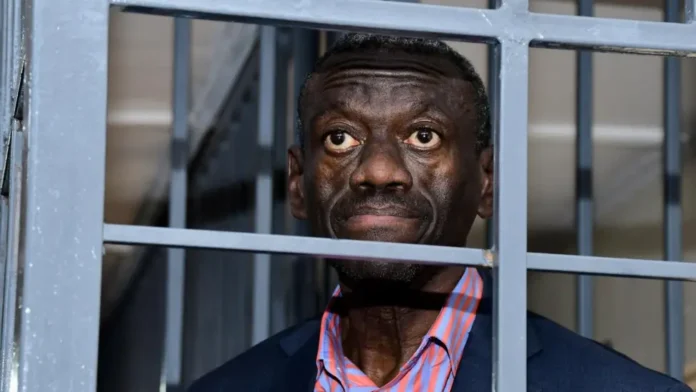
Veteran Ugandan opposition leader Dr Kizza Besigye collapsed during a court appearance in Kampala this week, raising fresh concerns about his health as his treason trial continues.
Court officials suspended proceedings after Besigye became unwell. Medical personnel attended to him before he left the courtroom for treatment.
Besigye has remained in detention since November 2025 after authorities arrested him in neighbouring Kenya and returned him to Uganda. Prosecutors later charged him with treason, one of the country’s most serious criminal offences.
His lawyers and supporters have repeatedly questioned the conditions of his detention and called for his release on medical grounds. Ugandan authorities maintain that the legal process is proceeding in accordance with the country’s laws.
Besigye has spent more than two decades at the centre of Uganda’s opposition politics. A former military doctor, he once served alongside President Yoweri Museveni during the bush war that brought the current government to power in 1986. The relationship later broke down after Besigye publicly criticised the direction of the government and entered opposition politics.
Since then, he has challenged Museveni in four presidential elections and has become one of Uganda’s most recognisable opposition figures.
His political career has also been marked by repeated arrests, court appearances and periods of detention linked to protests and election-related disputes.
Ugandan prosecutors accuse Besigye of offences related to national security. Treason is among the most serious crimes under Ugandan law and carries severe penalties upon conviction.
The government argues that the case should proceed through the courts and has urged the public to allow the judicial process to take its course.
Besigye’s legal team disputes the charges. His lawyers argue that the prosecution is politically motivated and have challenged both his arrest and continued detention.
The court has not reached any findings on the allegations, and Besigye remains presumed innocent unless proven guilty. Besigye’s collapse has renewed debate over the health and welfare of detainees awaiting trial.
His supporters say he has experienced periods of ill health while in custody and argue that continued detention places him at unnecessary risk.
Government officials have not publicly indicated that his medical condition will affect the progress of the trial. Court proceedings are expected to resume once he is medically fit to appear.
The incident has nevertheless drawn attention from regional human rights organisations, which continue to monitor the case.
The court proceedings come at a time of heightened political activity in Uganda. The country is preparing for another electoral cycle, while opposition parties continue to raise concerns about political freedoms, freedom of assembly and the treatment of government critics.
The Ugandan government rejects accusations that it suppresses political opposition. It says law enforcement agencies act within the law and that all citizens remain subject to the same legal process.
International observers continue to monitor developments closely because Uganda plays an influential role in regional security, peacekeeping and diplomacy across East Africa.
Besigye’s trial extends beyond the fate of one opposition leader. The proceedings have become part of a wider discussion about judicial independence, political competition and constitutional governance in Uganda.
Legal experts note that high-profile political cases often shape public confidence in the justice system. They also influence how investors, development partners and regional organisations assess governance and the rule of law. The outcome of the case could therefore have implications beyond Uganda’s domestic politics.
Uganda has experienced periods of intense political competition throughout the Museveni era. Opposition leaders have frequently challenged the government through elections, court proceedings and public campaigns.
Besigye’s latest court appearance illustrates how legal institutions have become one of the principal arenas for resolving political disputes.
While the court will determine the criminal case before it, the wider debate over political freedoms, due process and democratic governance is likely to continue well beyond the conclusion of the trial.