


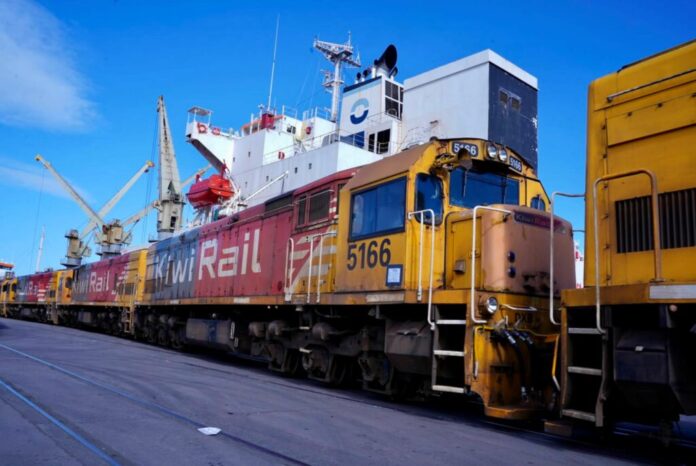
South African rail company Traxtion is investing R3.4 billion in locomotives and wagons as freight reforms gather momentum across Southern and Central Africa, driven by rising demand to move critical minerals more efficiently from mines to global markets.
South Africa’s push to open its freight rail network to private operators is attracting significant investment, with Traxtion committing about R3.4 billion ($210 million) to expand its fleet as rail reforms accelerate across the region.
The privately owned rail company plans to acquire 46 locomotives and 920 wagons, positioning itself for growing demand across mineral-rich economies including South Africa, Zambia, Zimbabwe, Angola, Mozambique and the Democratic Republic of Congo.
Investment comes as governments across Southern and Central Africa reconsider how their railway systems are financed and operated. Ageing infrastructure, limited rolling stock and years of underinvestment have constrained the movement of minerals and other bulk commodities, increasing reliance on expensive road transport.
South Africa has responded by opening parts of its state-owned freight network to private train operators. The reforms are intended to increase rail volumes, improve competition and ease logistical bottlenecks that have affected miners, manufacturers and agricultural exporters.
Traxtion chief executive James Holley said greater regional integration could unlock significant opportunities, although regulatory differences between countries remain a challenge.
African mining drives demand for better railways. Growing international demand for copper, lithium and other critical minerals is placing renewed attention on Africa’s transport infrastructure.
Zambia and the DRC sit at the centre of the continent’s copper and cobalt industries, while Zimbabwe has significant lithium and other mineral resources. South Africa remains one of Africa’s largest and most diversified mining economies.
Moving those commodities efficiently has become increasingly important as governments seek to attract investment into mining and mineral processing.
Railways offer an important alternative to road freight, particularly when transporting large quantities of bulk commodities over long distances. Weak rail capacity, however, has forced some producers to move minerals by truck, adding costs and congestion to regional transport corridors. Traxtion’s expansion reflects expectations that reforms could gradually shift more freight back onto rail.
Several major projects are also reshaping the region’s transport map. Angola’s Lobito Corridor has emerged as one of Africa’s most strategically important infrastructure projects, providing a potential Atlantic export route for copper and other minerals produced in Zambia and the DRC.
Running from Angola’s Lobito port towards the mineral-producing regions of Central Africa, the corridor has attracted international investment as competition intensifies over access to critical-mineral supply chains.
Its development could reduce dependence on longer routes towards ports on Africa’s eastern and southern coastlines while giving landlocked producers additional access to international markets.
Meanwhile, Tanzania and Zambia are moving ahead with plans to revitalise the Tanzania-Zambia Railway Authority network, commonly known as TAZARA.
China has backed a roughly $1.4 billion programme to rehabilitate the historic railway, which connects Zambia’s Copperbelt to the Tanzanian port of Dar es Salaam.
Zimbabwe is also seeking to modernise its ageing railway network. A proposed $533 million programme involving China Railway International Group is expected to rehabilitate infrastructure and improve freight capacity.
Together, these investments suggest that railway development is becoming increasingly interconnected with Africa’s wider industrial and mineral strategy.
South Africa’s freight rail reforms could have particularly significant regional consequences.
State-owned Transnet has historically dominated freight rail operations in the country. Still, operational problems have contributed to declining rail volumes and disrupted exports from some of South Africa’s largest mining operations.
Government reforms are allowing private operators greater access to the national network while Transnet retains ownership of the underlying infrastructure.
Greater private participation could bring additional locomotives, wagons, capital and operational expertise into a system requiring substantial investment.
Traxtion is positioning itself to benefit from that transition. Its planned fleet expansion would increase the number of locomotives and wagons available not only within South Africa but potentially across interconnected regional corridors. Yet creating a seamless cross-border railway market will require more than rolling stock.
Different regulations, track-access arrangements, customs systems and operating standards continue to complicate cross-border freight. Greater coordination between governments and railway authorities will be necessary if trains are to move more efficiently between national networks.
Rail infrastructure becomes critical to Africa’s mineral ambitions. Africa holds significant reserves of minerals needed for electric vehicles, renewable energy infrastructure, battery storage and advanced manufacturing.
Global competition for those resources has increased investment interest across the continent, particularly in copper, cobalt, lithium, manganese and other critical minerals.
Infrastructure remains one of the biggest constraints. Building mines without improving the railways, roads, ports and power systems surrounding them risks limiting the economic potential of Africa’s mineral resources.
Better rail connectivity could also support governments seeking to move beyond exporting unprocessed commodities. Mineral-processing facilities and industrial zones require reliable logistics to transport raw materials, intermediate products and finished goods between countries and ports.
Regional railway corridors could therefore become part of a wider African industrial network rather than serving solely as routes carrying minerals towards overseas markets.
Traxtion’s R3.4 billion investment offers an early indication that private capital is beginning to respond to that opportunity.
Success will depend on whether governments can maintain regulatory reform, rehabilitate ageing infrastructure and make cross-border railway operations commercially viable.
If those changes continue, the emerging network linking South Africa, Zimbabwe, Zambia, Angola, Mozambique and the DRC could help redraw the logistics map of Southern and Central Africa, placing railways once again at the centre of the continent’s trade and industrial ambitions.