


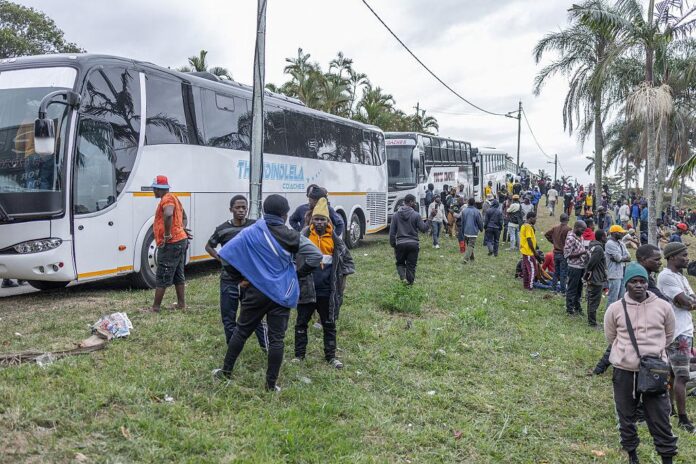
More than 178,000 migrants have left South Africa in recent months as authorities increase immigration enforcement and anti-immigrant tensions unsettle foreign communities.
The departures include people deported by South African authorities and thousands who chose to return to their home countries. Zimbabweans, Mozambicans and Malawians are among the nationalities most affected by the changing migration environment.
The movement highlights a difficult challenge facing South Africa. The government is under growing pressure to enforce immigration laws while protecting foreign nationals from discrimination, intimidation and violence.
South Africa has long attracted migrants from across the continent. Its relatively large economy draws people seeking jobs, education, business opportunities and greater economic security.
Many migrants come from neighbouring Zimbabwe, Mozambique, Malawi and Lesotho. Others have travelled from Nigeria, Ghana, Ethiopia, Somalia, the Democratic Republic of the Congo and elsewhere across Africa.
Migration has become one of South Africa’s most divisive social and political issues.
Some communities argue that undocumented migration places additional pressure on employment, housing, healthcare and public services. Anti-immigration movements have used these concerns to demand stronger border controls and tougher enforcement.
Migrant organisations and human rights groups reject attempts to blame foreign nationals for South Africa’s wider economic problems. They point instead to structural challenges such as unemployment, inequality, crime and weaknesses in public services.
South Africa’s unemployment rate remains among the highest in the world. Competition over jobs becomes particularly intense in poorer communities, where South Africans and migrants often depend on informal work.
Economic frustration can quickly deepen tensions between communities.
Anti-immigrant demonstrations have increased in some areas. Activists have targeted migrant-owned businesses and confronted foreign nationals over their immigration status.
Some groups have also campaigned outside hospitals and clinics, demanding restrictions on access by undocumented migrants. The actions have intensified concerns about intimidation and discrimination.
President Cyril Ramaphosa has acknowledged public concerns surrounding undocumented migration. He has also condemned xenophobia and warned citizens against taking immigration enforcement into their own hands.
The government maintains that immigration enforcement remains the responsibility of state institutions.
Official figures show a sharp increase in deportations.
South Africa’s Department of Home Affairs recorded 59,814 deportations during the 2025/26 financial year. The previous financial year recorded 51,650.
Zimbabweans accounted for 19,638 deportations in 2025/26. Authorities also deported 16,482 Mozambicans and 14,829 Malawians during the same period.
These numbers demonstrate how deeply South Africa’s migration challenges affect neighbouring countries.
Large numbers of returning citizens can place pressure on governments across the region. Authorities may need to arrange transport, temporary accommodation and reception services, sometimes at short notice.
The consequences are more personal to those making the journey home.
Many migrants have spent years building their lives in South Africa. Some have children in the country. Others support relatives back home using income earned through employment, informal trading or small businesses.
Leaving can mean giving up jobs, homes, businesses and established communities.
Several African governments have assisted citizens who wanted to return home during periods of heightened anti-migrant tension. Zimbabwe, Malawi, Mozambique, Ghana, Nigeria and Zambia have all taken steps to support returning nationals.
The movement also carries economic consequences across Southern Africa.
Remittances earned in South Africa support households throughout the region. Families depend on that income to pay school fees, buy food, access healthcare, build homes and finance small businesses.
A decline in migrant earnings can therefore affect communities far beyond South Africa’s borders.
South Africa also has a responsibility to manage its borders and enforce immigration laws.
The government argues that stronger enforcement can reduce undocumented migration and improve the integrity of the immigration system. The Department of Home Affairs is also pursuing wider reforms to immigration and asylum policies.
The challenge lies in distinguishing legitimate immigration enforcement from hostility directed at people because of their nationality.
That distinction carries particular significance in South Africa. The country has experienced repeated outbreaks of xenophobic violence since the end of apartheid. Attacks in 2008 killed dozens of people and displaced thousands. Further incidents followed in later years, damaging South Africa’s relationships with several African countries.
The government has repeatedly condemned xenophobia. Authorities maintain that all people living legally in the country deserve protection under South African law.
Yet migration remains closely connected to public frustration over unemployment, inequality, crime and access to services. Deportations alone are unlikely to resolve those underlying problems. South Africa’s economy remains deeply connected to neighbouring countries. People, goods, services and money cross its borders every day.
Zimbabweans have historically formed one of the country’s largest migrant communities. Mozambique, Malawi and Lesotho also share longstanding labour and migration links with South Africa.
Changes to South African immigration policy can therefore produce consequences across the region.
The current movement raises broader questions about how Southern Africa manages labour mobility, documentation and economic migration.
Regional governments also face pressure to create stronger economies at home. Better employment opportunities could reduce the need to migrate because of economic hardship.
The Southern African Development Community has promoted regional economic integration for decades. Growing migration tensions now test how that vision works when domestic pressures collide with cross-border movement. South Africa faces a difficult balance.
Authorities must enforce immigration laws and respond to legitimate concerns about undocumented migration. They must also prevent migrants from becoming targets of anger over unemployment, crime and failing public services. The debate becomes very different when viewed through the experiences of the people leaving.
Behind the figure of more than 178,000 are workers, parents, students, traders and business owners. Many arrived in South Africa searching for opportunities and greater economic security. Some are now returning home without knowing what comes next.
The scale of the departures shows that South Africa’s migration debate reaches well beyond its borders. Decisions made in Johannesburg, Pretoria and Cape Town can affect families and economies across Southern Africa.
Managing migration effectively will therefore require more than deportations and tighter borders. It will require functioning immigration systems, regional cooperation and policies that address the economic pressures driving migration in the first place.