


ACCRA, GHANA – Ghana is developing minimum wage and tender benchmarks for mining contractors as it pushes more lucrative work towards locally owned companies, adding worker protection to an ambitious effort to retain more of the value generated by Africa’s largest gold industry.
The Minerals Commission wants to prevent contractors from winning mining work through bids so low that wages, training, safety and job security suffer. The intervention addresses a growing concern as Ghana accelerates rules designed to shift more mining operations from international companies towards domestic businesses.
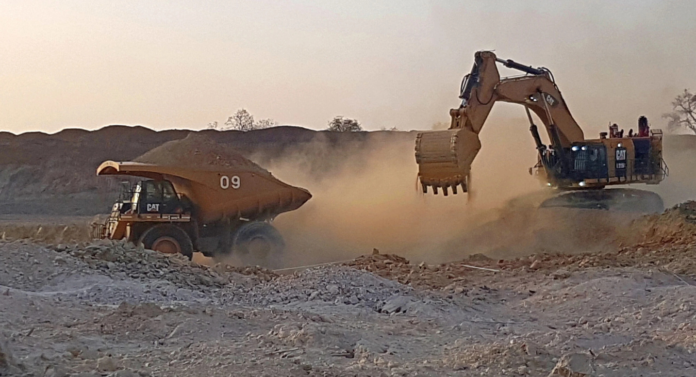
Ghana ordered mining companies in January 2025 to move surface operations such as blasting, loading, hauling and dumping to Ghanaian-owned contractors. Underground contract mining must shift to joint ventures with at least 50% Ghanaian ownership by the end of December 2026 or companies could face sanctions.
The policy represents a significant attempt to change who benefits from one of Ghana’s most valuable industries. Gold generates billions of dollars in exports, but the government wants more of the money spent throughout the mining supply chain to remain within the domestic economy.
Local ownership alone, however, does not guarantee that workers or communities will benefit.
Ghanaian mine workers have raised concerns that moving operations to contractors could leave employees earning less and facing weaker job security than they receive when directly employed by major mining companies.
That tension has forced regulators to confront an important weakness that can emerge in local-content policies. A contract may move from a foreign-controlled company to a Ghanaian business while the economic conditions experienced by workers deteriorate.
The Minerals Commission now wants minimum benchmarks to prevent that outcome.
Ben Birch-Mensah, the commission’s director of local content, says regulators are working on wage floors and minimum tender thresholds that would prevent companies from submitting commercially unrealistic bids simply to secure mining contracts.
Aggressive underbidding can create pressure throughout a contractor’s operations. When a company wins work at a price that leaves little room for sustainable operations, wages, training, equipment maintenance and safety can become areas where costs are reduced.
The Ghana Chamber of Mines has also acknowledged the danger. Although the industry body has opposed making contract mining compulsory, it supports measures that prevent unsustainably low bids from undermining training and worker safety.
The debate is becoming increasingly important as major mining companies approach Ghana’s December 2026 compliance deadline.
Companies including Newmont, Zijin and Ghana Manganese Company still need to align parts of their operations with the directive, increasing pressure on the domestic contracting sector to demonstrate that it can absorb more complex mining work.
Ghana already has a broader local-content framework designed to increase domestic participation throughout the industry. Mining companies must procure specified goods and services locally, while regulators want Ghanaian businesses to build the technical and financial capacity needed to compete with international suppliers.
The government has gone further this year by proposing reforms aimed at strengthening Ghanaian ownership across the mining value chain. Authorities argue that employment alone cannot represent the full measure of local participation when ownership, procurement and profits remain concentrated elsewhere.
That argument reflects a wider shift across resource-rich African economies.
Governments from DR Congo to Zambia are reassessing how much value their countries capture from minerals that have become increasingly important to global industry. Copper, cobalt, lithium, gold and other resources generate enormous international demand, yet African economies have historically captured a smaller share of the value created through processing, services, technology and manufacturing.
Ghana’s approach tackles the problem from another part of the mining economy.
Mining value does not exist only in the mineral extracted from the ground. Large operations spend heavily on drilling, blasting, transport, engineering, equipment, security, catering, financial services and other activities required to keep mines operating.
Domestic companies that capture more of those contracts can create jobs, develop technical expertise and build businesses capable of expanding into other African markets.
The opportunity is significant, but simply reserving contracts for Ghanaian businesses will not automatically produce competitive companies. Local contractors need access to finance, equipment, technology and skilled workers if they are expected to undertake operations previously handled by large mining groups or international specialists.
Tender floors could help by reducing the pressure to compete almost entirely on price. A procurement system that considers technical capability, worker welfare, safety and long-term sustainability could create stronger businesses than one that consistently rewards the cheapest bid.
The policy will still need careful implementation. Artificially high costs could make mining operations less competitive, while poorly designed local-content requirements could discourage investment or protect companies that cannot meet required technical standards.
Ghana therefore faces a balancing act between increasing domestic participation and maintaining an industry capable of competing for international capital.
Worker protection adds another dimension to that balance. Local ownership will carry limited economic meaning if companies win more contracts while mine workers experience falling wages, deteriorating conditions or greater insecurity.
The Minerals Commission’s proposed benchmarks suggest Ghana is beginning to recognise that distinction.
The wider lesson could resonate across Africa as governments demand greater participation in industries built around their natural resources. Resource nationalism is often measured through taxes, state ownership, export restrictions or requirements for local processing, but the supply chains surrounding mines can also retain billions of dollars within domestic economies.
Ghana is trying to move more of that economic activity into Ghanaian hands while ensuring that local participation does not become a race towards cheaper labour and weaker standards.
Success will ultimately depend on whether the reforms produce competitive Ghanaian mining companies, protect workers and retain more mining expenditure inside the country without undermining investment.
That is a more demanding objective than simply replacing foreign contractors with local ones, but it could also deliver considerably greater economic value.
Ghana’s mining reforms will therefore be judged not only by how many contracts move into Ghanaian ownership, but by whether those contracts build businesses, improve skills, protect workers and allow more of the wealth generated beneath Ghanaian soil to circulate through the Ghanaian economy.