


We often underplay history and its deep, lasting contribution to our current state of mind. Across Africa, a continent whose true scale is increasingly being recognised in conversations about how the world is represented, many men live under pressure to simply forget the past and move on. Yet we need to ask ourselves honestly: is that approach actually working?
I have discussed this in previous articles, but the issue bears repeating. Some might find it unusual that an immigrant’s son is offering a perspective on how African men should feel and behave. Let me begin by explaining why this matters so deeply to me.
My son is African, truly African. My wife and I chose to adopt, and we are blessed with two bright, beautiful children, aged three and six. My six-year-old son has a unique journey ahead of him. His parents do not look like him, a reality that will become increasingly apparent as he grows. He is also a boy growing into a young man in a world where boys are facing significant and often overlooked disadvantages.
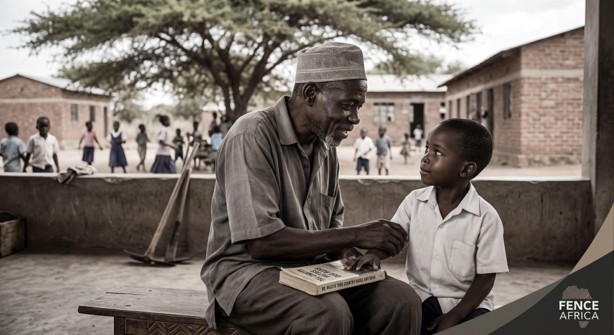
Consider the work of my friend Dr Mzamo Masito, author of This Country Hates Our Boys. He examines the challenges facing young males, including educational outcomes, school dropout rates and the growing gender imbalance within higher education. These trends should force us to examine whether institutions are paying enough attention to the particular challenges confronting boys.
Exposing the Institutional Blind Spot
If these problems were isolated to one country, we might blame local policy or failures in service delivery. But similar concerns about boys’ educational outcomes are being raised internationally, making this a much wider conversation.
Look closely at where academic funding, research grants and policy agendas are directed. Significant resources have rightly been committed to gender mainstreaming, examining the “glass ceiling” and advancing girls in STEM. That work has value, but it should not prevent society from asking equally serious questions about boys.
Where is the equivalent urgency around boys leaving school? Where is the sustained research into the developmental consequences of fatherlessness? Why does society mobilise when girls fall behind in particular areas while sometimes appearing to accept poor literacy and educational outcomes among boys as inevitable?
Institutions also risk becoming trapped within overly simplistic frameworks. Blanket statements about men and violence may describe particular statistical realities, but without sufficient context they can also contribute to a culture in which boys feel viewed primarily through the lens of risk.
Healthy male traits such as physical drive, competitiveness, risk-taking and high energy should not automatically be treated as behavioural problems. Boys need environments capable of directing those characteristics constructively rather than making them feel there is something inherently wrong with being male.
The Family Court Barrier and Fatherlessness
We cannot discuss this crisis without addressing Africa’s long-standing struggle with fatherlessness. Historical migrant labour systems played a major role in fracturing families across parts of the continent, but modern institutions must also examine whether they are doing enough to protect meaningful relationships between fathers and their children.
Family courts should recognise fathers as parents whose contribution extends far beyond financial maintenance. Where circumstances allow and the welfare of the child is protected, meaningful paternal involvement should be encouraged rather than reducing fatherhood to a monthly payment.
A system that views paternal involvement primarily through finances risks reinforcing the idea that children need a father’s money more than his presence. Children also need time, engagement, discipline, affection and guidance.
The Silent Crisis of Male Mental Health
When boys grow up feeling alienated, misunderstood or disconnected from positive male figures, the psychological consequences can be profound.
Boys who believe they must suppress their struggles because their feelings are unwelcome can learn to internalise pain rather than communicate it. Across Africa and elsewhere, concerns surrounding male suicide, addiction, harmful risk-taking and emotional isolation demand greater attention.
We cannot build resilient communities while ignoring the psychological wellbeing of boys and young men. Psychological safety begins by giving boys permission to exist, develop, express difficulty and receive support without judgment.
How We Begin to Fix It
Men are often driven to solve problems and build solutions. Restoring balance requires action, beginning with fathers taking an active and consistent role in their children’s lives. Being present means participating in schooling, sport, extracurricular activities and the ordinary routines through which relationships are built. Fatherhood cannot be outsourced.
We also need more positive male educators. Men remain underrepresented in many areas of primary education, yet boys benefit from seeing men teaching, guiding and leading within learning environments. We need men who are proud to teach from early childhood development through secondary education and into university.
Technical education must also regain its place within African education systems. Practical and vocational pathways should not be treated as inferior alternatives to academic achievement. Building, carpentry, plumbing, electrical work, engineering and electronics are skilled professions capable of creating livelihoods, businesses and national infrastructure.
Countries such as the UK and Australia demonstrate the economic value skilled trades can command. Africa must shed the historical baggage that sometimes associates manual skill with servitude and instead recognise technical expertise as an essential part of economic development.
Community mentorship is equally important. Men should look back at where they started and reach towards the generation coming behind them. Supporting even one boy outside your immediate family, through reading, mathematics, trade skills, entrepreneurship or simple guidance, can alter the direction of a young life. Mentorship remains one of the most powerful tools available to reshape the future.
Reclaiming Africa’s Future
Can we, on this vast and vital continent, change the trajectory? Yes, but only if we stop trying to become something we are not. We are African, and we should embrace that heritage with confidence while training African engineers, financial leaders, builders, educators and entrepreneurs.
Celebrating our achievements also gives young Africans examples of what is possible. Boys, in particular, need to see versions of manhood built around responsibility, competence, service, resilience and purpose rather than violence, domination or empty displays of strength.
Without violence, posturing or coercion, we can raise men who are strong, resilient, accountable and effective. We can reject destructive examples while creating healthier ones for the generations that follow.
Africa’s future will depend partly on what we build, but also on the people we raise to build it.
We are better. We are African.