


Nigeria’s downstream petroleum sector closed 2025 on a much stronger footing, with higher domestic fuel supply, improved stock levels and growing refinery output reducing the country’s reliance on imports.
According to the latest fact sheet from the Nigerian Midstream and Downstream Petroleum Regulatory Authority (NMDPRA), petrol supply increased to 74.2 million litres per day in December, up from 71.5 million litres in November, while daily consumption averaged 63.7 million litres. Diesel supply stood at 17.9 million litres per day, with demand at 16.4 million litres, while cooking gas supply comfortably exceeded consumption, pointing to a healthier and more balanced market.
The authority said national fuel stock sufficiency improved sharply, with petrol reserves rising from 16.6 days in November to 29.2 days in December. Diesel stock averaged 25 days, aviation fuel 20 days and LPG eight days, helped by stronger local production and better supply coordination across the sector.
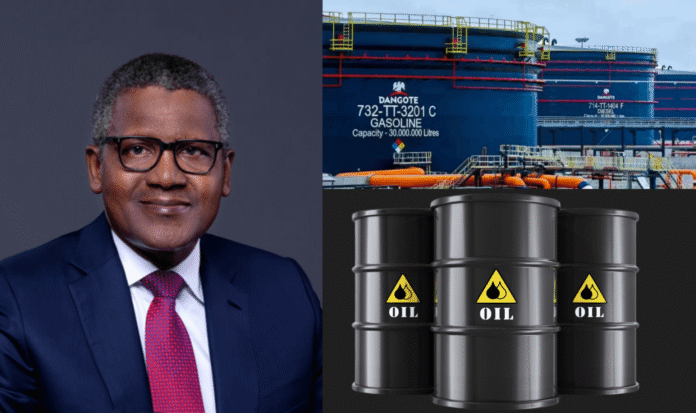
Dangote Refinery is a major player in Nigeria’s downstream petroleum industry
“The days-of-stock sufficiency increased by 77% between November and December due to improved supply performance by Dangote Refinery, NNPC and oil marketing companies,” the regulator said.
The Dangote Refinery continued to play a central role in stabilising supply, operating at an average capacity utilisation of 62.9% and delivering about 32 million litres of petrol per day to the market, alongside nearly six million litres of diesel daily. While state-owned refineries in Port Harcourt, Warri and Kaduna remained shut, modular refineries helped bridge the gap, led by Edo Refinery at 85% utilisation.
DON’T MISS THIS: Dangote Refinery Announces New Reductions in Price of Diesel & Aviation Fuel
Nigeria’s natural gas sector also showed resilience, with domestic supply averaging 4.8 billion standard cubic feet per day. Gas continued to support power generation, industries and exports, including liquefied natural gas and pipeline shipments through the West African Gas Pipeline.
Dangote continues to Nigeria’s Downstream Petroleum
Fuel prices remained relatively stable despite global volatility. Petrol pump prices in December averaged between ₦832 and ₦900 per litre, with Lagos at ₦861, Abuja at ₦893 and Kano at ₦952, reflecting regional transport and logistics costs.
Analysts say the data points to a turning point for Nigeria’s downstream petroleum sector, with domestic refining and gas production now beginning to reshape the country’s fuel supply chain.
“Higher refinery utilisation, rising stock levels and reduced imports show that Nigeria is finally moving toward energy security,” one energy analyst said. “The challenge now is to keep refineries running reliably and complete the restart of state-owned plants.”
The NMDPRA said the improvements position Nigeria for a more stable and competitive downstream market in 2026, with stronger supply security, better pricing stability and growing confidence among investors and consumers.