
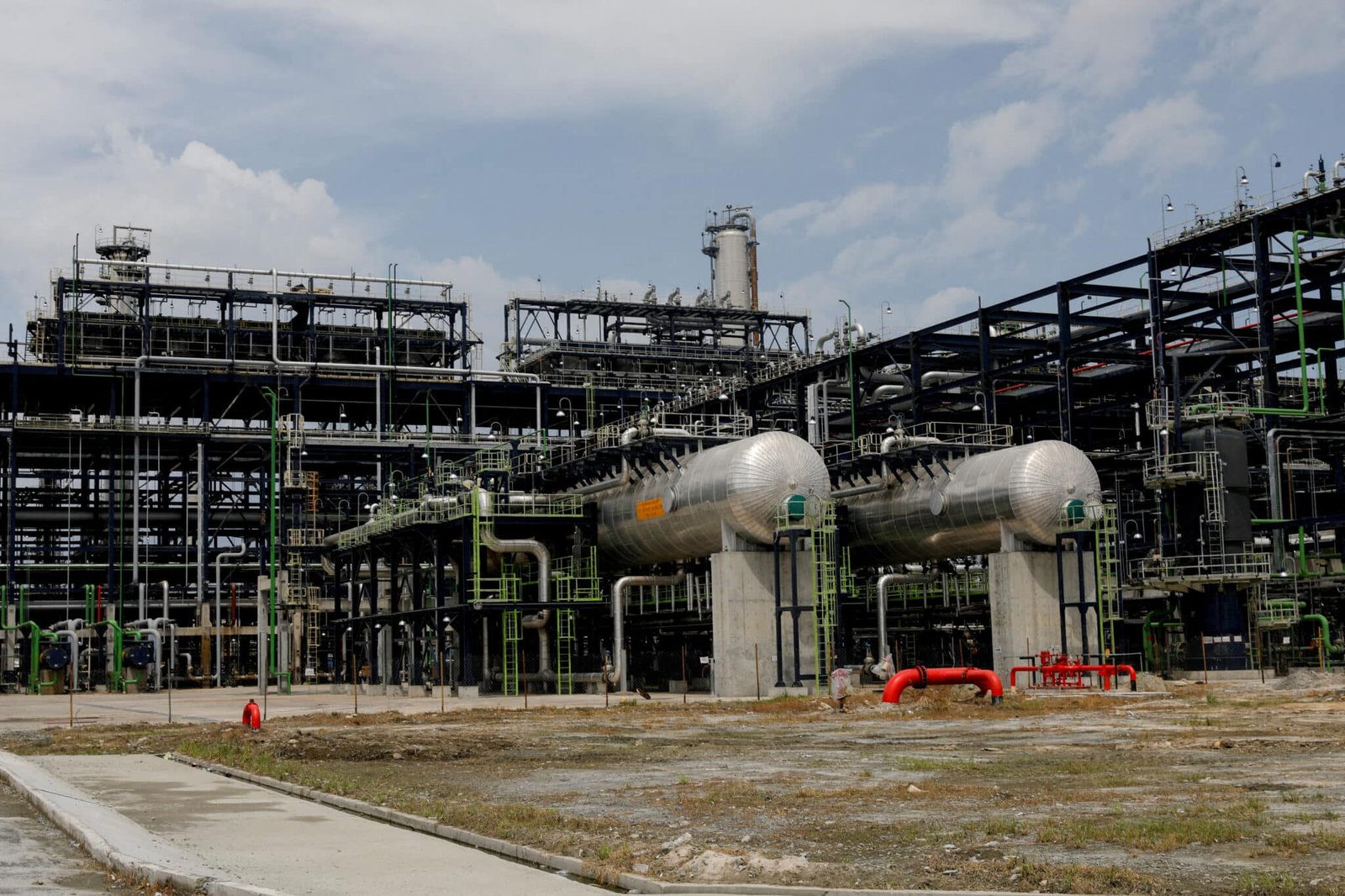
Nigeria’s Dangote Petroleum Refinery is preparing a potential $5 billion stock market listing as Africa’s largest refinery seeks capital to support an ambitious expansion plan that could double its production capacity.
Nigeria’s Dangote Petroleum Refinery is moving towards a landmark initial public offering that could rank among Africa’s largest listings. A source familiar with the plans said the refinery has submitted an application linked to a potential $5 billion IPO to Nigeria’s Securities and Exchange Commission, although the company has not yet decided the final size of the offering.
Management is targeting October for the Nigerian listing, with chief executive David Bird saying the company wants Nigerians to participate directly in its growth. Its immediate focus remains on the domestic market rather than an overseas exchange, while a possible international listing could follow after the refinery establishes a longer financial and operational track record.
Investor interest has already provided an early indication of demand. A private placement in July raised about $2.5 billion and valued the refinery at roughly $40 billion, with Africa Finance Corporation leading a group of strategic investors. AFC said demand reached 3.7 times the available amount, signalling strong interest from African and international institutional investors.
A successful listing would give Nigerian investors access to one of Africa’s largest privately developed industrial projects while potentially strengthening the country’s capital markets. Built in the Lekki industrial area outside Lagos, the refinery cost roughly $20 billion and represents one of the continent’s most ambitious private-sector infrastructure investments.
Its development seeks to address a longstanding weakness in Nigeria’s energy sector. Despite ranking among Africa’s largest crude oil producers, the country has historically relied heavily on imported petrol, diesel and other refined products because of limited domestic refining capacity. Dangote Refinery is beginning to change that relationship by processing crude within Nigeria and supplying domestic and international markets.
Management now plans another major expansion, with Dangote aiming to increase refining capacity to about 1.4 million barrels per day within three years. IPO proceeds and additional debt financing are expected to support the expansion as the company strengthens its position in African and international petroleum markets.
Such growth could have implications beyond Nigeria. Many African countries continue to import large quantities of refined petroleum despite the continent holding substantial crude oil reserves. Limited refining capacity leaves these economies exposed to global fuel prices, shipping costs and disruptions in international supply chains.
A larger Dangote operation could increase the amount of refined fuel available within Africa and strengthen West Africa’s position in international petroleum markets. Jet fuel has already become an important part of the refinery’s international business, with Bird saying the facility became Europe’s largest jet fuel supplier during June and July.
Rising international sales demonstrate how quickly Dangote Refinery is extending its reach beyond Nigeria. Management increasingly sees the facility as both a domestic supplier and an international refining operation capable of competing in markets traditionally supplied by established refining centres outside Africa.
Expansion will still require reliable access to crude oil. Securing sufficient domestic supplies has previously created challenges for Dangote, while Nigeria continues to review how local refineries access and purchase crude from producers operating in the country.
Nigeria’s refinery owners have also raised concerns about additional costs created when crude passes through trading operations before reaching domestic processors. Changes that allow producers to supply nearby refineries more directly could reduce costs and support increased domestic production.
Improving that system would carry wider benefits for Nigeria. Producing more fuel locally could reduce dependence on imports, ease pressure on foreign currency reserves and retain a greater share of the petroleum value chain within the economy.
Dangote’s growing capacity is also beginning to influence the wider West African fuel market. Regional energy regulators have explored plans to establish a fuel pricing benchmark and trading hub that could give West Africa a greater role in determining petroleum prices.
Such a development would mark a significant shift in the continent’s energy position. African oil-producing countries have traditionally exported crude while importing higher-value refined products, leaving much of the processing value outside their economies. Expanding regional refining capacity could gradually change that model.
Dangote Refinery has the scale to accelerate that transition, but its proposed IPO also carries significance beyond the energy industry. Major African infrastructure and industrial projects often depend heavily on international lenders, development finance institutions and foreign investors because domestic capital markets remain relatively small.
Opening the refinery to Nigerian investors could demonstrate whether African capital can play a larger role in financing major industrial assets. A public listing would also bring greater scrutiny of the refinery’s financial performance, operations and corporate governance as it enters its next phase of growth.
July’s heavily subscribed private placement provides an early indication of investor appetite, while the proposed October listing could offer a much larger test. If Dangote completes a multibillion-dollar IPO, the transaction would give Nigerian investors a direct stake in one of Africa’s most important industrial assets while demonstrating the growing potential of African capital markets to finance the continent’s industrial ambitions.