
Namibia is getting ready to test whether hydrogen can serve not only as a future fuel but also as a practical option for freight rail in the present.
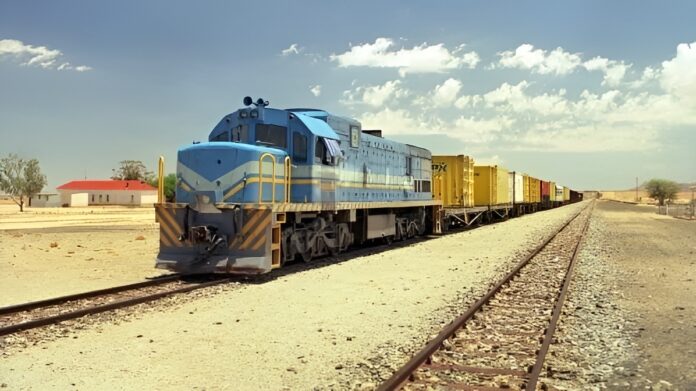
State-owned rail operator TransNamib has approved a six-month pilot of a dual-fuel locomotive. It will run on hydrogen and diesel along the Walvis Bay–Windhoek corridor, one of the country’s most important logistics routes. The trial covers approximately 50 return trips. CMB.TECH Namibia will carry it out, with support from Africa Global Logistics.
This is more than a technical test. African transport systems face a hard challenge: how do you decarbonise heavy freight without compromising reliability, cost control, or operational performance? Namibia is attempting an early answer.
The Walvis Bay–Windhoek corridor is not just a symbolic route. It connects the country’s main port to the inland economy. Trade and freight depend on it. If hydrogen can establish itself there, even in blended form, it means more than a laboratory demonstration or a brief urban pilot. It shows that cleaner transport technologies can face real commercial pressures on a route that logistics operators and exporters actually rely on.
TransNamib says the trial will focus on practical performance in Namibian conditions. That means testing fuel efficiency, reliability, maintenance needs, operating behaviour, and cost-effectiveness. These metrics will determine whether the model can advance beyond the pilot stage and roll out across the fleet.
The locomotive is part of a broader hydrogen project that has been underway for some time. Industry reports suggest engineers are assembling the upgraded engine in South Africa. There, CMB.TECH technology converts a traditional diesel locomotive to run on a hydrogen-diesel mix. The project also includes a hydrogen tender system to transport compressed hydrogen for railway operations.
That broader context matters. Namibia does not view hydrogen solely as an export opportunity. The country has drawn attention for its green hydrogen ambitions. But this rail pilot shows it also wants to explore domestic industrial applications. Namibia is not just producing hydrogen. It is testing whether hydrogen can power its own transport sector.
That is an important distinction. African energy transitions attract global attention when they involve exports or future mega-projects. Local applications are harder to develop. They are also often more significant. They show whether technology can address real operational challenges on the ground.
This pilot is a prime example. CMB.TECH stated earlier this year that Namibia was preparing to launch its first heavy-duty green hydrogen freight locomotive. That would place Namibia among the first countries in Africa to test hydrogen rail at this scale. The work originated from Namibian and German grant support. A broader consortium drives it, including TransNamib, Traxtion, and the University of Namibia.
Freight transport remains one of the most challenging sectors to decarbonise. Rail operators require power, durability, and dependability, especially on long routes and in tough conditions. That is why hydrogen continues to garner interest in heavy transport, even as batteries dominate much of the discussion of lighter mobility.
If the locomotive performs well, Namibia builds a case for hydrogen in freight rail. Other African markets will watch closely. If the economics or maintenance prove challenging, that is equally instructive. Either way, the trial shifts the conversation from aspiration to data.
This development matters beyond a single railway operator. It sits at the crossroads of climate ambition, logistics reform, and industrial experimentation. It also raises a broader African challenge. How do you adopt cleaner technologies in ways that suit local conditions rather than imported models?
The pilot tests whether a lower-emission future can succeed on a strategically important route. For Namibia, the bigger goal is clear. Can the country convert green hydrogen from a headline topic into a viable part of its economy?
That answer will not come from conference stages or policy papers. It will come from performance on the line between Walvis Bay and Windhoek.