


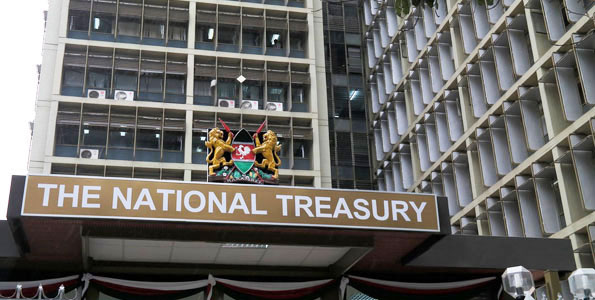
Kenya is considering its first panda bond in China as Nairobi looks beyond traditional Western debt markets and expands its search for capital across Asia to finance development and manage costly public debt.
Kenya is considering raising about $300 million from China’s domestic bond market, a move that would mark the country’s first panda bond and deepen its financial relationship with the world’s second-largest economy.
Nairobi has included the potential renminbi-denominated bond among several international financing options under consideration during the 2026/27 financial year. Plans also include borrowing from Japan and returning to the Eurobond market as the government diversifies its sources of capital.
A successful panda bond would give Kenya direct access to Chinese domestic investors rather than relying solely on conventional loans from Chinese institutions. It would also signal a significant change in how one of East Africa’s largest economies approaches its relationship with Beijing.
China has financed major Kenyan infrastructure projects over the past two decades, including roads and the Standard Gauge Railway connecting Mombasa, Nairobi and Naivasha. Much of that financing came through Chinese state-linked institutions, making direct access to China’s bond market a notable departure from the traditional model.
Kenya’s Finance Ministry is considering an approximately $815 million Eurobond during the second quarter of the financial year. Authorities are also examining more than $500 million in potential borrowing through Japan’s capital markets.
Other financing options include Islamic Sukuk instruments, sustainability-linked debt and diaspora bonds. Together, the proposals point to a deliberate effort by Nairobi to spread its borrowing across different markets, currencies and investor groups.
Kenya needs the additional financing as debt repayments continue to weigh heavily on government finances. Years of borrowing to build infrastructure and support development have left the country managing substantial domestic and external obligations.
Higher global borrowing costs have complicated that position. Interest rates and currency pressures have made international debt more expensive for several African governments, particularly those that accumulated large dollar-denominated obligations.
Kenya is now trying to broaden its financing options without allowing debt servicing to overwhelm public finances. Government projections indicate that external financing of about 247.2 billion Kenyan shillings, or roughly $1.9 billion, will help cover the country’s budget deficit. Nairobi expects domestic borrowing to finance much of the remaining shortfall.
At the same time, authorities plan to retire at least $500 million of expensive external debt during the financial year. Replacing costly obligations with more favourable financing could reduce pressure on the national budget.
That strategy makes the potential panda bond particularly significant. China operates one of the world’s largest domestic bond markets, giving foreign issuers access to a substantial pool of institutional capital. Raising money there could provide Kenya with an alternative to the dollar and euro markets that have traditionally dominated African sovereign borrowing.
Kenya collects most government revenue in shillings while servicing external obligations in several foreign currencies, making exchange-rate movements an important consideration.
However, diversification could reduce the country’s dependence on any single currency or group of creditors.
Kenya’s proposed Samurai bond in Japan follows a similar strategy. Access to Japanese institutional investors would open another major Asian capital market while potentially broadening the country’s international investor base.
Sukuk financing could attract capital from Islamic financial markets, while diaspora bonds would allow Kenyans living abroad to invest directly in government-backed development programmes.
Nairobi’s changing strategy comes as African governments confront a wider financing challenge. The continent requires significant investment in railways, roads, electricity, water systems and digital infrastructure, yet many governments already face high debt-servicing costs.
Traditional development finance alone cannot meet those requirements, while expensive commercial borrowing has increased pressure on national budgets.
Asian capital markets could therefore become increasingly important to African governments searching for new funding.
China’s role is particularly significant. Beijing has spent more than two decades financing and constructing infrastructure across Africa, making it one of the continent’s most influential development partners.
Direct access to Chinese investors could gradually change that relationship. Instead of depending primarily on bilateral loans and Chinese policy banks, African governments could increasingly raise capital through China’s financial markets. Such a shift would move part of the China-Africa economic relationship from state-backed infrastructure lending towards market-based financing.
Kenya could become an important test case. As one of East Africa’s largest and most diversified economies, the country has repeatedly accessed international debt markets and has extensive economic ties with China. A successful panda bond could encourage other African governments to consider similar transactions.
Much will depend on the final borrowing terms. Interest rates, maturity periods, currency exposure and investor demand will determine whether Chinese financing offers Kenya a meaningful advantage over conventional international borrowing.
How Nairobi uses the money will matter just as much. Borrowing that supports productive infrastructure and economic growth could strengthen Kenya’s capacity to repay its obligations. Additional debt that fails to generate sufficient economic value could instead increase pressure on future budgets.
Kenya’s proposed panda bond therefore represents more than another government borrowing exercise.
It reflects a broader transformation in how African economies are searching for capital, with Nairobi increasingly looking towards China, Japan and other alternative financial markets as it tries to fund development without deepening dependence on traditional sources of international debt.
If the transaction proceeds, Kenya would take an important step into China’s domestic capital market and potentially open another financing route for African governments seeking billions of dollars to build the infrastructure needed for future growth.