
JOHANNESBURG, South Africa – South Africa’s Democratic Alliance (DA) has emerged as the leading party in Johannesburg’s municipal elections, putting the African National Congress (ANC) under pressure. The result could reshape leadership in the country’s economic hub as parties prepare for coalition negotiations.
With counting almost complete on Sunday, the DA had secured approximately 35% of the ward vote. The ANC followed with around 20%, while ActionSA stood at 15.2%. No party had secured an outright majority.
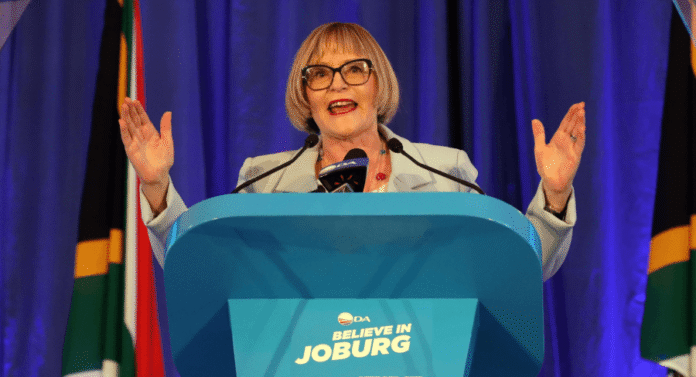
The outcome places DA mayoral candidate Helen Zille in a stronger position to challenge for control of the city. However, her appointment would depend on agreements with other political parties.
Johannesburg has experienced repeated changes in political leadership since the ANC lost its outright majority in 2016. Coalition disputes have contributed to uncertainty over municipal priorities and the delivery of essential services.
Water shortages, deteriorating roads and ageing infrastructure dominated the latest election campaign. Residents have also raised concerns about waste collection, public safety and the management of municipal finances.
Zille campaigned on restoring basic services and improving accountability. Her party has pledged to pursue coalition agreements with partners committed to fighting corruption and strengthening local government.
ActionSA could play an important role in determining the next administration. The party, founded by former Johannesburg mayor Herman Mashaba, has attracted support from voters seeking alternatives to the ANC and DA.
However, coalition negotiations may prove difficult. Political differences and competing demands over leadership positions could delay the formation of a stable government.
Johannesburg’s political direction carries wider economic significance. The city is a major centre for banking, commerce and corporate investment, making reliable infrastructure essential to business activity.
Water interruptions and poorly maintained roads increase operating costs for businesses. Municipal instability can also delay development approvals, infrastructure maintenance and investment decisions.
A stable administration could improve confidence by setting clearer priorities and strengthening financial management. However, political change alone will not resolve the city’s longstanding infrastructure challenges.
Johannesburg requires sustained investment in water networks, roads, electricity distribution and public transport. Effective coordination between municipal departments and other spheres of government will also be necessary.
The election reflects a broader shift in South African politics. The ANC has lost support across several major metropolitan areas, while opposition parties have gained ground.
Nationally, the ANC stood at approximately 31% with 99% of votes counted. The DA followed with 25%, reinforcing the growing importance of coalition politics.
Parties will have 14 days after the declaration of results to negotiate arrangements before new municipal councils are formed.
Johannesburg’s next administration will face immediate pressure to deliver visible improvements. Residents and businesses will judge its success through reliable services, better infrastructure and accountable leadership.
The election has created an opportunity for political change, but the city’s future will depend on whether competing parties can establish a government capable of delivering results.