


The United States plans to send more than 30 migrants to the Democratic Republic of Congo under a third-country arrangement, according to Reuters. These migrants are not Congolese nationals. Reports indicate they come mainly from countries in Central and South America, including Colombia, Peru, Chile and Guatemala. That is what makes the policy so disturbing.
This is not a case of people returning to their own country. US authorities want to move them to a country where they have no citizenship, no clear legal status and no obvious long-term future. Reuters reported that officials expect to keep them near Kinshasa’s airport for about 10 to 15 days. After that, no one has clearly explained what comes next. That uncertainty sits at the centre of the human-rights concern.
A deportation does not become fair simply because another government agrees to receive someone. The real question is whether that person has due process, legal protection and a genuine destination. When authorities send people to a country they do not know, without a public plan for what follows, the policy looks less like immigration enforcement and more like forced displacement.
The Congo deal also fits into a wider pattern. Reuters has reported that Washington has expanded similar third-country deportation arrangements with several African states, including Ghana, Cameroon, Equatorial Guinea and Eswatini. That should worry African governments.
If this model spreads, parts of Africa may become outsourced destinations for other countries’ migration politics. These are not neutral humanitarian arrangements. Governments shape them through power, diplomacy and convenience. The danger is clear: African states absorb the human consequences of policies made elsewhere, while the migrants at the centre of those policies lose even more control over their lives.
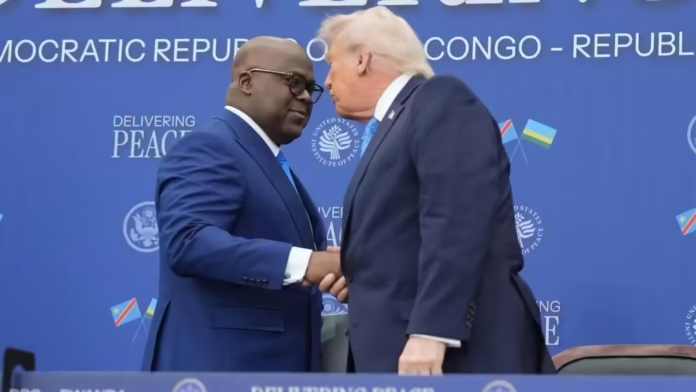
In the case of DR Congo, the timing makes the arrangement even more troubling. The deportation deal comes as Washington deepens its engagement with Kinshasa over regional security and critical minerals. Reuters has reported stronger US involvement in diplomacy around the conflict in eastern Congo, alongside growing strategic interest in Congolese cobalt and copper.
No government may openly say these issues are linked. Even so, when migration control, mineral access and diplomacy all move at once, the picture becomes harder to dismiss. Vulnerable migrants begin to look like bargaining chips in a broader relationship. No rights-based system should accept that.
Why should Congo, a country already carrying immense pressure, receive people who have no durable place in its legal or social system? Eastern Congo remains scarred by conflict and mass displacement. Yet Kinshasa now finds itself pulled into an arrangement designed mainly to solve a US political problem.
A humane migration policy starts with clarity. It requires lawful process, transparency, protection and a credible destination. It does not dump people into unfamiliar countries and leave their future undefined.
That is why this arrangement deserves close scrutiny. It risks normalising a system in which powerful states export the burden of deportation, while weaker or more fragile states carry the fallout. DR Congo should not become a waiting room for migrants the United States does not want, but does not know where else to send.