


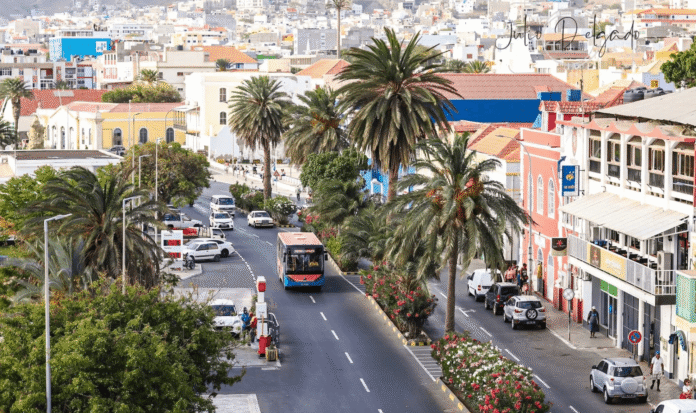
Africa is vast and varied. It is a continent of coastlines and crowded markets, of languages, landscapes and layered histories. Yet some of its most remarkable stories unfold far from the spotlight.
Many people may not immediately recognise the name Cabo Verde.
This small island state, known in English as Cape Verde, is an archipelago of ten volcanic islands in the central Atlantic Ocean, roughly 500 to 600 kilometres off the coast of Senegal in West Africa. Despite its size and limited natural resources, Cabo Verde has steadily built a reputation for stability, governance and economic resilience.
Cabo Verde is classified as an upper-middle-income country. Its economy is largely service-based, with tourism accounting for more than 30% of gross domestic product. Remittances from its diaspora also play a significant role, alongside financial and maritime services.
Unlike many resource-dependent economies, Cabo Verde has relied on institutional strength and strategic positioning rather than extractive wealth. That model appears to be paying off.
In 2026, Cabo Verde ranked first in Africa in the World Economics Governance Index, scoring 74.0 overall. It performed particularly strongly in political rights and press freedom, where it posted scores of 95.2 and 77.6 respectively.
Governance indicators often reflect long-term institutional consistency. In Cabo Verde’s case, peaceful transfers of power and relatively transparent public administration have underpinned its performance.
According to Transparency International’s 2025 Corruption Perceptions Index, Cabo Verde ranks as the least corrupt country in West Africa and the second least corrupt on the continent.
For investors and international partners, such rankings matter. They signal regulatory predictability and lower governance risk in a region where corruption perceptions often weigh heavily on investment decisions.
The country has also made headlines beyond economics and governance. Its national football team, known as the Blue Sharks, qualified for the 2026 FIFA World Cup for the first time in its history. They topped their qualifying group ahead of Cameroon, marking a milestone moment for the island nation.
Sporting success has amplified Cabo Verde’s global profile, reinforcing national confidence at home.
Cabo Verde ranks first in West Africa and sixth across the continent in the Global Innovation Index. It also features among Africa’s top performers for ease of doing business and overall business environment quality.
For a country with a population of just over half a million people, those rankings highlight a deliberate emphasis on regulatory clarity, digital transformation and economic openness.
Quality of Life and Democratic Stability
The archipelago records one of the highest life expectancies in Africa, at around 75 years. It is frequently described as one of the continent’s most stable representative democracies.
Political stability, social cohesion and relatively low levels of conflict have contributed to steady development outcomes.