


JOHANNESBURG, SOUTH AFRICA – South Africa faces a critical test of its economic recovery as new GDP figures are expected to show whether weakening mining and manufacturing ended the country’s longest run of quarterly growth in almost a decade.
Statistics South Africa will release second-quarter GDP figures on Tuesday, with economists expecting the economy may have contracted by about 0.1% between April and June. That would reverse the 0.5% expansion recorded during the first quarter.
The result matters because South Africa entered the second quarter with six consecutive quarters of economic growth behind it. Although the expansion remained modest, the run offered evidence that the continent’s most industrialised economy was beginning to build greater stability after years of electricity shortages, logistics failures and weak investment.
Several indicators now suggest that momentum weakened during the second quarter.
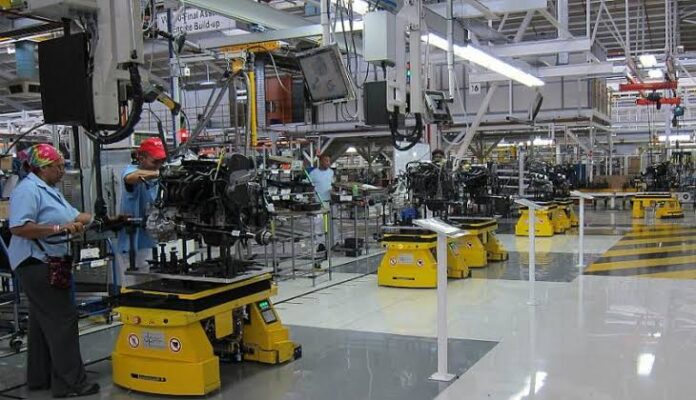
Manufacturing contracted by 1.5% between April and June, marking its fourth consecutive quarterly decline. Mining production fell by 2.7%, while electricity generation also weakened during the period.
Those sectors carry considerable weight in South Africa’s economy. Manufacturing supports extensive supply chains and employment, while mining remains central to exports and foreign-exchange earnings.
Platinum group metals contributed significantly to the mining decline. Production also fell for iron ore, chromium ore, gold, manganese and diamonds, although copper and coal performed more strongly.
The weakness comes at a difficult time for South African industry. Businesses continue to navigate high operating costs, infrastructure constraints and subdued demand, while global geopolitical tensions have added new pressure through energy prices.
The conflict in the Middle East has become particularly important for an economy that imports much of its crude oil. Higher international fuel prices can feed into transport, manufacturing and household costs, weakening domestic demand while raising expenses for businesses.
The second quarter captured more of that impact than the first. Stats SA noted in June that sharp fuel-price increases linked to the conflict would largely appear in the April-to-June GDP figures.
South Africa’s labour market provides another warning about the strength of the recovery.
The official unemployment rate increased from 32.7% in the first quarter to 33.6% in the second, while the number of unemployed people rose by 345,000 to 8.5 million.
Employment declined slightly to 16.7 million. Youth unemployment also increased, reaching 47.4% among people aged between 15 and 34.
Those figures expose one of the central weaknesses in South Africa’s economic recovery. Even when GDP grows, the expansion has struggled to create employment at the scale required by the country’s population.
Investment remains another concern. South Africa needs sustained private and public capital to expand electricity generation, modernise freight infrastructure and rebuild productive capacity.
Progress in the electricity sector has removed one of the most damaging constraints on economic activity. The dramatic reduction in load shedding has improved operating conditions for businesses and reduced dependence on expensive backup power.
Reforms at Transnet and efforts to increase private participation in ports and freight rail could also improve the economy’s productive capacity over time.
However, those structural improvements must translate into stronger investment, industrial output and employment before South Africa can achieve significantly higher growth.
The South African Reserve Bank has repeatedly highlighted weak potential growth as one of the country’s long-term economic challenges. Government reforms aim to raise that ceiling by improving energy, logistics, water infrastructure and the broader investment environment.
The second-quarter GDP figures will therefore reveal more than whether the economy grew or contracted during three months.
They will show whether South Africa’s recent run of economic stability has enough momentum to withstand new global shocks while domestic reforms take effect.
A modest contraction would not erase the progress made in electricity supply or infrastructure reform. It would, however, underline how fragile the recovery remains when mining, manufacturing and investment struggle to generate sustained growth.
South Africa’s challenge is no longer simply avoiding economic decline. The country needs growth strong enough to expand businesses, attract capital and create employment for millions of people who remain outside the labour market.
The latest GDP figures will provide another measure of how far the continent’s most industrialised economy remains from achieving that goal.