


BISSAU, GUINEA-BISSAU — Guinea-Bissau is counting votes from a constitutional referendum that could significantly strengthen presidential powers, less than 10 months after the military seized control of the West African country.
Voters went to the polls on Sunday to decide whether to approve a new constitution backed by the military-led transition. The proposed changes would shift Guinea-Bissau towards a stronger presidential system ahead of elections scheduled for 6 December.
The National Electoral Commission said turnout exceeded 55% and reported no major incidents that undermined the credibility of voting. Provisional results are expected on Tuesday.
Opposition parties and civil society groups have challenged the turnout picture after urging voters to boycott the referendum. They argue that an unelected transitional administration should not oversee such a significant change to the country’s political system.
The National Transitional Council has already claimed that the “yes” campaign secured enough support to approve the constitution. However, the electoral commission has yet to publish official provisional results.
At the centre of the referendum is a long-running struggle over the balance of power between Guinea-Bissau’s president, prime minister and parliament.
The proposed constitution would give the president greater control over the executive. It would allow the head of state to appoint and dismiss the prime minister and members of government, while also granting the president power to dissolve parliament.
The changes would move the country away from a system where the prime minister traditionally emerged from the parliamentary majority. Transitional authorities argue that repeated clashes between presidents and prime ministers have contributed to decades of political instability.
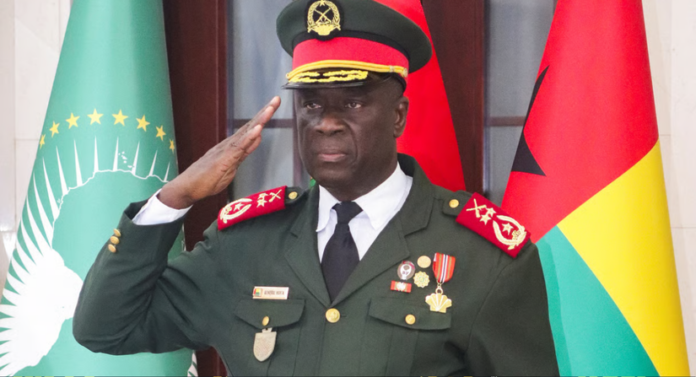
Military leader and transitional President General Horta N’Tam said the reforms would help future elected governments complete their mandates without institutional obstruction. The transitional charter bars him from contesting the forthcoming presidential election.
Opposition groups reject the government’s argument and warn that the constitution could concentrate too much authority in the presidency.
The African Party for the Independence of Guinea and Cape Verde, known as PAIGC, called for a boycott before the vote. It argued that the proposed system would weaken the prime minister, parliament and political parties.
The constitutional changes would also reduce the number of parliamentary seats from 102 to 65. Transitional authorities say a smaller legislature could improve debate and make parliament more effective, while critics question whether reducing representation would strengthen democratic accountability.
The referendum comes at a critical point in Guinea-Bissau’s latest political transition. Soldiers seized power in November 2025, shortly after a disputed presidential election in which former President Umaro Sissoco Embaló and opposition candidate Fernando Dias both claimed victory.
The military suspended the electoral process and later installed a transitional administration under N’Tam. Authorities have promised presidential and parliamentary elections in December as part of a return to civilian government.
That transition is attracting scrutiny because Guinea-Bissau has struggled with political instability throughout much of its post-independence history.
The country has experienced five military takeovers and several attempted coups since independence from Portugal. Repeated confrontations between presidents, governments and parliament have also weakened institutions and disrupted economic development.
Guinea-Bissau’s political instability carries wider implications across West Africa, where military interventions have reshaped governments in several countries during recent years.
The referendum therefore goes beyond deciding how much authority a future president should hold. It will help determine the institutional structure under which Guinea-Bissau attempts its latest return to elected civilian government.
A victory for the proposed constitution would strengthen the presidency before December’s elections. A rejection would leave the military-led transition facing difficult questions over how to address the institutional conflicts it says have repeatedly destabilised the country.
Official provisional results will provide the first clear indication of which direction voters have chosen. Until the electoral commission releases those figures, claims about the final outcome remain premature.