


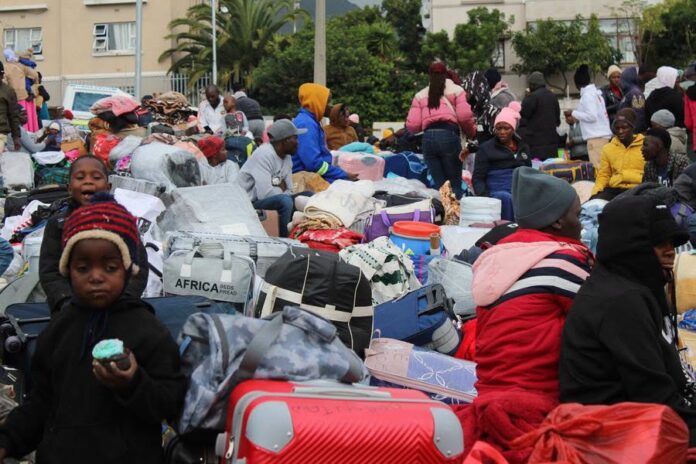
BULAWAYO – Zimbabweans returning from South Africa have described the fear and loss they experienced during recent attacks on foreign nationals. Many said they were forced to flee without warning, leaving behind their homes, belongings and sources of income.
The returnees arrived at the United Congregational Church of Southern Africa (UCCSA) reception centre in Njube, Bulawayo. Most carried only a few personal items. They said violence spread quickly through the communities where they lived and worked.
According to The Herald Zimbabwe, the attacks have triggered a large-scale return of Zimbabwean nationals. The Government has since expanded its repatriation and reintegration programme.
More than 21,000 Zimbabweans have been repatriated since the programme began on 28 May. A further 56,832 people are believed to have returned through their own arrangements.
Wiseman Mlilo, a builder and tiler from Tsholotsho, had been working in Limpopo Province. He said he left South Africa with nothing but the clothes he was wearing.
Mlilo said he abandoned furniture, a refrigerator and bicycles when violence broke out. After residents fled, looters stripped the property. He said the experience was so traumatic that he has no plans to return to South Africa.
Another returnee, Bangcwele Sibanda from Plumtree, hopes to rebuild his future in Zimbabwe. A qualified welder, he wants to find work locally or start a small business.
Sibanda said he returned with only one bag containing a few clothes. He explained that there was no time to prepare or pack properly.
Brighton Ncube, who lived in Polokwane since 2008, said returning home was still the better option. He arrived without any possessions and no identity documents. Ncube has already informed officials about his situation. He hopes assistance will be provided to help him obtain new documents.
The Government has instructed the Civil Registry Department to prioritise documentation for returnees. Officials say this will help speed up reintegration into communities.
Mike Mbewe also returned home after spending nearly 20 years in South Africa. He left Zimbabwe at the age of 18 and settled in Durban. Mbewe said he never secured stable employment. Instead, he survived through temporary jobs and struggled to make ends meet.
Financial difficulties prevented him from visiting home or maintaining regular contact with relatives. He said he had always wanted to return but could not afford the journey.
Now back in Zimbabwe, Mbewe hopes to start a poultry project. He believes the business could provide a stable source of income. For now, he is staying with relatives in Bulawayo.
Government agencies, churches and development partners are supporting the returnees. Assistance includes food, shelter, healthcare and psychosocial support.
Authorities are also helping people travel to their home districts. Transport arrangements are being made across the country.
Bulawayo Minister of State for Provincial Affairs and Devolution, Judith Ncube, said support would continue beyond the reception stage. She said the goal is to help returnees rebuild their lives and become self-reliant.
Ncube said some returnees had formal jobs in South Africa and would seek employment opportunities in Zimbabwe. Others would need support through skills training and income-generating projects.
She also praised the Zimbabwe Heads of Christian Denominations and local churches. The organisations have provided shelter and welfare support at the reception centre.
Donations continue to arrive from churches, businesses and members of the public. Food, clothing and toiletries are among the items being collected.
The response follows President Emmerson Mnangagwa’s call for a safe and dignified welcome for returning Zimbabweans.
Most of the returnees are being transported to the provinces of Matabeleland North and Matabeleland South. However, support services are available nationwide.
The reintegration programme includes healthcare, counselling and identity document processing. School placements are also being arranged for returning children.
President Mnangagwa has encouraged returnees to contribute their skills and experience to Zimbabwe’s development. He said they remain an important part of the country’s Vision 2030 goals.