


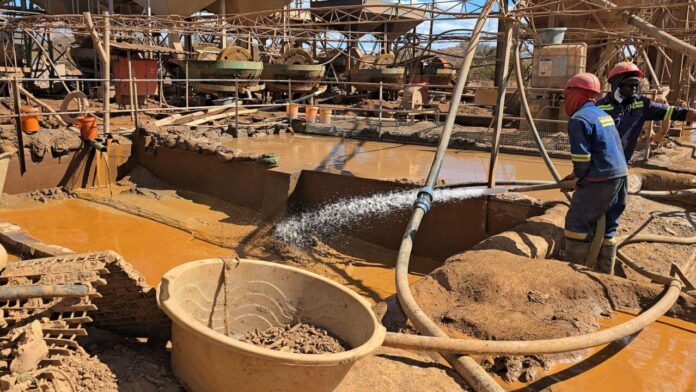
HARARE: Zimbabwe has introduced tougher rules for foreign players in its small-scale gold mining sector, as the government seeks to protect local miners and keep more mineral wealth inside the country.
Mines and Mining Development Minister Polite Kambamura announced the policy in Harare. He said small-scale gold mining would now be reserved for Zimbabwean citizens.
The move targets foreign individuals, foreign-controlled companies and hidden ownership structures operating in the sector. Under the new rules, foreign investors must either expand into larger mining operations or leave the reserved small-scale category. They have until January 2027 to comply.
Kambamura said Zimbabwe’s small-scale gold mining sector belongs to local citizens. “The small-scale gold-mining sector in Zimbabwe is reserved exclusively for Zimbabwean citizens,” he said. The policy applies to mines producing up to 20kg of gold a month. It also covers operations with capital investment below US$15 million.
This means foreign investors who want to remain in gold mining must raise their production or increase their investment above the small-scale threshold.
The government also wants to stop foreign actors from using local names to control mining claims. Officials say proxy ownership, nominee arrangements and informal partnerships will face tighter checks.
This is important because small-scale miners play a major role in Zimbabwe’s gold economy. Small-scale mining contributes the majority of Zimbabwe’s gold production. The sector accounts for about 65% of national gold output, making it central to the country’s foreign currency earnings.
In the first four months of the year, Zimbabwe produced about 12,637kg of gold. That was a 1.3% increase compared with the same period the previous year. The government sees the sector as both an economic asset and a political priority. Thousands of families depend on small-scale gold mining for income.
However, the sector also faces serious challenges. These include smuggling, unsafe mining practices, weak environmental controls and limited access to formal finance.
Harare argues that local miners should benefit more directly from a resource that carries major national value. The policy also reflects a wider shift in Zimbabwe’s mining strategy. Zimbabwe has moved aggressively to reduce raw mineral exports. The government now wants more processing, refining and manufacturing to happen locally.
This approach has already affected the lithium sector. In 2025, Zimbabwe announced plans to restrict lithium concentrate exports from 2027. The government later brought the deadline forward and imposed an export ban in February 2026.
Officials said the country was losing too much value by exporting raw or semi-processed minerals. By April, the government had introduced tougher conditions for companies seeking to resume lithium exports. Firms now face export quotas and must show clear plans to build local processing plants.
This policy direction shows that Zimbabwe wants to move beyond extraction. Instead of exporting raw minerals, Harare wants mining companies to invest in processing plants, smelters, refineries and battery-material supply chains. The gold and lithium measures point to one message: Zimbabwe wants more control over its mineral economy. For gold, the government wants citizens to dominate the small-scale sector.
Together, these policies form part of a broader African debate about mineral beneficiation. Many resource-rich countries want to stop exporting raw materials while importing finished products at higher prices. Zimbabwe believes local processing could create more jobs, increase tax revenue and support industrial growth.
If handled well, the policy could help build new value chains around mining. These may include equipment supply, transport, energy services, mineral processing and technical training.
However, the strategy also carries risks. Reserving small-scale gold mining for citizens may support local ownership. But ownership alone will not solve the sector’s deeper problems.
Local miners still need affordable finance, modern equipment and geological support. They also need safer working conditions and better access to formal gold markets. If these gaps remain, some miners may continue to rely on informal buyers and risky production methods.
The government will also need to apply the new rules fairly. Transparent licensing and consistent enforcement will matter. Foreign investors may still have a role in Zimbabwe’s mining industry. However, the government now appears to prefer larger, formal projects that bring capital, technology and processing capacity.
That approach could attract serious investors. It could also discourage speculative operators who seek quick access to minerals without long-term local commitment.
Zimbabwe’s latest gold mining policy marks another step in Harare’s effort to reshape the country’s resource economy. The government wants citizens to control small-scale mining. It also wants foreign investors to support larger, value-adding projects.
The policy could strengthen local participation and increase national benefit from gold production. But success will depend on more than regulation. Zimbabwe must also provide practical support to miners, close smuggling channels and build credible processing infrastructure.
For now, Harare has made its position clear. Zimbabwe no longer wants to serve only as a source of raw minerals. It wants mining to create jobs, support industry and leave more value inside the country.