
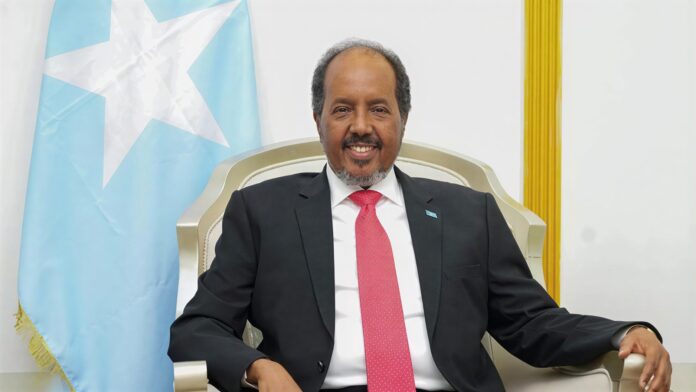
The Federal Government of Somalia (FGS), President Hassan Sheikh Mohamud; the Somali Future Council (SFC), representing Jubbaland, Puntland, and opposition groups; and al-Shabaab are the principal actors. On March 4, Parliament passed contested constitutional amendments that delay the 2026 elections, extend President Mohamud’s term, and transition to direct parliamentary votes for selecting the president.
This occurred in Mogadishu in March 2026, following the collapse of negotiations on February 23. Persistent doubts about the parliamentary quorum have cast doubt on the vote’s legitimacy.
President Mohamud contends that direct elections will enhance governmental legitimacy, while the SFC characterises the move as a corrupt consolidation of power. The prospect of parallel political processes recalls the 2021 confrontation involving former President Farmaajo.
On March 1, FGS and the African Union Transition Mission in Somalia (AUSSOM) initiated an offensive in the Shabelle region, capturing Daarusalaam and Mubaarak. The resulting political rupture creates opportunities for al-Shabaab, which previously exploited the 2022 electoral disputes to intensify its bombing campaign.
The amendments establish direct parliamentary elections for 2027, with elected representatives selecting the president. The SFC rejects this process, advocating for the interim clan-based constitution adopted in 2012 and the originally scheduled 2026 elections.
The legitimacy of Parliament’s decision is in question due to a disputed quorum; failure to meet legal thresholds would violate the African Union Peace and Security Council protocols on constitutional change, transforming a governance reform into a breach of normative standards. The procedural conflict is institutional, parliamentary procedure versus non-institutional threats, exemplified by SFC’s threats of parallel elections, which previously led to Jubbaland-FGS clashes in 2020, 2024, and 2025.
Al-Shabaab leverages its bases in the Shabelle valley to exert pressure on Mogadishu through vehicle-borne improvised explosive devices (VBIEDs). Since June 2025, FGS and AUSSOM have cleared eight localities in the region and eliminated a commander near Awdheegle on March 1. However, ongoing clan disputes divert security forces from these operations. Notably, in 2021, delays attributed to former President Farmaajo triggered armed confrontations among security forces.
Renewed political violence would divert military resources from efforts to disrupt river-valley supply routes, potentially recreating the conditions of early 2022, when al-Shabaab suicide bombings increased during periods of internal conflict. The governance implications are significant: federalism in Somalia depends on negotiated consent among stakeholders. Unilateral constitutional amendments undermine this principle and provide al-Shabaab with propaganda material to question the legitimacy of the FGS.
Some analysts argue that direct elections justify short-term instability, as indirect clan-based arrangements perpetuate elite entrenchment and hinder reform. However, adherence to proper procedures remains critical. If quorum requirements and SFC participation are disregarded, the legitimacy of the reforms is compromised, creating operational opportunities for al-Shabaab.
While some anticipate that the SFC will respond rhetorically rather than violently, precedents from 2020 to 2025 and the availability of weapons among clan affiliates suggest that violent clashes are plausible. Overlooking this risk constitutes a policy choice.
Ensuring accountability requires both legal and practical measures. The African Union could deploy a technical team to verify the March parliamentary quorum and facilitate the development of a new political roadmap. The FGS could consider suspending the term extension if negotiations become more inclusive, while the SFC could offer a joint security guarantee to maintain the deployment of forces in the Shabelle region.
Although these actions will not immediately defeat al-Shabaab, they will reduce the extent to which Somali political dynamics contribute to the group’s recruitment narrative, thereby prioritising civilian interests over those of militants in the pursuit of unity.