
Côte d’Ivoire has closed a financing deal that matters beyond one solar plant. It also points to a new way African infrastructure can be funded.
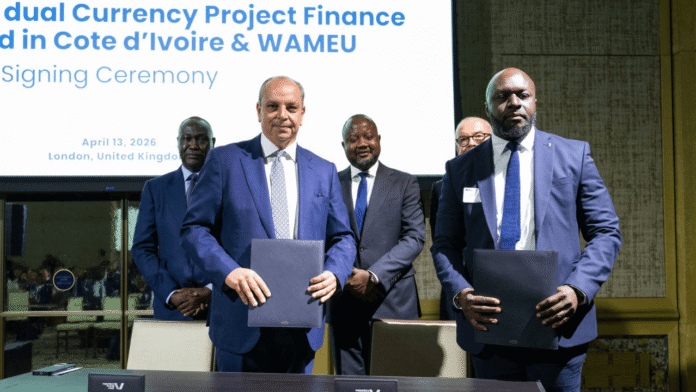
The country has reached financial close on a €65 million green bond package for a 66MW solar plant in Korhogo. Africa Finance Corporation has already disbursed €43 million. The plant is due to start operating in 2027. It is expected to become Côte d’Ivoire’s largest solar facility.
The project, developed by Poro Power, will add generation capacity in the north. But the bigger story sits in the financing.
For years, large infrastructure in Côte d’Ivoire and across Africa has depended heavily on foreign capital. This deal points in another direction. African institutions structured it. African institutions underwrote it. And African institutions supplied the money. AFC acted as lead underwriter and co-arranger.
That matters because many African projects do not fail for lack of demand. They fail because the funding model does not fit local market conditions.
The Korhogo deal uses a dual-currency structure in euros and CFA francs. That gives it added relevance for West Africa’s capital markets. It shows that serious infrastructure can be financed through structures closer to regional realities, rather than leaning only on offshore lenders. This is an inference based on the deal structure and AFC’s role in arranging it.
The energy benefits are also clear. The plant should cut more than 72,000 tonnes of carbon emissions each year. It should also supply electricity to over 100,000 households. That supports Côte d’Ivoire’s target of lifting renewables to 45% of the energy mix by 2030.
The transaction also marks a regional first. AFC and deal advisers describe it as the first project finance green bond in Côte d’Ivoire and the first of its kind in the WAEMU energy sector.
The Korhogo plant rests on a longer-term operating model. It is being developed under a 25-year concession and power purchase framework. That gives the project the revenue visibility lenders usually want. Reporting on the deal also points to support from the Emerging Africa & Asia Infrastructure Fund and the West African Development Bank.
For Côte d’Ivoire, the project fits a wider strategy. The country has tried to build a stronger record in private infrastructure investment. AFC has already backed the Singrobo-Ahouaty hydropower project and the Henri Konan Bédié Bridge. The Korhogo financing adds another major transaction to that list.
The lesson for the continent is simple. Africa’s energy transition will depend on more than solar panels and policy promises. It will also depend on whether the continent can raise long-term money for bankable projects on workable terms.
Korhogo will add power to the grid. The bond behind it may prove just as important. It shows that African institutions can take a larger role in financing African infrastructure.