


A fresh warning from the United States over trade with Iran is increasing pressure on several African economies, as Washington signals it is prepared to raise tariffs and review preferential trade access for countries it believes are out of step with its foreign-policy goals.
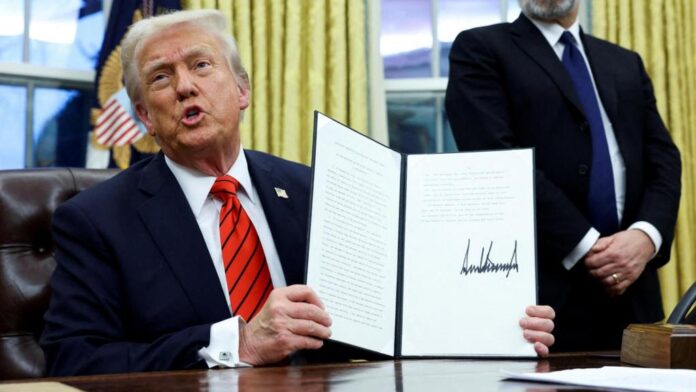
In a statement issued on 12 January, US President Donald Trump said any country that continues to do business with Iran would face a 25% tariff on all trade with the United States, on top of existing duties.
“Effective immediately, any country doing business with Iran will pay a tariff of 25% on any and all business being done with the United States of America,” Mr Trump said in a post on Truth Social, describing the decision as “final and conclusive”.
The announcement comes at a sensitive time for African exporters, many of whom are already dealing with higher US import tariffs under Washington’s so-called reciprocal trade policy. South Africa currently faces duties of up to 30% on selected goods, Nigeria about 14–15%, Ghana between 10–15%, while Kenya and Tanzania are subject to tariffs of around 10%. Other African countries face a baseline 10% levy.
If enforced, the additional 25% tariff would sharply raise export costs for African countries that maintain trade links with Iran, including South Africa, Nigeria, Ghana, Kenya, Tanzania and Somalia, reducing their competitiveness in the US market.
Africa’s direct trade with Iran remains relatively small in global terms. Exports typically include agricultural products, medical instruments and coal, while imports consist mainly of oil products, processed foods and manufactured goods. However, Iran’s economic engagement with Africa has grown rapidly in recent years.
Data from Iran’s Trade Promotion Organization shows Iranian exports to Africa reached $849 million between March and November 2025, representing a 77% increase compared with the same period a year earlier. Tanzania has emerged as one of Iran’s largest African trading partners, alongside Kenya, Ghana, South Africa, Nigeria and Somalia.
Nigeria, Iran’s third-largest African trade partner, conducts roughly $125 million in annual trade, exporting products such as cocoa, oil seeds and spices, while importing industrial equipment, plastics and processed food items.
For South Africa, even limited trade exposure could carry wider consequences. The country exported about $8.2 billion worth of goods to the United States in 2024, mainly in the automotive, mining and manufacturing sectors, making the US one of its most important export destinations. Analysts warn that an across-the-board tariff increase could erode margins and weaken export performance.
The timing also raises concerns over the future of African Growth and Opportunity Act (AGOA) access, which allows eligible African countries duty-free entry into the US market. While the US Congress has approved an extension of AGOA to 2028, eligibility is reviewed annually by the White House.
African governments are now facing a difficult policy calculation, whether to deepen trade diversification with partners such as Iran, or protect access to the US market, which remains a key destination for manufactured goods, minerals and agricultural exports.
As global trade becomes increasingly shaped by geopolitics, analysts say African economies may find themselves under growing pressure to navigate between competing economic partnerships and political alignments.