


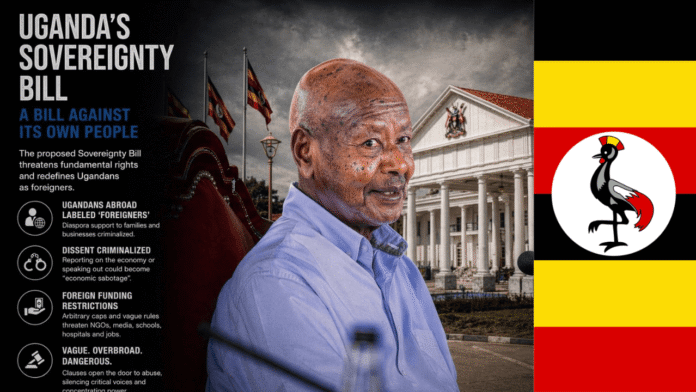
The introduction of the Protection of Sovereignty Bill, 2026, in Uganda’s Parliament has raised widespread concern. Critics warn that the proposed law targeting foreign influence may significantly affect citizens, businesses, and civil society.
Introduced on April 15 by State Minister for Internal Affairs David Muhoozi, the Bill aims to regulate foreign funding and external involvement in Uganda. Stakeholders caution that its provisions may go beyond regulation and significantly impact ordinary Ugandans, especially those in the diaspora.
Hamza Sebunya, a human rights activist, questioned whether public consultations meaningfully influence parliamentary decisions. Referring to the 2017 Togikwatako (age limit) debate, he noted that legislators did not reflect public input. He warned that the current Bill contains “many loopholes” needing urgent attention, particularly for banks, journalists, musicians, NGOs, and civil society organisations.
Sebunya also expressed concern that Ugandans abroad could be classified as “foreigners,” requiring ministerial approval to send money home, which could affect their citizenship status.
Anthony Kalanda criticised the proposed financial restrictions, questioning why Ugandans face limits on sending money home while public officials can access significant assets. He argued that the Bill could undermine investment and economic growth, especially as foreign aid declines and diaspora support remains essential.
Journalist Charles Onyango-Obbo described the Bill as unprecedented, noting it explicitly defines Ugandan citizens living abroad as “foreigners.” He warned this could subject routine financial support, such as school fees, business capital, and family expenses, to strict regulation. He added that the Bill broadens the definition of “agents of foreigners” to include those indirectly funded from abroad, potentially affecting journalists, researchers, and NGO workers.
The Bill proposes a cap of about Shillings 400 million in foreign funding over 12 months without ministerial approval. It also introduces offences such as “economic sabotage,” which could criminalise publishing information considered harmful to the economy, even if accurate. Critics argue these provisions could restrict independent reporting and civic engagement.
Human Rights Defenders, a civil society organisation, argued that the Bill risks consolidating state power instead of protecting sovereignty. The group warned that vague provisions could criminalise dissent and subject millions of Ugandans who rely on diaspora remittances to increased scrutiny.
Members of Parliament raised procedural concerns about the Bill’s handling. Theodore Ssekikubo stated that the Bill must follow standard legislative procedures and that MPs should receive copies in advance for proper review. He emphasised that, given its impact on Ugandans, thorough examination is essential to maintain public confidence in Parliament.
Patrick Nsamba Oshabe noted that the Bill was not available when he checked his pigeonhole. After consulting the Clerk’s office, he learned the document existed but was still under consultation, raising concerns about access to key legislative materials.
Presiding over the session, Anita Annet Among referred the Bill to the committees on Defence and Internal Affairs and Legal and Parliamentary Affairs for detailed review. She stated that the Defence and Internal Affairs committee will lead, with the review expected within three weeks of tabling.