


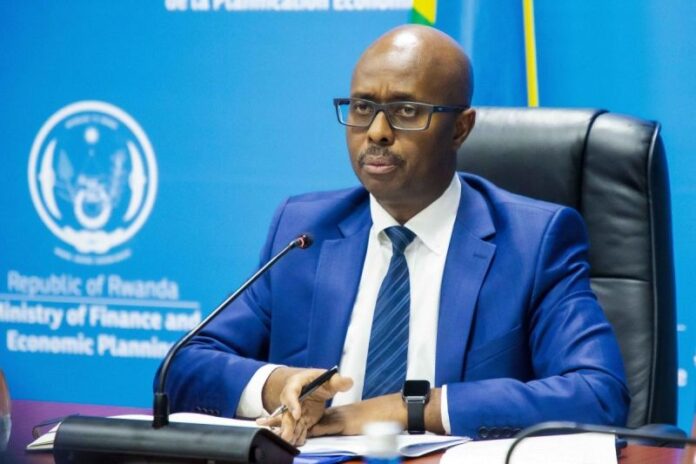
Rwanda has secured about $190 million through a landmark financing deal denominated in euros and Japanese yen, widening its access to international capital as African governments search for more sustainable ways to fund development.
The dual-currency commercial loan comprises €82 million and ¥15 billion, with a 15-year maturity and six-year grace period. The yen portion marks Rwanda’s first borrowing in the Japanese currency and opens another source of financing beyond the markets traditionally used by the East African country.
Rwanda’s Ministry of Finance and Economic Planning said the transaction forms part of a broader debt management strategy aimed at diversifying funding sources, reducing borrowing costs and creating a smoother repayment profile.
The financing carries particular significance at a time when high interest rates and volatile global markets have made external borrowing more difficult for many African governments. Rwanda is using multilateral guarantees to reduce some of the risk faced by commercial lenders and secure longer-term financing on more favourable terms.
The World Bank Group backs the transaction through a guarantee structure involving the International Development Association and the Multilateral Investment Guarantee Agency. IDA provides first-loss protection through a policy-based guarantee, while MIGA provides additional cover against the risk of Rwanda failing to meet sovereign financial obligations.
That structure allows Rwanda to use the World Bank Group’s financial strength to improve the terms available from commercial lenders rather than relying entirely on direct multilateral loans.
The approach could carry wider relevance across Africa, where governments face enormous financing requirements for infrastructure and public services while attempting to prevent debt repayments from consuming a growing share of national budgets.
Rwanda will use proceeds from the facility for general budget purposes linked to its Inclusive and Resilient Job Creation programme. Priority areas include infrastructure, health and nutrition, education, agriculture, social protection and industrial development.
The transaction also marks Rwanda’s first entry into yen-denominated commercial financing, potentially strengthening its access to Japanese and wider Asian capital.
Diversifying the currencies in which a government borrows can reduce dependence on a single source of international finance. However, foreign-currency borrowing still carries exchange-rate risks because governments ultimately need sufficient foreign currency to service those obligations.
Rwanda’s decision comes as African governments increasingly explore financing structures beyond conventional dollar-denominated Eurobonds. Periods of high US interest rates and a stronger dollar have exposed the vulnerability created when countries rely heavily on dollar debt while earning much of their government revenue in local currencies.
Kigali has structured the new facility to address another major concern: the timing of future repayments.
The six-year grace period means principal repayments will begin after Rwanda’s outstanding Eurobond reaches maturity. That arrangement is designed to avoid concentrating major external debt repayments within the same period, reducing the risk of a refinancing bottleneck.
Extending the loan over 15 years also spreads repayments across a longer period. Rwanda says the structure supports its objective of maintaining debt and fiscal sustainability while continuing to finance its development programme.
Those safeguards matter because Rwanda’s debt position still requires careful management. A recent joint World Bank and International Monetary Fund assessment classified the country as facing a moderate risk of both external and overall public debt distress, with limited capacity to absorb additional shocks.
The assessment also described Rwanda’s debt-carrying capacity as strong, reflecting the country’s economic and institutional position. Its financing strategy assumes continued access to concessional support from development partners alongside a growing domestic financing market.
Rwanda’s latest borrowing therefore represents a balancing act. The government needs capital to sustain investment and economic transformation, but it must also prevent debt servicing from creating excessive pressure on future budgets.
Kigali has increasingly used blended finance and multilateral guarantees to manage that challenge.
Earlier in 2026, the World Bank Group approved a financing package designed to help Rwanda mobilise up to $450 million in commercial funding. That programme combined a ¥15.4 billion IDA credit with a $240 million policy-based guarantee supported by additional MIGA protection.
Rwanda also completed a €200 million environmental, social and governance-linked loan in 2024, backed by a partial credit guarantee from the African Development Fund. More recently, it closed a €213 million policy-based guarantee facility before completing the latest euro-yen transaction.
Together, the deals point to a broader shift in how Kigali is approaching external finance. Rather than depending solely on traditional sovereign borrowing, Rwanda is using guarantees from multilateral institutions to attract commercial capital while attempting to keep financing terms manageable.
The strategy comes as the World Bank Group expands its use of guarantees across Africa. The institution plans to more than double annual guarantee issuance on the continent to $6.4 billion by 2030, with the aim of attracting private investment into infrastructure, energy, healthcare, agriculture, digital services, finance and trade.
Such structures could become increasingly important as African governments confront a persistent development finance gap. Countries need capital to build roads, electricity networks, hospitals and digital infrastructure, yet elevated borrowing costs have made conventional international debt expensive for many sovereign issuers.
Guarantees do not remove debt obligations, and they cannot substitute for disciplined public finances. Governments still have to repay the money, while foreign-currency exposure can become more expensive if exchange rates move sharply against them.
Their advantage lies in reducing part of the risk carried by lenders, potentially allowing governments with credible economic programmes to obtain longer maturities or better financing terms than they could secure independently.
Rwanda’s move into yen financing adds another dimension to that strategy. Access to Japanese currency gives Kigali a broader investor and funding base while reducing its reliance on conventional dollar borrowing.
Whether the approach delivers lasting benefits will depend on how Rwanda manages the debt and whether investments supported by public borrowing contribute to stronger economic growth and government revenue.
The $190 million transaction nevertheless demonstrates how African governments can look beyond traditional financing markets. As access to affordable development capital becomes increasingly important across the continent, Rwanda is testing whether currency diversification and multilateral guarantees can provide a more flexible route to funding national priorities.