


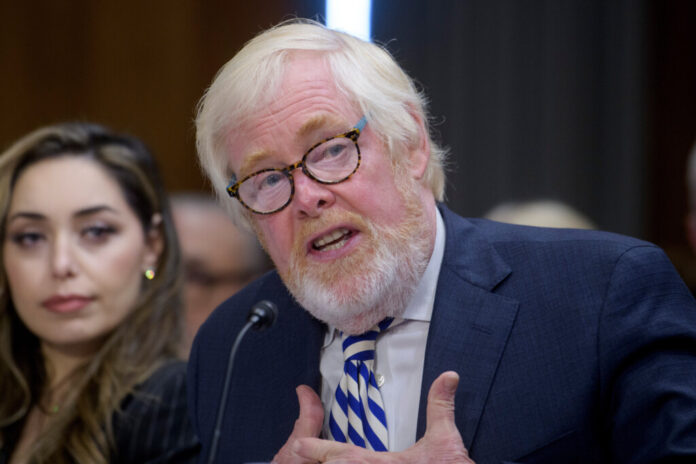
Washington: The arrival of Leo Brent Bozell South Africa as Washington’s ambassador-designate to Pretoria comes at a tense moment in relations between the two countries. His appointment follows months of diplomatic strain, trade tensions and public disputes over policy and rhetoric.
Mr Bozell, a conservative activist with little formal diplomatic experience, has spent much of his career challenging what he sees as media bias and moral decline in the United States. His nomination signals a political shift in how Washington may approach its relationship with South Africa, and, by extension, the wider continent.
Relations between Washington and Pretoria have deteriorated over several issues. Former President Donald Trump has repeated claims that white Afrikaner farmers face persecution and land seizures under South Africa’s democratic government, assertions widely rejected by independent observers and South African officials.
At the same time, the United States has criticised South Africa’s case against Israel at the International Court of Justice, as well as its diplomatic ties with Russia, China and Iran. Trade tensions have escalated, with tariffs of up to 30% imposed on South African exports.
Mr Bozell’s past engagement with South Africa dates back to the 1980s, when he joined a campaign opposing US engagement with the African National Congress during apartheid. The ANC, despite having an armed wing at the time, later led the country’s transition to democracy and remains in government.
During his confirmation hearing, Mr Bozell said he would encourage South Africa to reconsider its legal action against Israel and reassess its relationships with global powers viewed by Washington as strategic competitors.
Observers say this approach could harden positions rather than open dialogue.
South Africa faces a complex balancing act. The United States remains a key trading partner and investor. Yet Pretoria has increasingly pursued a foreign policy that emphasises strategic autonomy and engagement with emerging economies.
Diplomatic pressure from Washington may test that stance. However, analysts note that South Africa has shown a willingness to resist external influence, including by closing a US-supported centre that processed applications from Afrikaner farmers seeking refugee status.
Whether Mr Bozell acts as a mediator or an ideological advocate remains unclear. The Leo Brent Bozell South Africa appointment also carries symbolic weight for the continent.
Africa is no longer peripheral in global politics. It holds critical mineral resources, rapidly expanding consumer markets and strategic voting blocs in multilateral institutions. Yet discussions in Western capitals often frame African policy choices as deviations rather than expressions of sovereignty.
If US diplomacy adopts a confrontational tone, it may reinforce perceptions that Africa is viewed primarily through ideological lenses.
At the heart of the debate is narrative. Claims about “genocide” or political alignment shape international perceptions, even when contested.
For many African policymakers, this moment highlights the need to articulate the continent’s positions clearly and independently. South Africa, as a leading regional economy and a member of BRICS, often finds itself at the centre of that conversation.
The coming months will show whether the Leo Brent Bozell South Africa appointment leads to renewed dialogue or further friction.