
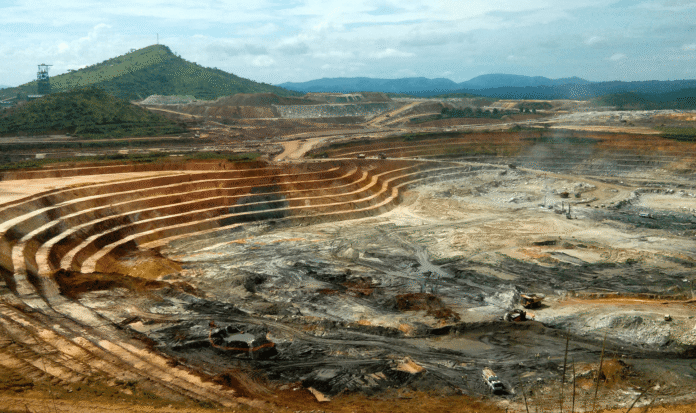
Near Zambia’s border with the Democratic Republic of Congo (DRC), preparations are underway for what could become one of the most significant American mining ventures in decades. The plunder in the midst of the DR Congo Minerals Conflict under the guise of mediation. KoBold Metals, a US-based firm backed by high-profile investors, is positioning itself to explore vast lithium deposits in a country long defined by conflict, corruption and competition for its mineral wealth.
Congo holds some of the world’s largest reserves of lithium, cobalt and copper, minerals essential to electric vehicles, renewable energy systems and advanced electronics. Yet these riches have brought instability rather than prosperity. Armed groups, weak institutions and decades of external exploitation have turned mineral wealth into a source of violence and plunder, particularly in the country’s east.
DON’T MISS THIS: African Union is Failing, The DRC-Rwanda Case Exposes Deep Flaws
Despite these risks, American interest is returning. In December, the United States announced agreements with both Congo and neighbouring Rwanda, a regional power accused by the United Nations of backing the M23 rebel group operating in eastern Congo. The so-called “Washington Accords” aim to support a peace framework while opening the door to greater US investment in Congo’s mining sector.
For Washington, the motivation is strategic. The US government identifies more than 60 “critical minerals” vital to modern economies and national security. Many of them, including cobalt and lithium, are currently dominated by Chinese supply chains. Congo alone accounts for around 70% of global cobalt production, most of it controlled by Chinese companies.
Breaking that dominance has become a priority. Similar logic underpinned recent US resource deals with Ukraine and renewed interest in Greenland’s minerals. Congo, however, presents a far more complex challenge.
Western firms have traditionally avoided the country, deterred by insecurity and endemic corruption. Chinese companies, by contrast, expanded aggressively over the past two decades, often operating through opaque agreements with state-owned firms. By 2024, China controlled an estimated 80% of Congo’s mining output, taking advantage of the DR Congo Minerals Conflict.
Now, the US hopes to reverse that balance.
KoBold became the first American company in more than ten years to secure a Congolese exploration licence in 2024. Other Western-linked deals are following. Swiss commodities trader Mercuria recently announced a $1bn partnership with Gécamines, Congo’s state mining company. Investors say Congolese officials are keen to attract American capital, hoping it will bring diplomatic leverage over Rwanda and greater international attention to the conflict in the east.
Large areas rich in minerals, including coltan deposits critical to smartphone production, lie in territories effectively controlled by M23. Mining in such regions is not only dangerous but politically sensitive. Any investment there risks entanglement in conflict financing, regardless of stated intentions.
Corruption remains another obstacle. Past scandals involving Western firms have shown how difficult it is to operate cleanly. Permits are often issued and revoked without warning. Taxes are collected by multiple overlapping authorities, making compliance complex and disputes common. Since 2002, Congo has been involved in legal battles with more than half of its foreign mining partners.
The US-backed agreements seek to impose greater structure, including clearer tax arrangements and a “strategic asset reserve” that prioritises American and allied investors for future discoveries. The aim is to prevent Chinese firms from acquiring assets that Western companies first explored. The DR Congo Minerals Conflict has been a cash cow for superpowers.
Whether this marks a genuine turning point for the DR Congo Minerals Conflict remains to be seen.
For Congo, promises of peace-for-investment have been made before. Mineral wealth has repeatedly been leveraged by foreign powers without delivering stability or development for ordinary citizens. Millions remain displaced, and human rights groups warn that civilians continue to bear the cost of fighting linked directly or indirectly to control of resources.
For the United States, success will depend on more than deals and diplomacy. Sustained engagement, pressure on regional actors and a willingness to prioritise peace over short-term access to minerals will be critical. Without that, critics warn, new investment risks becoming another chapter in Congo’s long history of extraction without accountability.
As American firms move closer to the ground, the question remains whether this renewed interest will help end the plunder, or simply rebrand it.