


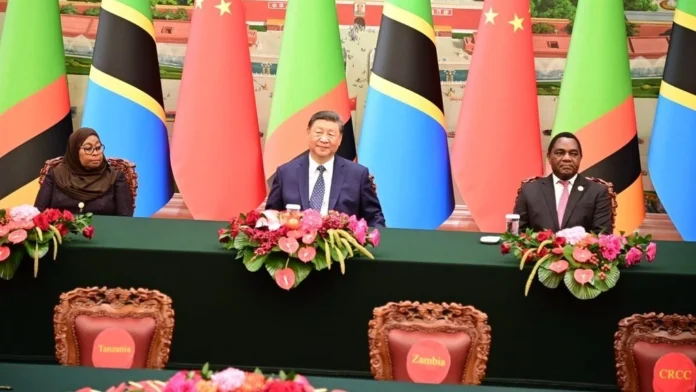
Africa’s shifting geopolitical landscape is once again under scrutiny, raising difficult questions about power, influence and who truly benefits from new alliances. As global powers reposition themselves on the continent, many Africans are asking whether today’s partnerships represent genuine cooperation or simply a change in who holds the leverage.
Following an official visit to Tanzania by Wang Yi, China’s foreign minister. In a statement released at the end of the visit, Wang congratulated Tanzania on what he described as the “successful conduct” of its recent elections and reaffirmed China’s confidence in the country’s leadership and institutions to manage their own affairs.
“China reiterates its full confidence in Tanzania’s leadership and institutions to manage internal affairs independently,” the statement said, underscoring Beijing’s long-standing position of non-interference.
The comments followed elections in which President Samia Suluhu Hassan retained office with 98 per cent of the vote. The poll, however, was controversial. Opposition parties were largely excluded from the race, and international observers described the process as deeply flawed. Opposition groups claim that at least 2,000 people were killed by security forces in the aftermath of the October vote, allegations that have strained Tanzania’s relations with Western governments.
Wang Yi, who met President Hassan during the visit, made no reference to the reported post-election violence. Instead, China emphasised its support for Tanzania’s “national sovereignty and security”, a phrase often used by Beijing to signal respect for state authority while avoiding criticism of internal political matters.
China, Tanzania & Africa relations
China’s political backing comes alongside growing economic ties. Beijing has significantly expanded its footprint in Tanzania over the past few years, with both sides pointing to rising trade volumes. Tanzanian authorities say Chinese investment has been particularly strong in low-tax special economic zones, where 343 Chinese-funded projects worth an estimated $3.1 billion were registered in 2025 alone.
Supporters of the partnership argue that such investments bring jobs, infrastructure and much-needed capital, especially at a time when Western financing has become more cautious and conditional. Critics, however, warn that economic dependence can quietly translate into political influence, leaving African states vulnerable to pressure behind closed doors.
After Tanzania, Wang Yi is due to continue his African tour in Lesotho, another country navigating complex global relationships as rising US tariffs have cooled relations with Washington.
For Africa, the broader question remains unresolved. Is the continent gaining real leverage from renewed interest by global powers, or merely trading one form of dominance for another? As history has shown, promises of partnership can sometimes mask deeper ambitions. Whether today’s alliances lead to shared prosperity or midnight plunder will depend on how firmly African nations define, defend and negotiate their own interests.



[…] China Backs Tanzania as Africa Weighs New Power Dynamics […]