
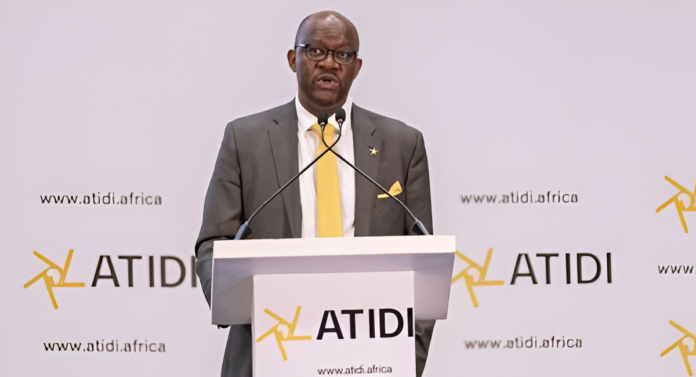
The African Trade and Investment Development Insurance (ATIDI) plans to double its capital to $2 billion within the next two years as African institutions search for new ways to finance infrastructure and attract private investment across the continent.
The Nairobi-based institution wants to significantly increase the guarantees it can provide to investors and lenders backing projects in African markets. Chief executive Manuel Moses said additional capital could eventually allow ATIDI to support up to $20 billion in guarantees annually.
The expansion comes as African governments confront a persistent shortage of development finance. Infrastructure needs remain enormous across energy, transport, water, digital connectivity and industrial development, while debt pressures have reduced the ability of many governments to finance large projects directly.
ATIDI’s model attempts to address part of that problem by reducing the financial risks associated with investing in African projects.
The institution provides political risk insurance, credit guarantees and other forms of investment protection. These instruments can give lenders and investors greater confidence when committing capital to projects that they might otherwise consider too risky.
Rather than financing every project directly, guarantees can help governments and development institutions use limited capital to attract much larger pools of private money.
Moses told Reuters that ATIDI’s ambition is to increase its capital to $2 billion, although reaching the target will depend on bringing additional shareholders into the institution. Discussions are underway with France, other G7 countries and about 30 African states that are not yet members.
ATIDI currently has 24 African member states alongside institutional shareholders. Germany’s development bank KfW joined the institution earlier this year, adding another international financial partner to its shareholder base.
The African Development Bank has also increased its involvement significantly.
The AfDB injected $125 million into ATIDI this year, increasing its shareholding to about 14% from 3%. The investment made the development bank a major shareholder and strengthened ATIDI’s ability to expand its guarantee business.
The move forms part of a wider effort to reshape how Africa finances its development.
African Development Bank President Sidi Ould Tah has promoted a New African Financial Architecture for Development, known as NAFAD. The approach seeks to strengthen African financial institutions and mobilise more capital from within the continent.
Africa has substantial pools of money held by pension funds, sovereign wealth funds, insurers and other institutional investors. Much of that capital remains fragmented or invested outside major African infrastructure projects.
The AfDB estimates that African institutional capital could amount to around $4 trillion. Mobilising even a portion of those resources could provide an important source of long-term finance.
The challenge is convincing investors that infrastructure projects offer acceptable levels of risk and return.
Major projects can take years to complete and often require large initial investments. Political instability, currency fluctuations, regulatory changes and concerns about government payment obligations can discourage investors or increase borrowing costs.
Guarantees can help absorb some of those risks. A lender financing a power plant, railway or renewable energy project may become more willing to provide capital when a specialised institution protects part of the investment against defined political or commercial risks.
This can also lower financing costs, which remains particularly important in African markets where borrowing can be significantly more expensive than in developed economies.
ATIDI has spent 25 years developing that role. The institution was established to support trade and investment by providing insurance and guarantees in markets where perceptions of political and commercial risk can restrict access to finance.
Its growing capital base now gives it the potential to operate at a much larger scale.
ATIDI has historically supported about $3 billion in investments annually. The AfDB’s increased shareholding is expected to help raise annual guarantee volumes substantially, with an initial ambition of reaching around $10 billion.
Moses believes doubling ATIDI’s capital could eventually increase that figure to $20 billion a year.
Such an expansion would not solve Africa’s infrastructure financing challenge on its own, but it could demonstrate how African financial institutions can use their balance sheets more strategically.
The continent faces an estimated annual development financing gap of about $400 billion, according to figures cited by the AfDB. Traditional sources of development finance are unlikely to close that gap without significant private-sector participation. Development aid has also come under pressure.
Cuts to overseas assistance from some wealthy countries have increased the urgency of finding alternative financing models. African policymakers are therefore placing greater emphasis on domestic capital, regional institutions and partnerships capable of attracting commercial investment.
The shift does not mean international finance will become less important. ATIDI is actively seeking investment from international partners alongside additional African shareholders.
The difference lies in how that capital is structured and deployed. Instead of relying primarily on grants or conventional government borrowing, institutions such as ATIDI can use guarantees to improve the risk profile of projects and attract investors that might otherwise remain on the sidelines.
Infrastructure is likely to remain one of the biggest areas of opportunity. Africa needs extensive investment in electricity generation and transmission as demand rises from households, businesses and expanding cities. Renewable energy also requires large amounts of capital as countries develop solar, wind, hydroelectric and battery-storage projects.
Transport presents another major requirement. Roads, railways, ports and border infrastructure remain essential to reducing the cost of moving goods across the continent.
The African Continental Free Trade Area increases the importance of those investments. Removing tariffs alone cannot create an integrated African market when poor transport links and expensive logistics continue to restrict trade.
Digital infrastructure has become equally important as African economies expand mobile banking, e-commerce, cloud services and other technology-driven industries.
Each sector offers significant investment opportunities, but many projects struggle to reach financial close because investors remain concerned about risk.
Guarantees cannot make an economically weak project viable, but they can address specific risks that prevent otherwise sound investments from attracting capital.
Africa’s financing challenge also extends beyond the amount of money available. The continent needs stronger institutions capable of connecting capital with credible projects.
That means improving project preparation, procurement, governance and regulatory certainty alongside expanding financial guarantees.
The success of ATIDI’s capital plan will therefore depend partly on whether governments can create projects that investors are prepared to finance once key risks have been addressed.
Expanding the institution’s membership could strengthen that process.
About 30 African countries have yet to join ATIDI, according to Moses. Bringing more of them into the institution would increase its capital while extending its guarantee products into additional markets.
International shareholders could add further financial strength and diversify the institution’s capital base.
The wider ambition reflects a change in the conversation about African development finance.
Africa has often been described primarily through the size of its infrastructure funding gap. A growing number of African institutions are instead focusing on how the continent can use its existing financial resources more effectively.
Pension funds, sovereign wealth funds, development banks and insurance institutions already control substantial pools of capital. The challenge is building financial structures that allow more of that money to support productive investment while managing risk responsibly.
ATIDI’s proposed expansion sits within that effort. Reaching $2 billion in capital would give the institution greater capacity to support infrastructure, trade and private investment across African economies. Increasing annual guarantees towards $20 billion could multiply the impact of that capital further.
The bigger test will be whether those guarantees translate into projects that people can see and use.
New power generation, better transport corridors, industrial facilities and digital infrastructure would provide a clearer measure of success than the size of ATIDI’s balance sheet alone.
Africa’s development financing gap remains substantial, but the continent also holds considerable financial resources of its own. Strengthening institutions capable of mobilising those resources could become an increasingly important part of how Africa finances its next phase of growth.