
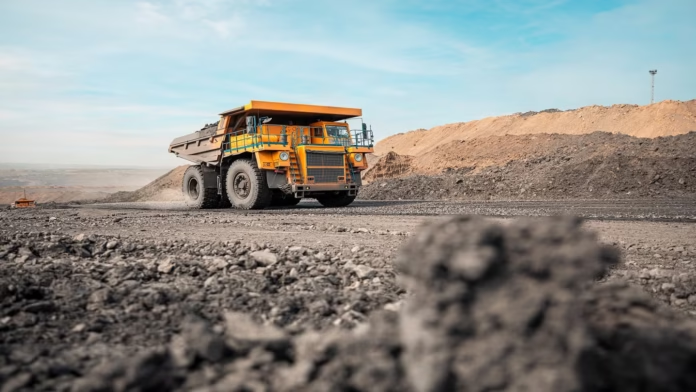
A major copper deposit beneath Zambia’s Copperbelt is drawing global attention. KoBold Metals’ $2.5 billion investment raises a key question in the African copper race: Will Africa remain a raw-material supplier, or secure greater value in the shifting global supply chain?
KoBold Metals is investing in the Mingomba copper project, one of Africa’s largest mining deals in recent years. Yet, the story extends beyond extraction, raising questions about the region’s evolving role.
Backed by high-profile investors including Jeff Bezos and Bill Gates, KoBold Metals uses artificial intelligence to identify untapped mineral deposits. This technological approach, combined with its move into Zambia, highlights growing urgency around copper supply as the world shifts towards electrification.
Copper has long been vital to industry. However, its role is growing as economies shift to cleaner energy. Electric vehicles use far more copper than conventional cars. This includes not just batteries, but entire electrical systems. Renewable energy infrastructure, from solar to wind, also depends on copper for transmission.
At the same time, the rapid growth of data centres is adding further pressure on supply.
The International Energy Agency projects a sharp rise in global copper demand in the coming decades, while supply struggles to keep up. As analysts warn of a deficit by the early 2030s, questions arise about how electrification targets will be met.
Against this backdrop, Zambia has long been recognised as one of Africa’s key copper producers, alongside the Democratic Republic of Congo. The Mingomba project, located in the Copperbelt, is believed to host high-grade deposits, making it valuable as easily accessible reserves diminish.
In response to these challenges, KoBold Metals is using artificial intelligence to find new deposits, aiming to reduce risk and improve efficiency. This reflects a wider shift in mining, as technology changes how resources are discovered and developed.
The timing of this investment is also important. It aligns with the United States and its allies’ efforts to secure alternative mineral sources. It also aims to reduce reliance on China, which leads global refining.
Despite Africa’s large reserves of copper and other minerals, most of the value has historically been realised abroad. Resources are exported and processed elsewhere, then returned as finished goods, leaving limited benefit for the countries of origin.
This pattern has constrained industrial growth. It has also deepened global trade dependency. As a result, the African copper race is forcing a fresh look at this model.
If African governments push for local processing, they can capture more value. In this scenario, industrial growth and skills transfer become key. Building refining capacity and technical expertise can help countries move beyond raw exports, allowing them to claim a greater share of the value created.
Ultimately, the Mingomba project is more than a mining deal; it highlights both the challenge and the opportunity for Africa. Copper sits at the centre of this transformation. The choices made now will determine whether Africa remains a supplier of raw materials or becomes a powerful force in the global supply chain. The future of industries and economies across the continent depends on it.