


ABUJA, NIGERIA – Nigeria could double investment into its energy sector within five years as global supply disruptions increase demand for reliable partners and the country strengthens its position in international energy markets.
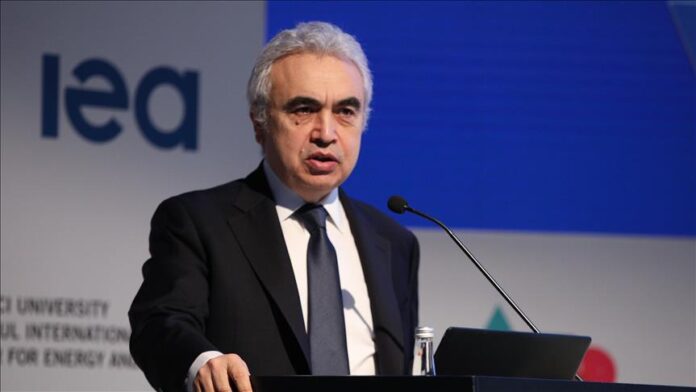
International Energy Agency Executive Director Fatih Birol made the assessment during a visit to Abuja, where Nigeria began a new phase of cooperation with the Paris-based energy body.
The opportunity extends beyond oil. Nigeria needs substantial investment across natural gas, electricity, renewable energy and infrastructure as it tries to increase production while improving energy access for its rapidly growing population.
Nigeria formally joined the IEA as an Association country in July after the agency’s governing board unanimously approved its application. The move places Africa’s most populous country inside a network that now represents more than 80% of global energy demand.
Birol believes closer cooperation could help Nigeria attract significantly more capital from governments and private investors. He has set an ambition of at least doubling the energy investment flowing into the country within five years.
The timing could work in Nigeria’s favour. Conflict and disruption across major energy-producing regions have forced governments to reconsider where they secure oil, gas and refined petroleum products.
Birol argues that reliability has become increasingly valuable in that environment. Countries want suppliers that can continue delivering energy when geopolitical shocks disrupt established trade routes.
Nigeria has several advantages. It remains one of Africa’s biggest oil producers, holds vast natural gas reserves and has a rapidly expanding market for decentralised solar energy.
The country also has the Dangote Petroleum Refinery, which has added a new dimension to Nigeria’s role in global fuel markets. The Lagos facility has increased exports of refined products at a time when supply disruptions have placed pressure on international markets.
That shift matters because Nigeria historically exported crude oil while importing large quantities of refined fuel. Expanding domestic refining allows the country to capture more value from its resources before products reach international markets.
Nigeria now wants to push crude production towards three million barrels per day by 2030. Achieving that target will require investment in production, pipelines and other infrastructure, alongside improved security in oil-producing regions.
Oil theft, ageing infrastructure and years of underinvestment have constrained output. Recent reforms aim to improve the investment environment and attract capital back into the sector.
Natural gas could become equally important. Nigeria holds some of the world’s largest proven gas reserves, giving the country an opportunity to expand electricity generation, industrial production, fertiliser manufacturing and exports.
Global demand for dependable gas supplies has also increased as countries seek greater energy security. Nigeria could benefit if it develops infrastructure capable of bringing more of its reserves to domestic and international markets.
However, the country’s energy ambitions cannot focus only on exports. Millions of Nigerians still lack reliable electricity, while businesses routinely depend on private generators because grid supply remains inadequate.
That gap creates another investment opportunity. Expanding transmission, distribution, off-grid solar and other power infrastructure could improve productivity while supporting industrial growth.
Nigeria and the IEA have now signed their first Joint Work Programme to deepen cooperation in those areas. The agreement covers energy security, investment, energy data, efficiency and clean cooking, while giving Nigerian institutions greater access to IEA expertise and training.
Better energy data could prove particularly important to investors. Market participants have long raised concerns about gaps in Nigerian statistics covering oil production, exports and consumption.
More reliable information can reduce uncertainty and help companies make investment decisions with greater confidence.
The partnership also gives Nigeria a stronger voice in global energy discussions at a time when Africa’s role in the international energy system is changing.
Nigeria joins South Africa, Kenya and Senegal among the IEA’s Association countries in sub-Saharan Africa. Its inclusion increases African representation inside an institution that plays an influential role in global energy policy.
The opportunity now is to translate that representation into capital and infrastructure.
Nigeria’s resources alone will not guarantee an investment boom. Investors will still assess regulatory stability, security, infrastructure, project economics and the government’s ability to maintain reforms.
The country must also balance its ambition to increase fossil-fuel production with the rapid global expansion of renewable energy and electrification.
That combination could ultimately become one of Nigeria’s strengths. Few African economies possess comparable oil and gas resources alongside such a large domestic electricity market and significant solar potential.
The wider significance reaches beyond Nigeria. Global energy insecurity is creating new competition for dependable suppliers, while African countries need unprecedented levels of capital to expand energy access and industrialise.
Nigeria now has an opportunity to turn those two realities into a new investment proposition.
If the country can combine reliable energy exports with stronger domestic infrastructure, transparent data and consistent regulation, doubling investment may become more than an ambitious forecast. It could mark a shift in which Africa’s largest energy producer captures more value from a changing global energy order.